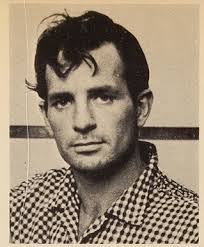
Jack Kerouac
Español
May 3, 2026
by Philip Gambone
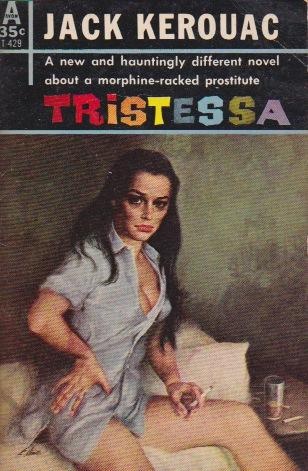
"How could you fall in love with a prostitute?" Carlos Monsiváis asks in his book of essays, Mexican Postcards. "How do you channel a typically homely feeling, blessed by God, towards someone outside the family circle, towards a non-being like a whore?" Monsiváis was being tongue-in-cheek here. As a student of Mexican love songs, he well understood the chemistry of "non-homely" passions outside the family circle. So did Jack Kerouac, who took up this theme in his 1960 novella, Tristessa, about his infatuation with a morphine-addicted Mexican prostitute.
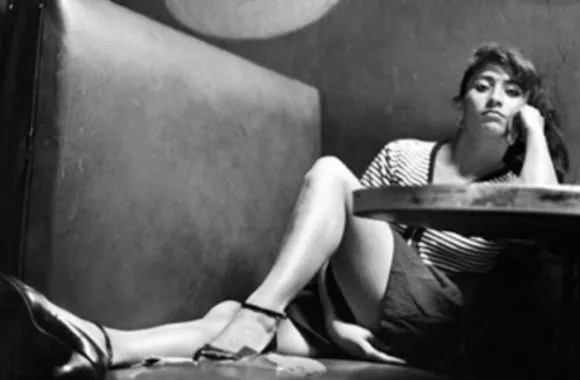
Esperanza Villanueva
*
During the 1950s and early 60s, Kerouac made several trips to Mexico. On one of those trips, the young, brilliant, and tortured writer—a "baggy-trousered gringo jerk" with a "crash inside my soul"—met a young woman named Esperanza Villanueva. She was an "Indian girl with mysterious lidded Billy Holiday eyes" and a "great melancholic voice." He thought she was as beautiful as Ava Gardner.
Esperanza had been an addict since age 16 and was now shooting ten grams of morphine a month. Her junk-racked body was, Kerouac wrote, a "bundle of death and beauty." Kerouac took fellow beat poet Gregory Corso to meet her. Corso later recalled that Esperanza regarded Kerouac's declaration [of love] with the cold eye of the addict accustomed to selling her body for a fix. She was out of it. He had this great feeling toward her. I don't think he knew what a junkie was like, 'cause there's nothing you can do but just give them some junk and they'll feel better."
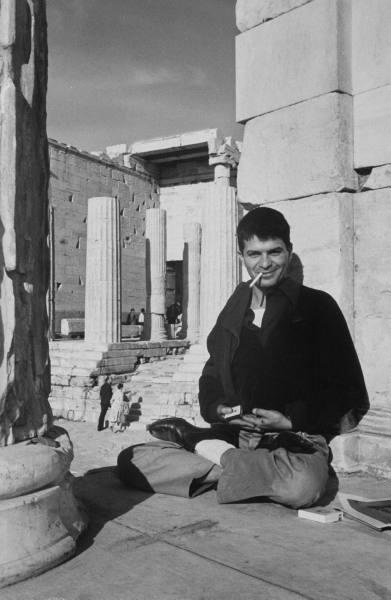
Gregory Corso
*
The novella opens with Kerouac and Esperanza (whom he renames Tristessa, a variation of the Spanish word "tristeza," sadness) on a rainy Saturday night in Mexico City, taking a cab back to her place. He's drunk and she is high on morphine. Tristessa lives in a gloomy tenement cell-house that she shares with an assortment of people and animals. In a corner of her bedroom is a huge icon of the Virgin of Guadalupe. When she says the word "dead," she clasps her hands in a holy attitude, "indicating her Aztecan belief in the holiness of death." It's that juxtaposition—of squalid dope addiction and something almost saintly in her—that makes Kerouac's portrait of this tragic woman so powerful.
"I wish I could communicate to all these creatures and people, in the flush of my moonshine goodtimes, the cloudy mystery of the magic milk to be seen in the Mind's Deep Imagery where we learn that everything is nothing," Jack the narrator writes in Part One of the novel. "I wish I could communicate to all their combined fears of death the Teachings that I have heard from Ages Old, that recompenses all that pain with soft reward of perfect silent love abiding up and down and in and out everywhere past, present, and future in the Void unknown where nothing happens and all simply is what it is."
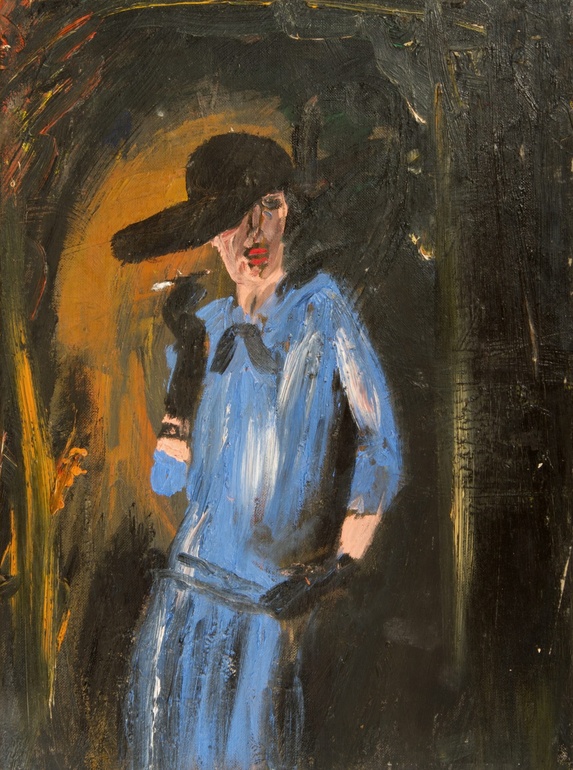
Painting by Jack Kerouac
*
There's quite a bit of this kind of writing—"the drizzles of religion"—in Tristessa. You can take it as nothing but drunken, stream-of-consciousness nonsense, or as flashes of sudden Buddhist enlightenment. Kerouac clearly intended the latter. He had been studying Buddhism for several years and by now was, according to another poet friend, "a complete Bodhisattva," carrying "everything on his back." In her apartment, he and Tristessa talk earnestly and eagerly about God.
Even though he feels "murderous lust" for this "beautiful Tristessa of Dolours," Jack holds back, having sworn off lust with women. Instead, he hopes for a "holy friendship" with her. "I wish I could tell her in Spanish the illimitable and inestimable blessing she will get anyway in Nirvana." In his drunken or enlightened state—take your pick—he sees her as a saint, an angel, an enlightened creature. "Her heart a gold gate."
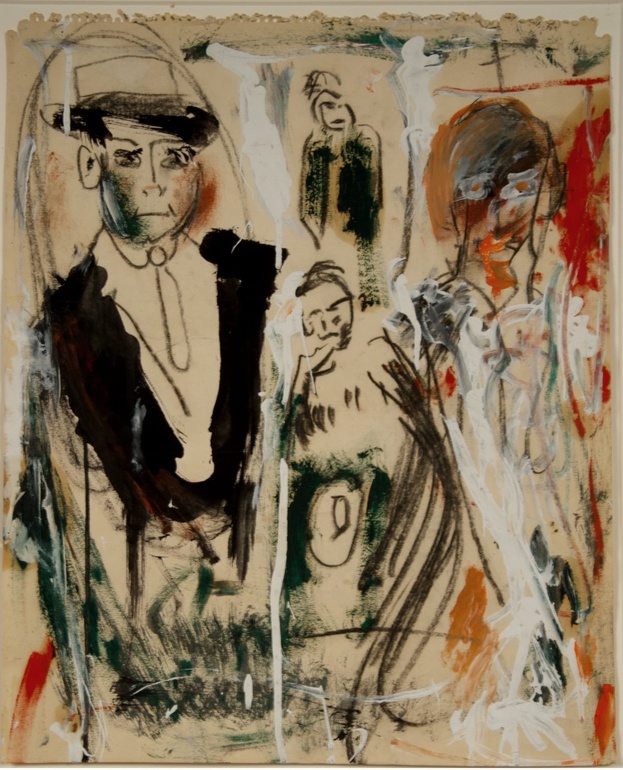
The Slouch Hat painting by Jack Kerouac
*
As Part One wraps up, Jack leaves Tristessa's apartment, drunkenly pushing and dodging through "moils of activity with whores by the hundreds lined up along the walls of Panama Street." Here Kerouac's rich powers of description—the street food vendors, the hipsters in their zoot suits and Pachuco haircuts, the "whoreboy bar of queers"—are on full display.
In a letter to Allen Ginsberg, Kerouac called Tristessa "a big sad novel." While the first part was "flowery," he reported that the prose in the second part was "very choppy and terse and funny to the point and painful—no flowery."

Desolation Peak
*
In "no flowery" Part Two, a year has passed, during which Jack has gone to California and lived in a shack with a young Buddhist monk, then spent the summer at Desolation Peak. He is looking forward to being back with Tristessa, marrying her, and getting his Mexican citizenship. But when he returns to Mexico, he finds she is deathly sick. She has become a "sad mutilated blue Madonna." He resolves to stay with her "and sleep where she sleeps, even if she sleeps in a garbage can, in a stone cell with rats." At dawn, as "the incredible colors of Mexico" begin to emerge, they go wandering through "the biggest junk den in Latin America." Jack, "too gone to realize anything," just wants "to hold her and stop shivering … stop this insane wandering in the streets—"
When Tristessa trips and falls, cracking her skull on the stone pavement, Jack finally understands that she is dying, "either from epilepsy or heart, shock, or goofball convulsion…. I feel like taking her in my arms and squeezing her, squeezing that little frail unobtainable not-there body—" As the book comes to its end, he realizes he'd have to be a junkie to remain with Tristessa, something he can't bring himself to do.

Allen Ginsberg
*
Allen Ginsberg said Kerouac was "a very unique cat—a French Canadian Hinayana Buddhist Beat Catholic savant." Kerouac simply called himself "a religious wanderer." With Tristessa, he aimed to express the mystery of holiness found in the most unexpected and sordid places. He sought to situate "this recent little event called the world" within Buddhism's understanding of reality as empty, a void, the "not-there." Tristessa may have its shortcomings—including its "disheveled mysticism," as essayist Lucy Sante once wrote of the Beats in general—but it is also a beautiful prose-poem, a prayer, a meditation on pain and suffering.
In his very last letter to Allen Ginsberg, Kerouac wrote, "Everybody should simply make a vow of kindness and let it go at that, try to stay sober too—start new party Vow of Kindness party …" Kerouac struggled with sobriety all his short life. Through it all, he managed to turn out some of the Beat Generation's most powerful works.
 **************

Philip Gambone, a retired high school English teacher, also taught creative and expository writing at Harvard for twenty-eight years. For over a decade, his book reviews appeared regularly in The New York Times. Phil is the author of seven books. His memoir, As Far As I Can Tell: Finding My Father in World War II, was named one of the Best Books of 2020 by the Boston Globe. His new collection of short stories, Zigzag, was published last year by Rattling Good Yarns Press. His books are available through Amazon, Aurora Bookstore, and at "Tesoros," the bookshop at the Biblioteca.
**************
*****
Please contribute to Lokkal,
SMA's online collective:
 ***
***
Discover Lokkal: Mission
Visit SMA's Social Network
Contact / Contactar