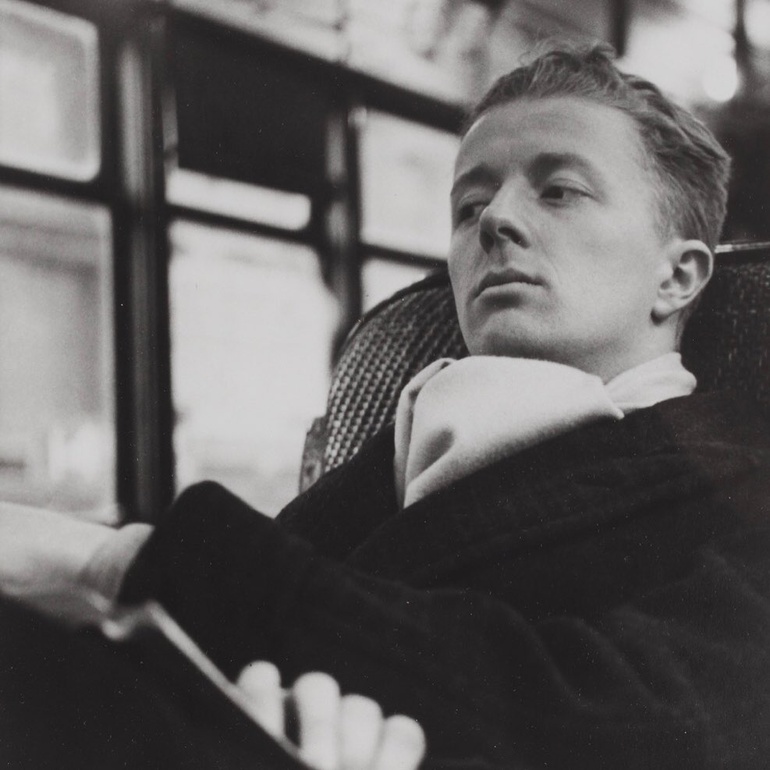
Young Paul Bowles
Español
March 22, 2026
by Philip Gambone
Most readers, if they know Paul Bowles at all, know his first novel, The Sheltering Sky (1949), about a disaffected married couple who travel into the Sahara seeking to work out their marital problems, only to succumb to the dangers all around them. Very much in the mode of the novel of existential angst, it established Bowles, who until that time had primarily been a composer, as an important modern voice in American letters.
An expatriate most of his life, Bowles is usually associated with Morocco, where he settled 1947, when he was 36, and where he lived until his death in 1999. But as a young man casting about for a place outside the United States in which to settle, he spent time in Mexico. Those visits inspired some of the music he was writing at the time and at least one notable short story set in Mexico.
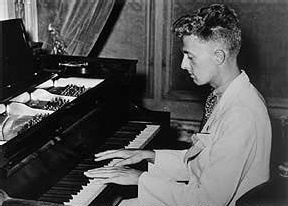
Bowles at the piano (1930s)
*
From the time he was a teenager, Bowles had felt estranged from the bourgeois life he lived with his parents in Queens, New York. He thought, as he put it in an early poem, that "a soul is not a soul sans it have / a dark recess / Wherein lie the worms of ruin." As a teenager, he would venture into Manhattan to explore the Bohemian haunts of Greenwich Village, broadening his knowledge of literature, art, and music. His youthful writing was rooted in the surrealistic and the power of the unconscious. "Years later," writes Christopher Sawyer-Lauçanno in An Invisible Spectator: A Biography of Paul Bowles, "he would become legendary for writing drug-inspired works, but the tendency was already present at age seventeen."
Bowles' "dark recess" was not immediately noticeable in the well-mannered, cosmopolitan, and handsome exterior he presented to the world. The American writer and translator Édouard Roditi was "dazzled" by his "angelic Anglo-Saxon physical appearance." But Bowles' alienation was real. After a year at the University of Virginia, an experience he found hopelessly provincial, he dropped out in the spring of 1928. The following March, he sailed for France, envisioning for himself the life of an expatriate. "I fully expected never to see my family again," he wrote, intent on forming an identity based in separateness and isolation. By the summer, he was back in New York, ambivalent about which of his talents to pursue—music or writing. He became a protégé of the composer Aaron Copland, taking composition lessons with him on an intermittent basis.
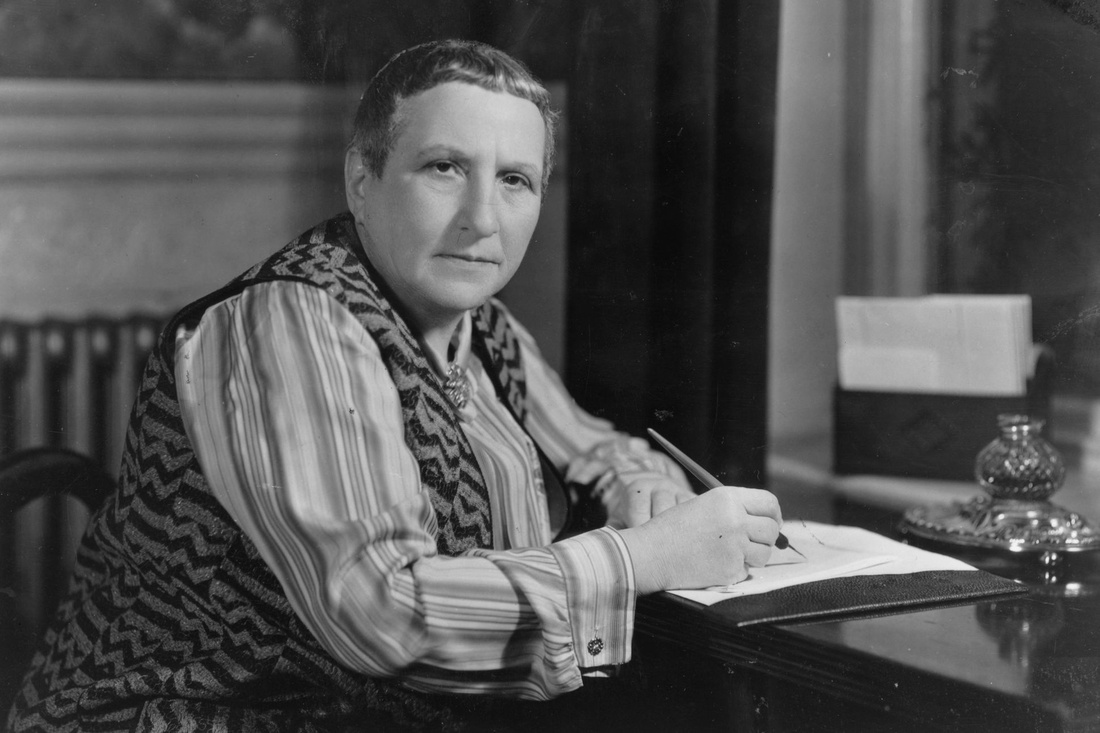
Gertrude Stein
*
In 1931, not yet 20, Bowles returned to Paris and looked up Gertrude Stein, who took to him and decided to "launch" the precocious young American into the world of Europe's avant-garde artistic scene. At this point, Bowles was still searching for his creative outlet. "His despair over poetry pushed him further into music and back to fiction," Sawyer-Lauçanno writes.
Three years later, Bowles sailed to Latin America, stopping in Puerto Rico and Colombia. The trip inspired the composition of Latin-inspired piano pieces with titles like "Guayanilla" and "Café Sin Nombre." Copland found Bowles' early compositions "full of charm and melodic invention, at times surprisingly well made in an instinctive and non-academic fashion."
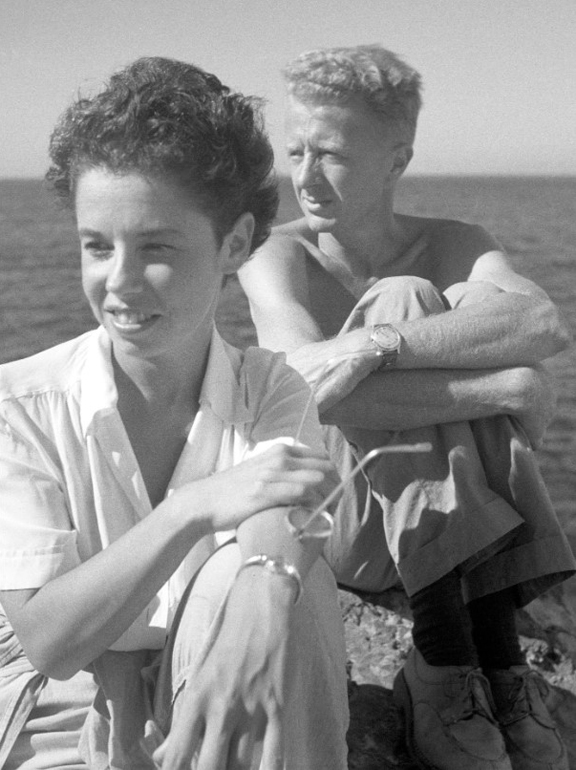
Jane and Paul Bowles
*
In 1937, Bowles met twenty-year-old Jane Auer. Spoiled, petulant, impulsive, charming, and bright, she was a habitué of New York's lesbian bars. Bowles, who also had homosexual tendencies, was captivated. He invited her to go to Mexico with him. She agreed.
With two friends, they traveled by bus, crossing the border at Laredo, and spent their first night in Monterrey. Jane soon became disenchanted with Mexico—the primitive busses, the unpaved roads, the rugged terrain. When they reached Mexico City, she checked herself in at the Ritz. Meanwhile, Paul and his two other traveling companions enjoyed the capital—the food, the music, the bullfights. The next day, Jane, sick with dysentery, flew back to the United States.
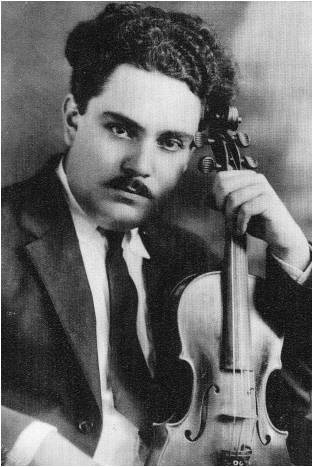
Silvestre Revueltas
*
With Jane gone, Bowles looked up the Mexican composer Silvestre Revueltas, who was teaching at the Conservatorio Nacional de México. Bowles' time with Revueltas opened him up to all he was experiencing in Mexico and to transforming those experiences into art. As a result, he composed more solo piano pieces based on Mexican rhythms and sonorities.
After a month in Mexico City, Bowles and his friends ventured further south, to Tehuantepec. In his autobiography, Bowles recalled that Tehuantepec was "unforgettable." He loved the "oases of coconut palms towering above the mangos, the zapotes and bananas." He wrote that the "highly spiced hot wind blew incessantly across the countryside, which was not really desert, but an impassable wilderness of bare thorny trees and cacti."
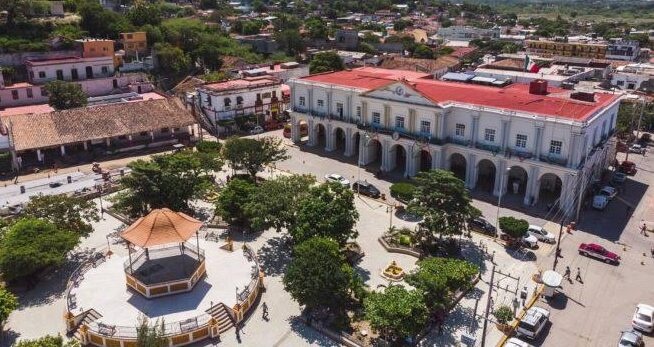
Tehuantepec
*
Back in the United States, Bowles again began seeing Jane. In the winter of 1938, on a whim, they became engaged. "Jane and I used to spin fancies about how amusing it would be to get married and horrify everyone," he wrote. "From fantasy to actuality is often a much shorter distance than one imagines." It was largely a marriage of convenience. They imagined, Sawyer-Lauçanno writes, that they could have "the best of both worlds: companionship and freedom to be themselves."
That March, after a concert that featured some of Bowles' Mexican music, he and Jane sailed to Latin America, disembarking at Colón, Panama. They crossed the isthmus to the Pacific side and went on to Costa Rica, a visit that would, years later, inspire his novel Up Above the World. After a month in Costa Rica, they moved on to Guatemala and then, having survived some risky Guatemalan adventures, left for France. There they began "to work out some of the knots in their relationship," as Sawyer-Lauçanno puts it. "In some ways they would spend the rest of their married life together attempting to understand the meaning of what they had committed themselves to during the summer of 1938."
Eager to visit Mexico again, Bowles and Jane returned in the summer of 1940, moving into a hacienda outside Jalapa with a breathtaking view of the countryside and the volcano of Toluca. But in fact, Bowles found that "the vastness of the landscape had a paralyzing effect." The hacienda itself, though beautiful, was melancholy. "The fact that it was so beautiful made the melancholy more insidious, more corrosive," he wrote.
When altitude sickness got to him, he and Jane moved on to Acapulco, into a large house with a tree-filled patio strung with hammocks. They had no sooner moved in than the young playwright Tennessee Williams, sunburned and in a floppy hat, appeared at their door. (See my "A 'cotton-headed romanticist' in Mexico," Lokkal, January 14, 2024.) Williams turned out to be one of several American visitors they had that summer.
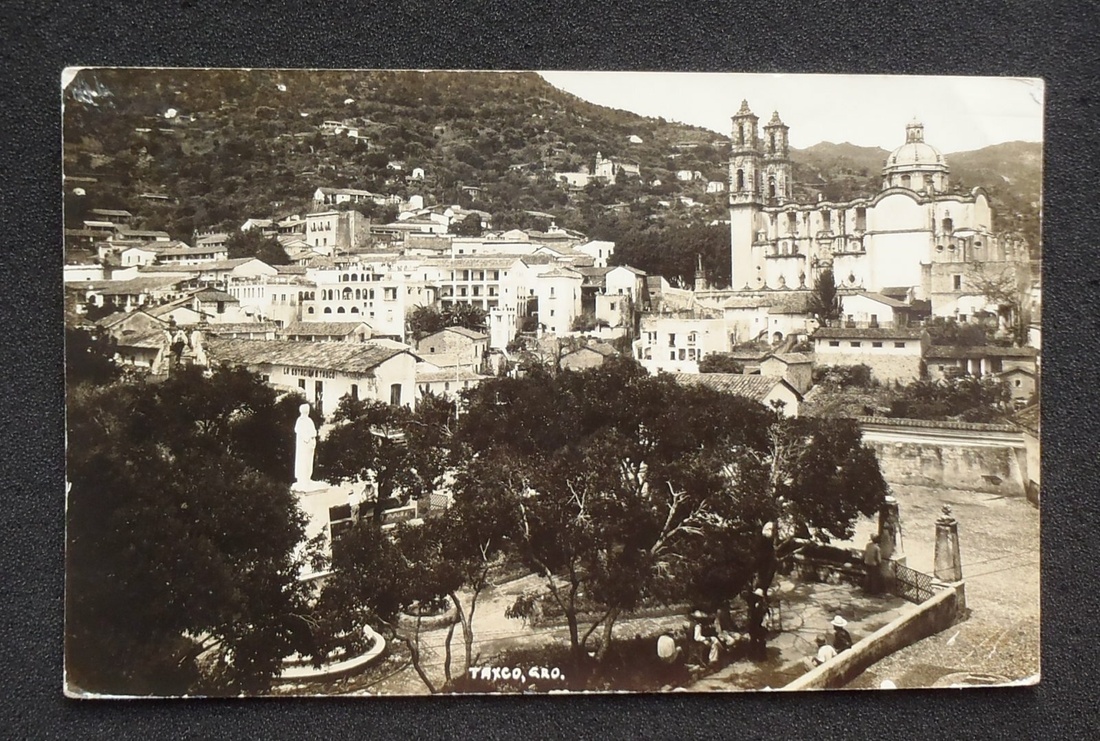
Taxco (1940)
*
Bowles returned again to Mexico in June 1941. As on his previous stay, he found the expatriate community in Taxco distasteful: "The foreign colony is made up still of about the same proportion of dopes, drunks and nice individuals," he wrote in a letter to fellow composer Virgil Thomson. "Then there are the hordes of Californian, Middle Western and Texas tourists who come afresh each day with guides from Mexico [City], have lunch and go back again. And a certain number of wealthier New York and Connecticut people who stop on their way to Acapulco in their cars."
Despair over his marriage and his congoing estrangement from the state of civilization plagued him. Eager to take a break, he went to Mexico City, but his unrest persisted. In August, he moved back to Acapulco, where the tropical climate, the food, and the natural setting restored his spirits. By September, he was ready to return to New York, but came down with a severe case of jaundice, which landed him in a Mexico City hospital. His convalescence was slow and in November he was moved to a sanitarium in Cuernavaca. There he began working on an opera, The Wind Remains, based on a surrealist play by Federico García Lorca.
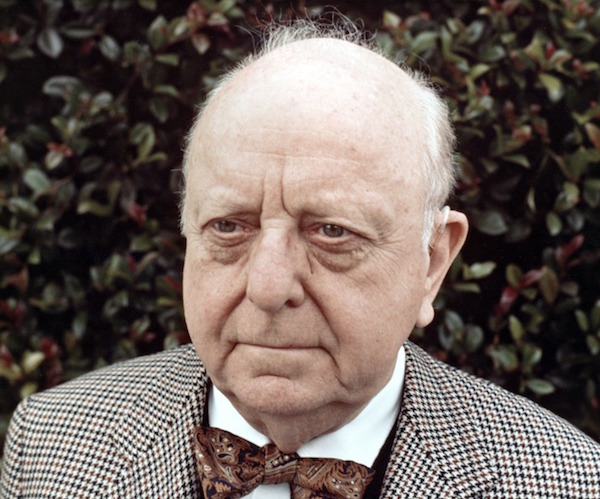
Virgil Thomson
*
By April 1942, Bowles was "completely fed-up with this republic." Writing to Thomson again, he said, "This is a charming country if one is full of vigor. Otherwise it easily turns into an almost perpetual nightmare…. The way of staying sane is simply that of accepting, accepting one horror after another, and being thankful to be still alive." In June, he left Mexico once again. Bowles made one final trip to Mexico, in 1944, a solo vacation to reward himself for completing two more musical commissions. He spent most of the time on the Pacific coast near Manzanillo.
While Bowles never visited Mexico again, his Mexican experiences stayed with him. When he turned to writing fiction, Mexico (and other Latin American locales) figured in some of his short stories. His one definitively Mexican story, "Pastor Dowe at Tacaté," will be the subject of the next installment of my column "The Writer in Mexico."
**************

Philip Gambone, a retired high school English teacher, also taught creative and expository writing at Harvard for twenty-eight years. For over a decade, his book reviews appeared regularly in The New York Times. Phil is the author of seven books. His memoir, As Far As I Can Tell: Finding My Father in World War II, was named one of the Best Books of 2020 by the Boston Globe. His new collection of short stories, Zigzag, was published last year by Rattling Good Yarns Press. His books are available through Amazon, Aurora Bookstore, and at "Tesoros," the bookshop at the Biblioteca.
**************
*****
Please contribute to Lokkal,
SMA's online collective:
 ***
***
Discover Lokkal: Mission
Visit SMA's Social Network
Contact / Contactar