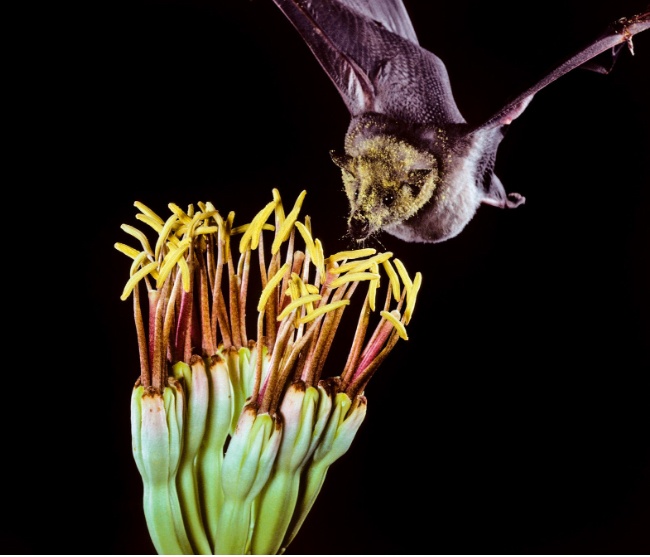
 Español
March 8, 2026
by Roger Jones
Roger Jones: Dr. Celia, why are bats important?
Dr. Celia Selem Bats are the regenerative allies of our delicate ecosystem. They pollinate flowers, disperse seeds, control insects, and help regenerate forests naturally. Without them, nighttime ecosystems would collapse quietly, without most people even realizing what was lost.
Bats have an extremely wide distribution worldwide. They inhabit almost all ecosystems, except the poles and a few remote islands. They are primarily nocturnal animals and show a remarkable diversity of feeding habits.
Some bats feed on nectar and pollen. Others eat fruits and disperse seeds. Some species can even feed on leaves from certain plants. Many bats feed on insects. In fact, more than 70% of bat species are insectivorous, and they play a key role in controlling insect populations naturally.
Other species can consume a wide variety of prey such as small reptiles, amphibians, birds, and even other mammals. They may also eat invertebrates like scorpions and spiders.
Only three bat species feed on blood, and even those mainly feed on mammals and birds, including wild animals, as well as domestic and farm animals.
Bats are ecologically important because they provide multiple ecosystem services such as pollination, seed dispersal, and pest control. However, many of these services are not fully recognized because people don't always see them directly, especially when the benefits are not immediately linked to human production.
RJ: What role do bats play in pollination?
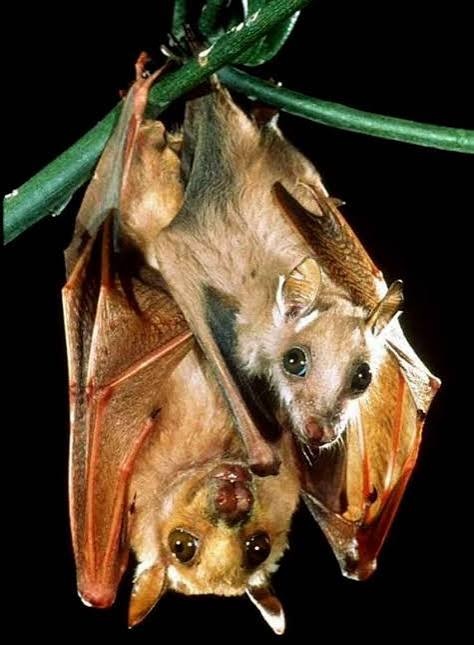
CS: Bats are the regenerative allies of our delicate ecosystem because they pollinate many plants that bloom at night, including agave and many species of cactus. Their long migrations connect landscapes and help maintain genetic diversity across regions.
Bats maintain a mutualistic relationship with many plants. This means both sides benefit: plants provide food such as nectar, pollen, or fruit, and bats provide pollination or seed dispersal.
Pollination is the process by which flowering plants reproduce, through the transfer of pollen from one flower to another. This transfer can be done by many animals, and bats are one of the most important groups of pollinators in tropical and subtropical regions.
Worldwide, close to one thousand plant species are pollinated totally or partially by bats. Some 80-90% of these species are concentrated in tropical and subtropical zones.
The Neotropics are the world's main center of bat pollination, with an estimated 500 to 700 plant species that depend on bats. These include agaves, columnar cacti, ceibas, bromeliads, and many others.
In the Neotropics, bat pollinators belong mainly to the family Phyllostomidae. Within this family, around 60 species show specialized adaptations to feed on nectar and pollen and to provide pollination.
Bats that visit flowers tend to be relatively large and have high energy requirements due to their warm-blooded metabolism. They are able to transport large amounts of pollen. Their mobility and long lifespan make them extremely reliable pollinators.
They have developed extraordinary adaptations: elongated snouts, reduced teeth, and long retractable tongues designed to reach nectaries and absorb nectar. At the tip of their tongues, they have specialized papillae that act almost like a brush.
Many nectar-feeding bats can hover and feed in a way that resembles hummingbirds.
Their fur, body size, and ability to travel long distances allow them to transport pollen over several kilometers. They can recognize floral aromas and use their vision to locate resources. But one of their most important abilities is echolocation, a system of navigation and hunting based on emitting sound and interpreting the echoes that bounce back from objects.
There are also generalist bats that are not specialized nectar feeders. These bats are heavier and cannot hover. Instead, they perch on flowers and feed opportunistically on nectar and pollen. Examples include bats in the genera Artibeus and Carollia. These species are mainly fruit-eaters, but when fruit is scarce they may feed on nectar, pollen, insects, and even leaves.
Plants pollinated by bats have evolved a set of traits to attract them. This is called chiropterophily, a bat-specific pollination syndrome.
Bat-pollinated flowers are often nocturnal, pale-colored, and produce strong odors. Their nectar usually has a lower sugar concentration compared to flowers pollinated by insects or birds.
Bats use a combination of visual, olfactory, and acoustic signals to locate flowers, so color, scent, and shape all matter.
Many bat-pollinated flowers are positioned in ways that make them accessible, such as directly on the trunk or branches, or hanging from long stalks.
Their colors are often white, green, pale brown, or muted purple, which makes them visible at night and also helps avoid attracting other nocturnal pollinators like moths.
Their odors can be intense — often described as sour, rancid, or garlic-like — which helps bats locate them from far away.
Flower shape is also crucial. Some bat-pollinated flowers are tubular or bell-shaped, depositing pollen on a specific part of the bat's body. Others are open and cup-shaped, producing large amounts of pollen and nectar that are easy for bats to access.
Many bat-pollinated plants are economically and ecologically important. In northern Mexico, for example, columnar cacti are keystone species in arid and desert ecosystems because they provide food and shelter for many organisms and help stabilize ecosystem structure.
RJ: What is the relationship between bats, agave, and mezcal?
CS: Bats are the primary pollinators of wild agave.
Without bats, agave loses genetic strength, and the future of mezcal, tequila, and cultural traditions becomes threatened.
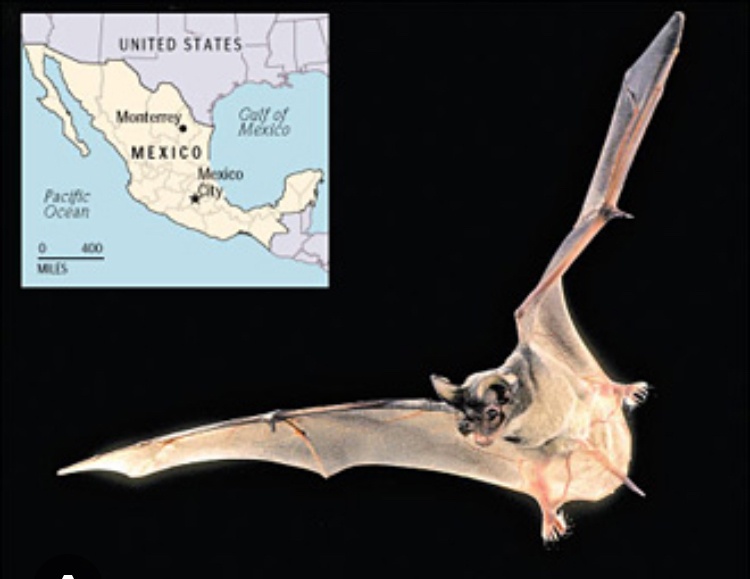
In arid regions of the New World, two plant families, Agavaceae and Cactaceae, have enormous ecological and economic value. Many paniculate agave species depend heavily on phyllostomid bats for pollination. These bats are also important pollinators and seed dispersers of columnar cacti.
In Mexico, three nectar-feeding bat species are strongly linked to agave pollination:
• The Greater long-nosed bat (Leptonycteris nivalis)
• The Lesser long-nosed bat (Leptonycteris yerbabuenae)
• The Mexican long-tongued bat (Choeronycteris mexicana)
All three are included in risk categories under NOM-059.
Agave is central to Mexican culture and economy. For example, Agave tequilana is the source of commercial tequila, which is a multi-billion-dollar industry.
Other agaves are used for local traditional products such as pulque, mezcal, and bacanora, especially in northern regions. Agaves are also important sources of fiber such as henequen.
Many bat-pollinated or bat-dispersed plants include economically important crops. In the Neotropics, bats contribute to systems involving bananas, mangos, pitahaya, and trees like ceiba and balsa.
However, in some cultivated plants, bats are not always needed because many crops reproduce vegetatively through clones. This is the case with Agave tequilana, which is grown in monocultures and reproduces almost exclusively asexually.
Sexual reproduction requires the plant to produce a flowering stalk called a quiote. During this process, large amounts of sugars stored in the plant, which are used for tequila production, are redirected toward flowering. After flowering, the plant dies, because agave is monocarpic.
This represents a productivity loss, so producers often choose asexual cultivation to avoid these economic costs. But this practice reduces genetic diversity.
Even if bats are not necessary for monoculture crops, their ecosystem services are essential for wild agave populations and wild relatives of cultivated species, because they preserve genetic diversity.
Agaves are bat-pollinated plants. Over millions of years of coevolution, agaves increased the height of their flowering stalks, which allows bats easier access to flowers and reduces the risk of entanglement.
Agaves also synchronized nectar production to peak at night, when bats are active.
In response, bats evolved elongated snouts and specialized tongues to access nectar without damaging flowers. They also synchronized their migrations with agave and cactus flowering across Mexico.
Sexual reproduction in plants is critical because it allows genetic crossing and increases diversity. This diversity strengthens resilience against environmental changes, diseases, pests, and climate stress such as drought.
Traditional agave products like mezcal, tequila, and pulque are made by harvesting the entire plant at the moment when sugar concentration is highest just before flowering. This prevents sexual reproduction and eliminates flowers as food sources for bats.
Combined with habitat loss and destruction of roosts, this has contributed to declines in long-nosed bat populations.
Historically, mezcal production was seasonal and artisanal, often using wild agaves growing in natural environments. Today, industrial intensification has created year-round production, monocultures, and heavy use of clonal plants and pesticides.
This transformation damages ecosystems: it reduces biodiversity, weakens soil productivity, breaks ecological interactions like the agave-bat relationship, and threatens cultural heritage tied to traditional agave management.
RJ: Why are bats so misunderstood?
CS: Bats are the regenerative allies of our delicate ecosystem, but fear and misinformation have portrayed them as dangerous.
In pre-Hispanic cultures, bats were sometimes represented as deities linked to the night and death, and they held symbolic importance within religious systems and ceremonies.
This perception changed drastically after colonization. Myths and false beliefs spread, and bat phobia became widespread.
With Catholic influence, bats began to be represented as evil or demonic beings. This is reflected in religious imagery, where angels have feathered wings while demons are often depicted with bat wings.
European vampire myths were also imported, especially in the 18th and 19th centuries, and later amplified by popular culture, especially Bram Stoker's Dracula, which helped spread the false idea that all bats are vampires.
This is not true. Only three bat species feed on blood, and they mainly feed on animals, not humans.
Bats have also been blamed for diseases. They have been associated with rabies, Ebola, SARS-CoV, and others. Although scientists have identified more than 200 viruses in bats, direct transmission to humans is often exaggerated or misunderstood.
For example, not all bats carry rabies. It is estimated that only around 1% of individuals may be infected.
Other diseases have also been wrongly linked to bats. For instance, histoplasmosis is caused by inhaling spores of a fungus that can grow in bird and bat droppings. But bats do not directly transmit this disease.
The tragedy is that misinformation leads to harmful actions. During the pandemic, bat roosts were vandalized, caves were burned, and bats were exterminated despite their enormous ecological value.
Right now, another example is happening: with the emergence of screwworm myiasis in livestock, bats have been unfairly blamed as part of the transmission cycle. This has caused some ranchers to take inappropriate actions, such as targeting vampire bats, which harms entire bat communities and ecosystems.
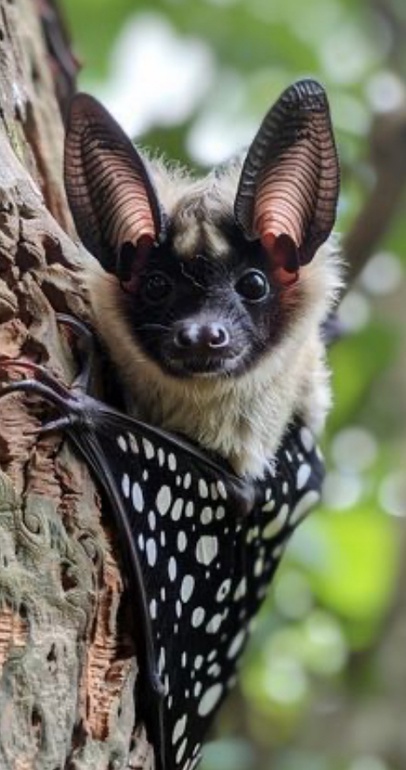
RJ: What are the main threats bats face today?
CS: Bats face multiple threats worldwide, and most are caused directly or indirectly by human activity.
The biggest threats include habitat loss, destruction and disturbance of roosts, pesticide exposure, urbanization and infrastructure, climate change, and especially misinformation and persecution.
Habitat loss is severe. Deforestation and conversion of forests and natural ecosystems into agriculture, livestock areas, and urban zones removes feeding grounds, shelter, and breeding sites.
When natural habitats become farmland or pasture, bats lose food and roosts. In some cases, it also changes bat population dynamics. For example, when cattle increase, populations of the common vampire bat (Desmodus rotundus) can expand, which increases conflict with ranchers.
Roost destruction is another major issue. Cave- and mine-roosting bats are particularly vulnerable because they often form large colonies, making them easy targets for vandalism and extermination.
In many parts of the Americas, vampire bats are considered a problem because they can transmit rabies to livestock. Many control methods have included destroying caves or killing bats, but these actions also kill beneficial bat species that share the same roosts, and they do not guarantee effective population control.
Unregulated cave tourism can also cause bats to abandon roosts, disrupt reproduction, and even lead to death.
Pesticides and agrochemicals are extremely harmful. They can poison bats directly, contaminate the environment, and reduce insect populations, the primary food source for insectivorous bats.
Urbanization creates additional stress. Artificial nighttime lighting and noise disrupt bat navigation and feeding behavior.
Wind farms, although part of clean energy solutions, have caused major bat mortality. Many insectivorous and migratory bats collide with turbine blades, contributing to population declines.
And finally, misinformation remains one of the most dangerous threats. When bats are feared, they are exterminated even though they are vital allies in ecological balance.
RJ: How does climate change affect bats?
CS: Climate change has profound and growing effects on bats, influencing their distribution, abundance, behavior, and the ecological relationships they maintain.
One major impact is changes in geographic distribution. Rising temperatures can push bats to higher latitudes or higher altitudes. This can cause loss of suitable habitat, especially for specialist or endemic species, leading to local extinctions and reduced diversity.
Climate change also causes desynchronization with food resources. It can alter flowering cycles of bat-pollinated plants and seasonal abundance of insects. This disrupts the timing between bat migration and flowering.
When nectar disappears, bats lose food during long journeys.
Climate change can also increase physiological stress. Heat stress and food scarcity weaken immune systems, increasing vulnerability to disease.
Droughts and extreme events are becoming more common. Prolonged drought reduces fruit, nectar, and insect availability. Heat waves can cause mass deaths in large bat colonies as has happened with flying foxes in Asia and Australia due to thermal stress.
And there are cascading ecosystem effects. When bats decline, pollination and seed dispersal decrease, agricultural pests increase, and ecosystem regeneration slows, amplifying the negative effects of climate change on biodiversity.
To be continued
***

Rancho Vía Orgánica is an organic regenerative ranch located in the Jalpa Valley just 15 minutes from the Luciérnaga Mall. Open every day, it is a working ranch, seed bank, restaurant, education center, and home to the Billion Agave Project.
www.viaorganica.org
***************

Roger D. Jones has been living in San Miguel for 43 years, married to Rosana Alvarez, a local woman and a co-founder of Vía Orgánica, for 40 of those. Roger is a community organizer, who is happily living The Mexican Dream.
**************
*****
Please contribute to Lokkal,
SMA's online collective:
 ***
***
Discover Lokkal: Mission
Visit SMA's Social Network
Contact / Contactar