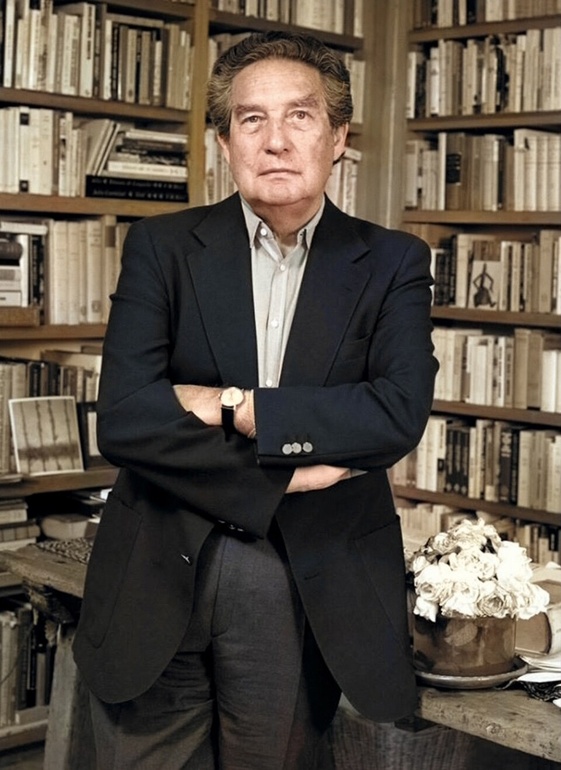
Octavio Paz (1984)
Español
May 31, 2026
by Philip Gambone
"Since my adolescence I have written poems, and have never ceased writing them," Octavio Paz once wrote. "My ambition was to be a poet and nothing but a poet." As it turned out, Paz (1914-1998) was also a superb prose writer who, very early in his career, began to publish essays on the art of poetry. Often in these essays, he was out to justify the role of poetry in society. Indeed, for him, the defense of poetry was, he said, "inseparable from the defense of freedom."
In 1990, the year he won the Nobel Prize for Literature, Paz published one of his last collections of essays on poetry, The Other Voice (La otra voz: Poesía y fin de siglo). The book—not always easy reading—was erudite, hard-hitting, and often brilliant. It captured Paz in all of his remarkable knowledge of poetry and world literature.
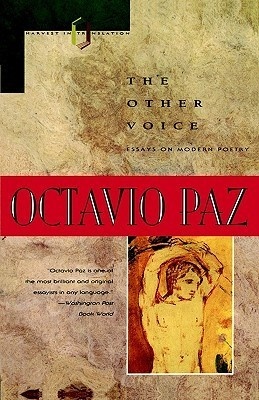
The Other Voice
*
In the first half, Paz tackled some complex and abstruse topics. He contemplated the spiritual state of poets when confronted with the disasters of the Modern Age—dictatorships, terrorism, the "debasement of souls"—and asked what poetry could contribute in the creation of a new, more fraternal political theory. In another essay, he smartly observed that the Romantic movement was "an ethic, an eroticism, a politics, a way of dressing, a way of living and dying." About modern poetry, he said it was "simultaneously an affirmation and a negation of modernity."
The book's second half—more easily accessible, I think—examined the role of poetry in present-day society. In these essays, Paz considered the small number of actual readers of good poetry and what that meant for the health of society. In contrast, commercial publishing houses, he said, turn out thousands of books, most of which "disappear without a trace." "People of today read more than ever, yes. But do they read better?" Paz doubted it. Instead of withdrawing from the world with a serious book, he found the majority of people are content just to be distracted, "lost in the trivial, senseless turmoil of everyday life."
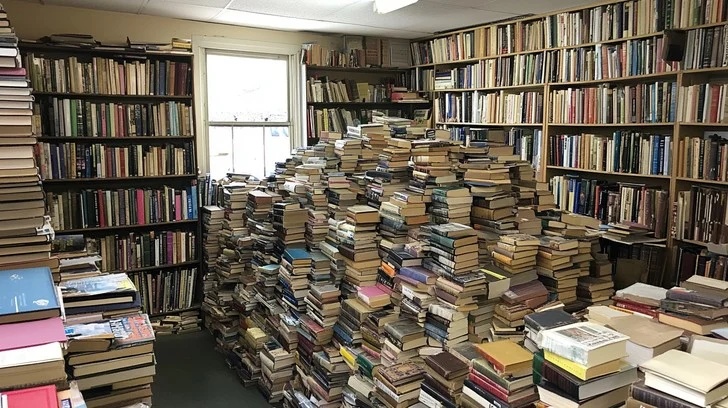
Paz saw literature in the last years of the twentieth century as debased by advertising, instantaneous communication, intellectual inertia, overall mediocrity, extensively hyped bestsellers ("merchandise," he called them), and a "faceless, soulless, and directionless economic process." These essays are full of passionate fervor. "Earning money is a legitimate activity, and so is producing books for the 'mass public'; but a literature dies and a society becomes decadent when the principal aim of publishers is to manufacture best-sellers and works for popular entertainment and consumption…. Endurance, that attribute of perfection, yields its place to quick consumption." Paz was heartened by the rise of small independent publishing houses, which, he wrote, could be "compared to the creation of antibodies to defend an organism."

A committed humanist, Paz was a spokesperson for the essent ial place of the humanities in society. For him, poetry—he was thinking especially of the classical world—used to be "an initiation into adult life and its two great facets: action and contemplation." Poetry "helped us to know what the passions were, and hence to know ourselves … in short, all the complexity of the human soul."
He sneered at the new kind of criticism, often called "deconstructionism," which claims that "the text does not really say what it says" and that the job of the critic is to reveal what the author, unknown even to himself, was really saying. Readers must learn again, he wrote, "to read a poem as a poetic text and not as some social or psychoanalytic document." He wasn't too keen on poetry workshops either, which, he thought, "have done more harm than good."

In the book's final essay, Paz again criticized the capitalist market for being "blind and deaf" to literature. "Its censorship is not ideological: it has no ideas. It knows all about prices but nothing about values…. Abundance has not made Europeans or North Americans more kindhearted, or wiser, or happier." He called for a radical and more human reform of liberal capitalist society, one based on three cardinal words of modern democracy: liberty, equality and fraternity.
Paz was on fire in this final essay. (Then again, was he ever not on fire?) "Between revolution and religion, poetry is the other voice," he proclaimed. "Its voice is other because it is the voice of the passions and of visions…. All poets, if they are really poets, hear the other voice. It is their own, someone else's, no one else's, no one's and everyone's … psychic knowledge buried in the most private depths of their being. A mania, in other words, a sacred fury, an enthusiasm, a transport."
To some, this will sound like gobbledygook, but if one reads Paz slowly and carefully, he makes beautiful sense. And poses a crucial question: in the face of an economic system that is stupid, wasteful and suicidal, where the only goal seems to turn citizens into consumers, what can the function of poetry be? His answer: to remind us of "certain buried realities, restoring them to life." As a "mirror of the fraternity of the cosmos, the poem is a model of what human society can be. In the face of the destruction of nature, it offers living proof of the brotherhood of the stars and elementary particles, of chemicals and consciousness."
The essays in The Other Voice, ably translated by Helen Lane, were written between 1976 and 1989. They're as vital today as they were back then. Readers might want to check out my other Lokkal articles on Paz's work:
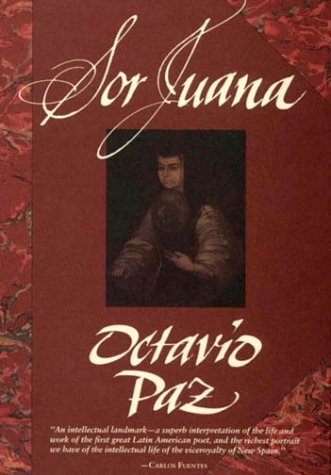
The "Tenth Muse" of Mexico: Sor Juana Inés de la Cruz (April 7, 2024)
The "Audacious Beauty" of Sor Juana's Poetry (April 14, 2024)
Octavio Paz: A Resounding Yes to Life (April 6, 2025)
 **************
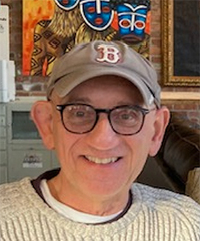
Philip Gambone, a retired high school English teacher, also taught creative and expository writing at Harvard for twenty-eight years. For over a decade, his book reviews appeared regularly in The New York Times. Phil is the author of seven books. His memoir, As Far As I Can Tell: Finding My Father in World War II, was named one of the Best Books of 2020 by the Boston Globe. His new collection of short stories, Zigzag, was published last year by Rattling Good Yarns Press. His books are available through Amazon, Aurora Bookstore, and at "Tesoros," the bookshop at the Biblioteca.
**************
*****
Please contribute to Lokkal,
SMA's online collective:
 ***
***
Discover Lokkal: Mission

Visit SMA's Social Network
Contact / Contactar