Biblioteca Palafoxiana
Español
June 14, 2026
by Philip Gambone
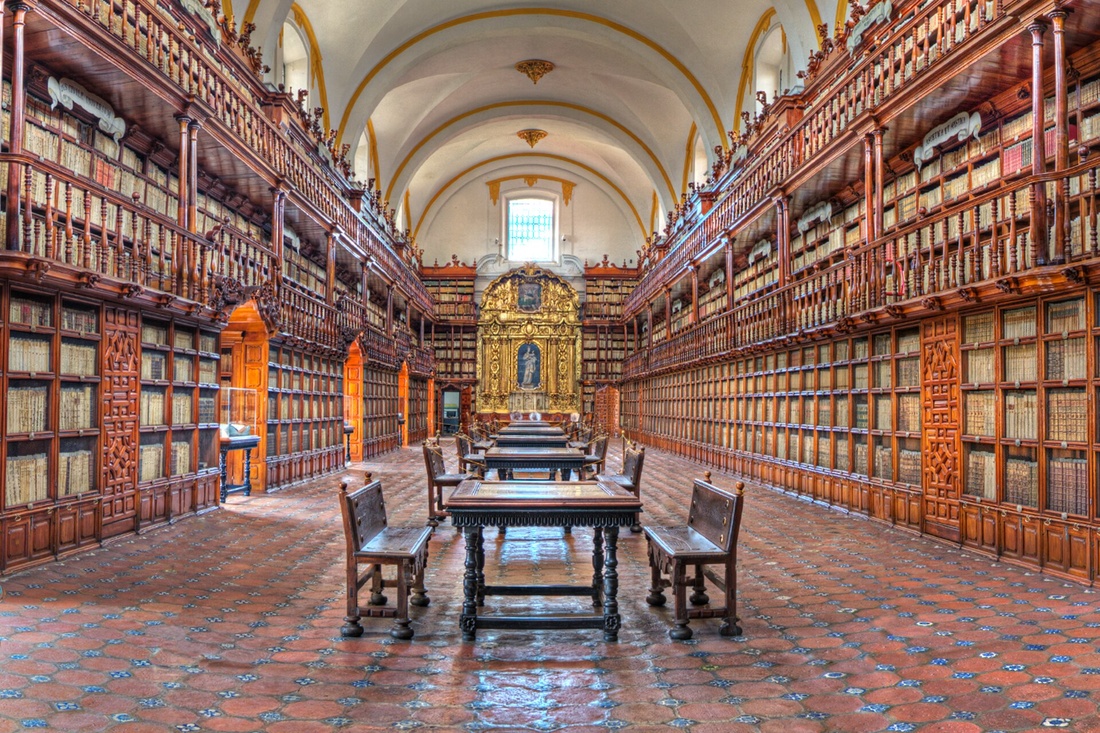
On a recent trip to Puebla, I visited the Biblioteca Palafoxiana. Founded in 1646, it is the oldest public library in the Americas. Among the 45,000 volumes shelved in this elegant and stately study center are a number of books printed in Mexico during the earliest days of Spanish colonial rule. As Marina Garone Gravier writes in her impeccably researched and interesting monograph, Libros e imprenta en México en el siglo XVI, the Palafoxiana and similar colonial libraries "offer eloquent examples of the wealth of documents in Mexico in the 16th century."
In fact, the sixteenth-century conquest of Mexico was accomplished not only through weapons but also through the printed word. Along with firearms, printing was the essential element in the political control of Nueva España. "The book," notes Garone, "was an atrium of indoctrination … a precious jewel of authorities and rulers."

Marina Garone Gavier
*
Administering the wealth of the new lands and the conversion of the natives to Catholicism necessitated a huge organizational apparatus that called for the monitoring of writing, printing, illustration and cartography. The vast territories of the New World needed to be "protected" from any religious departure in order to guarantee not only doctrinal purity but also loyalty to the Crown. Books—first printed in Europe and soon afterwards in Mexico—began to appear in Nueva España. It is estimated that during the entirety of Spanish colonial rule, 12,000 works were published in Mexico alone, including scientific, literary, religious, and legal publications.
Printed documents, says Garone, a research scholar at UNAM, served many ends. They dictated norms of conduct, religious practices, ways of participating in the rituals of life and death, how to address power groups, and how to function within the economic, cultural and social worlds. These tomes were "zealously scrutinized" in order to make sure nothing that went against the teachings of the Church entered Mexico.
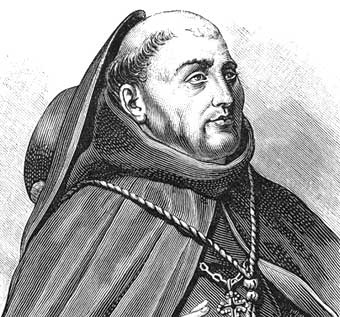
Bishop Juan de Zumaárraga
*
At first, books were imported into Mexico. Juan Cromberger, a printer from Seville, was given the monopoly to export these books. By the 1530s, the first bishop of Mexico, Juan de Zumárraga, convinced Cromberger to set up a printing operation in Mexico City. In turn, Cromberger, who never actually set foot in Mexico, appointed an Italian printer, Giovanni Paoli, better known as Juan Pablos, to open the press. In 1539, Juan Pablos produced the first book published in the New World, a work of religious doctrine entitled Escala Espiritual. Other printing shops soon followed.
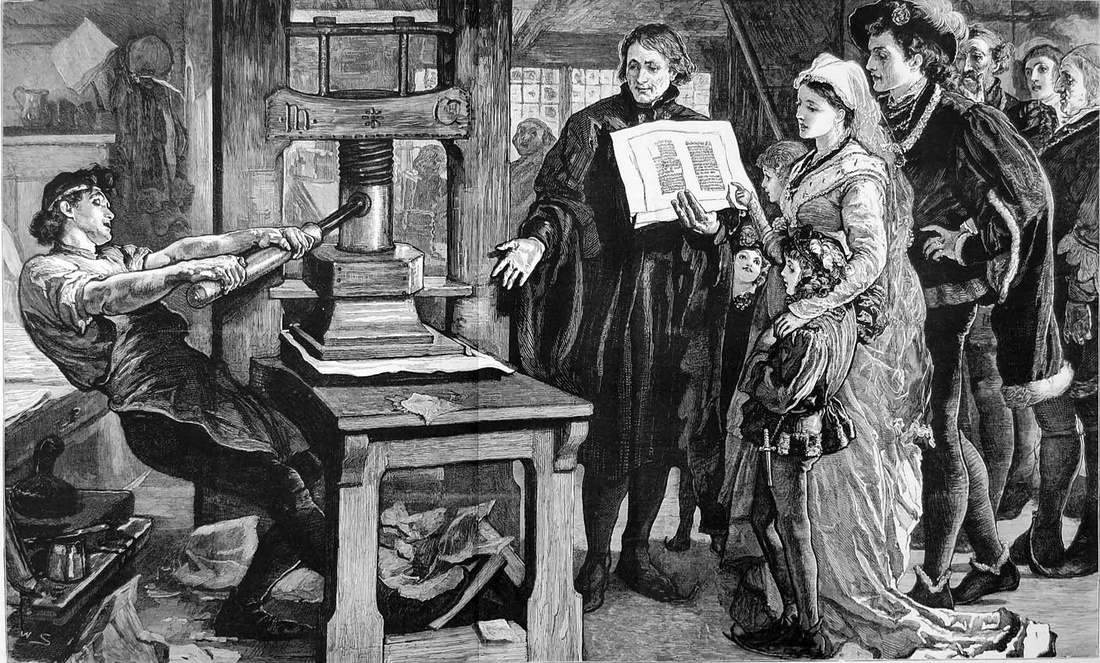
Juan Pablos, first printer in the Americas
*
Although no actual workshops or printing materials survive from the 16th century, we know from various inventories and other documents how these workshops were set up. They were equipped with movable type (gothic letters at first), engravings (a large collection of etchings, mostly woodcuts), paper (imported from Europe, especially France and Italy) and ink. The printing press itself was the most expensive piece of equipment and was usually kept for a long time, recycled from generation to generation. This helps to explain the "aesthetic conservatism," Garone says, of these early Mexican printed works.
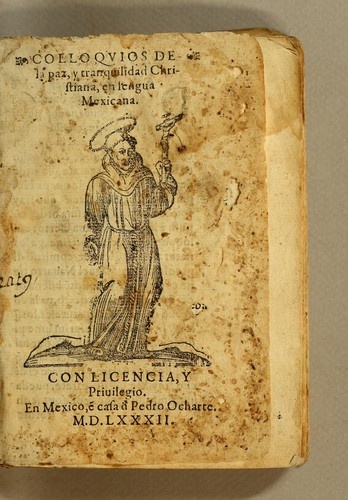
Book printed by Pedro de Ocharte (1582)
*
One interesting fact that Garone discusses is the presence of female as well as male book printers. Eventually, Indigenous people also worked in the early Mexican printing houses. This was especially important as books in native Mexican languages—Nahuatl, Purépecha, Otomi, Mixtec, Zapotec, Huastec, Chuchón, and Tzotzxil—began to appear. These Indigenous printing assistants learned how to write in their native language using the Latin alphabet. They also became adept at different styles of calligraphy and text illumination. "The chronicles of the time," Garone writes, "agree in noting the great ease and capacity that the Indigenous people had in reproducing diverse types and modes of writing." We know of one Indigenous man, Diego Adriano, who was a great Latinist and had the ability to typeset in any language.
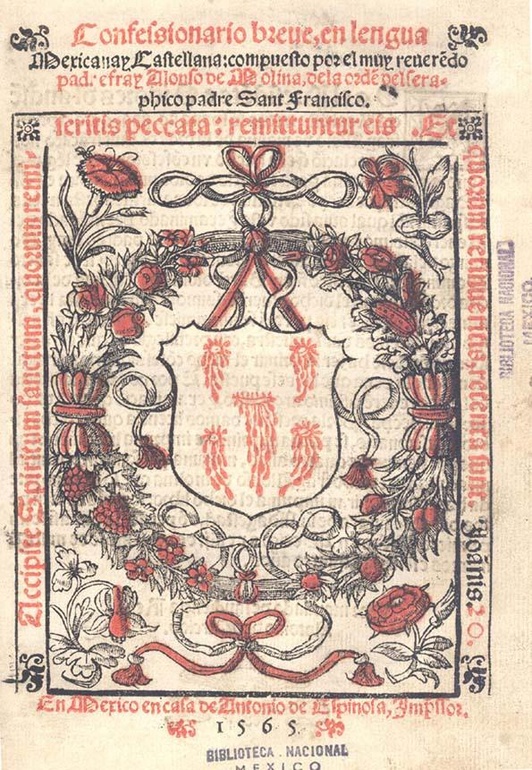
Confesionario breve (1565)
*
Books in Indigenous languages were, for the most part, of two kinds: those of a linguistic nature (dictionaries, vocabularies, grammars) and religious tracts—catechisms, collections of sermons, prayer books and lives of the saints—all used in the evangelization of the natives. In the bilingual Confesionario breve (1565), two languages, Nahuatl and Castillian, appear in columns of the same size, both in Gothic type, "so that neither language predominates or stands out over the other, typographically speaking," writes Garone.
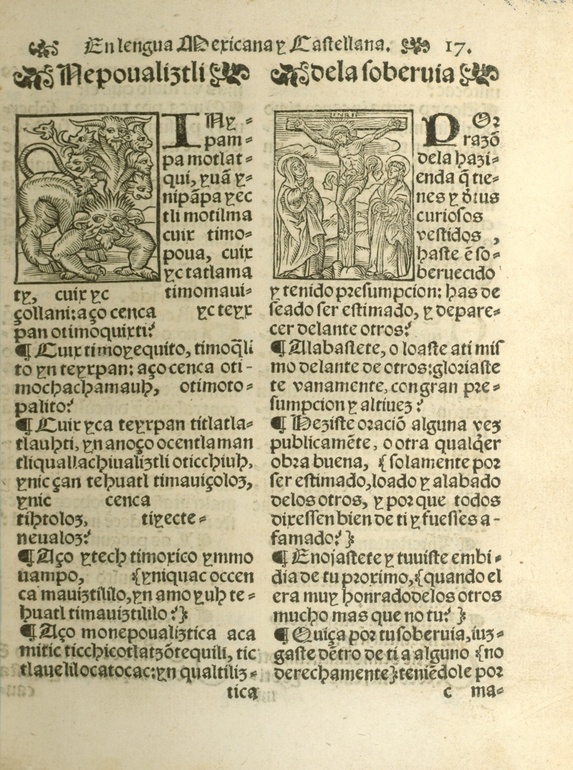
Bi-lingual page in Nahuatl and Spanish
*
Sixteenth-century Mexican printers had to follow strict procedures for pre-printing review, quality of printing, and post-printing control. Like writers, they were subject to accusations of apostasy. The name of Pedro Ocharte (ca. 1532-1592) comes down to us as one of the first Mexican printers brought before the Inquisition. He was prosecuted for printing a summary of the Virgin of the Rosary that was considered heretical. Later, one of his competitors in the type-founding trade also accused him of being—horror of horrors!—a Lutheran. In 1572, Ocharte, who had produced "works of breathtaking beauty and enormous cultural and linguist value," was imprisoned. When he died, his widow, María de Sansoric, took over his printing operation.
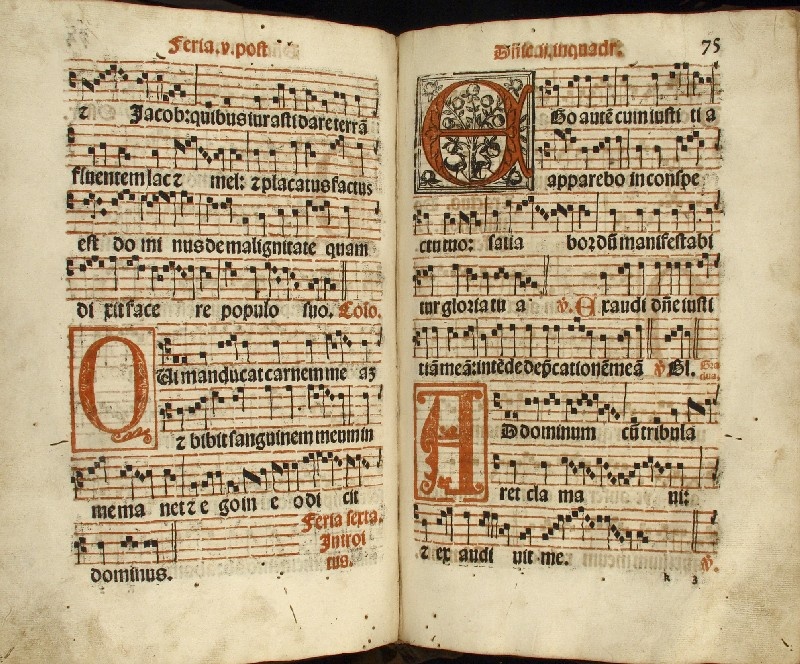
Pedro de Ocharte - Graduale Dominicale (1576)
*
Libros e imprenta en México en el siglo XVI includes a discussion of early Mexican bookbinding (encuadernación), which was the responsibility of the book’s owner, not the producer. Covered in cloth, leather, or parchment, books often sported luxurious finishes and were adorned with elegant metal corner pieces called cantoneras. Garone also discusses the great number of illustrations in some sixteenth-century Mexican books. One, Doctrina cristiana en la lengua guasteca (1571), featured 70 different grabados (etchings or woodcuts).
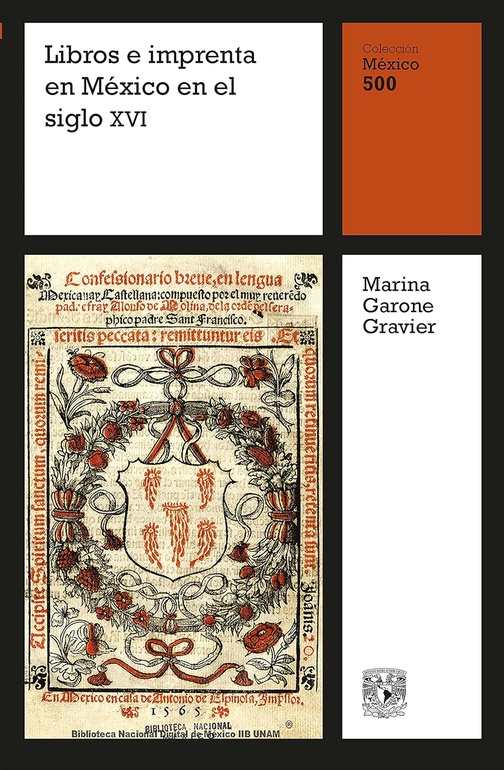
Libros e imprenta en México en el siglo XVI
*
For those of us who hail from Canada and the United States, it is interesting and humbling to note that the first book printed in British North America, The Bay Psalm Book (1640), was published a century after the first book printed in Mexico. Garone’s little study (for those with a modest reading knowledge of Spanish, it’s not too difficult to get through its 105 pages) makes for very informative and interesting reading. Mexico’s long literary culture, which of course pre-dates the Spanish conquest, is a subject of endless fascination.
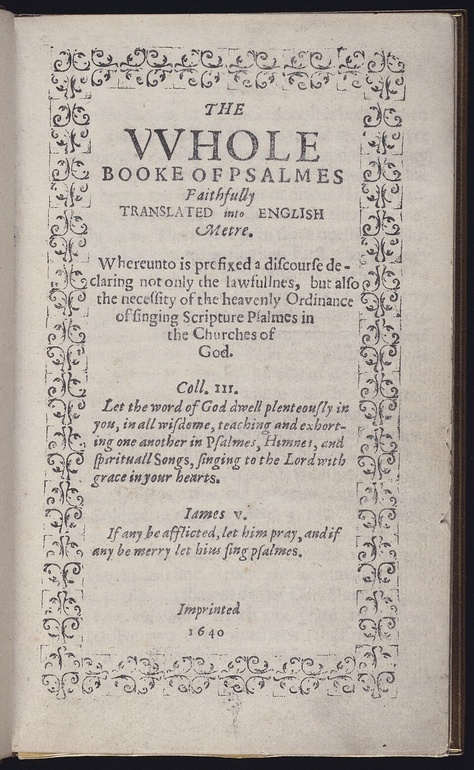
Bay Psalm Book (1640)
**************

Philip Gambone, a retired high school English teacher, also taught creative and expository writing at Harvard for twenty-eight years. For over a decade, his book reviews appeared regularly in The New York Times. Phil is the author of seven books. His memoir, As Far As I Can Tell: Finding My Father in World War II, was named one of the Best Books of 2020 by the Boston Globe. His new collection of short stories, Zigzag, was published last year by Rattling Good Yarns Press. His books are available through Amazon, Aurora Bookstore, and at "Tesoros," the bookshop at the Biblioteca.
**************
*****
Please contribute to Lokkal,
SMA's online collective:
 ***
***
Discover Lokkal: Mission

Visit SMA's Social Network
Contact / Contactar