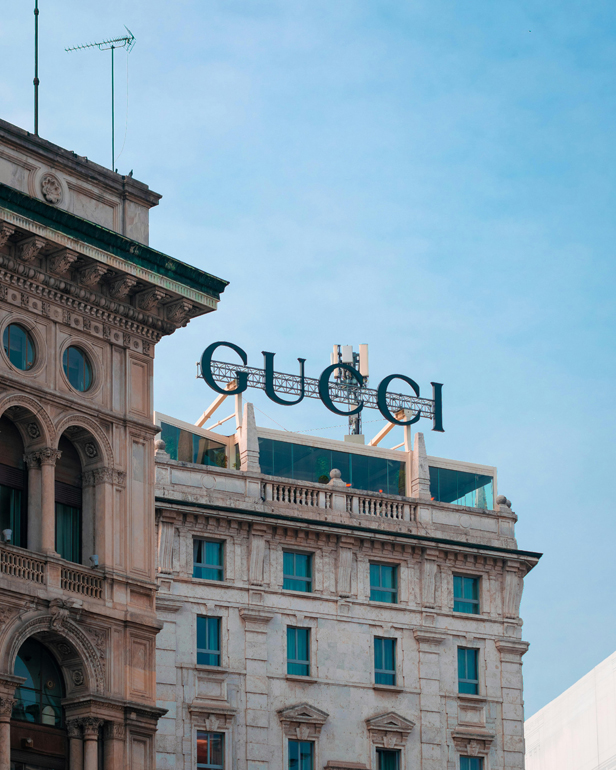
Photo by Daniyar Aliaskharov on Unsplash
Español
June 28, 2026
by Aaron S. Reisfield
I wrote a trilogy of books called The Perfume of Life. The excerpt below is the last section. It's how the books end. But let me briefly set the scene: there are brickmakers in Mexico who bake molded forms from dirts and organic matter in kilns. On account that wood fuel is often in short supply, they are forced to creatively come up with substitute combustibles. Tires, for example, are known to impart a reddish hue to the bricks. Sometimes they will even burn refuse from garbage trucks. And on a certain occasion, they were driven to burn a lot of commercial perfumes.
*****
A crew of ladrilleros [brickmakers] is at it again, fanning the flames, as it were, of the unstated agenda borne out by the quema [fire].
"Of perfumes in Nature, early intervention involved their interception, then eventually their extractive separation, and then, to secure human supremacy by way of chemistry, the extension of separative conventions in favor of conversions and inventions," Saffron would explain.
And now, this smoke disperses as if to display domination with a demonstration of combustive oxidation.
"She stares, and stares, into the embers, and remembers," Licorice would recite.
Into the controlled burn, box by box is introduced, flacon by flacon is tossed. Classic and floral, woody and chypre, citrus and Oriental, mass-marketed and niche. One after another, the perfumes are thrown into the horno. Any foils and paper wrappings are first to combust, then the labels and cardboard. Then the contained flammable contents of each flask become superheated, under pressure owing to the tight-fitting stopper, which eventually yields to the building energy with a violent burst. The fumes darken to black and fan out.
The desecration of Creation is an ongoing process, and it seems like each deposit of perfume into the oven marks its progress. As each bottle is cast inside, Earth becomes a share less bearable for those who take up residence here, a little less like home. Generosity yields some to animus, caring goes down as abuse goes up, and ugliness gains some ground on beauty. Native riches fall further behind blight, as Nature is made a grade more degraded, and Life becomes a shade more negated.
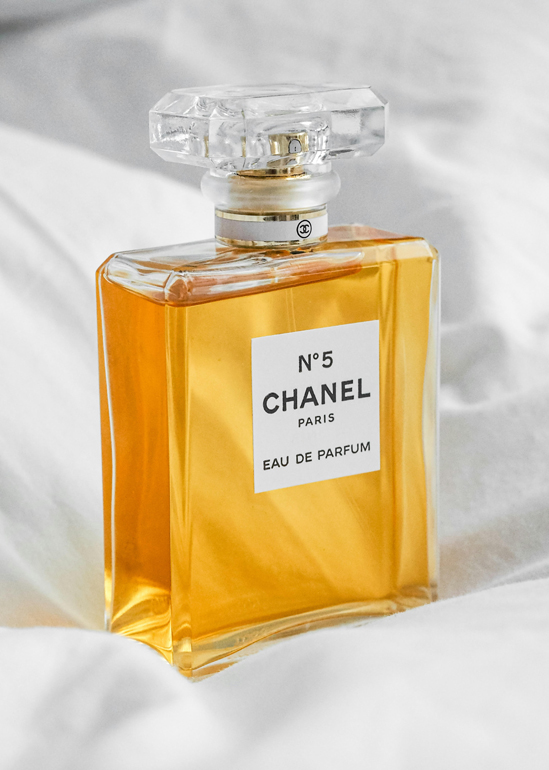
Photo by Laura Chouette on Unsplash
*
As L'Heure Bleue by Guerlain (1912) is pitched into the fire, specific practical human skills gained from experience are replaced by order power and predictability—with L'Air du Temps by Nina Ricci (1948), street smarts and playful thought are replaced by theoretical knowledge and power thought—with Youth Dew by Estée Lauder (1953), frogs forests spices dancing prairies weeds and crying are replaced by databases and disembedded computation and symbolic representations of structures and relationships—with Pour Homme by Paco Rabanne (1973), dimensional evolving communities in unhurried flux are replaced by those intentional idealized monotonous and situation-free—with Polo by Ralph Lauren (1978), fascination with the pollinating mechanism of a salvia blossom is replaced by fascination with the birth of stars in our galaxy—with Drakkar Noir by Guy Laroche (1982), the elaborate variety of things private singular contingent and emergent is replaced by coordinated common denominators and quantifiable samples and derivatives—with Coco by Chanel (1984), flowers cats butterflies and breasts are replaced by models quarks numbers quasars and photos of breasts—with Cool Water by Davidoff (1988), knowing a little about a lot is replaced by knowing more and more about less and less—with Red Door by Elizabeth Arden (1989), feelings and adaptable practices of particular craftspeople and artisans are replaced by mechanized account-keeping time-keeping and space-measuring—with White Diamonds by Elizabeth Taylor (1991), whatever is irreplaceable is (nevertheless) ticketed for replacement by whatever is interchangeable—with CK One by Calvin Klein (1994), things terrestrial organic unforeseeable and non-repeatable are replaced by things virtual prosthetic consummate managed and mediated—with Happy by Clinique (1997), finders and collectors of generated asymmetric things are replaced by fabricators and manipulators of extrinsic flawless things—with J'Adore by Dior (1999), foresight and feedback and natural limits and slower paces are replaced by means that are bigger and faster and context-free and farther away—with Terre d'Hermès by Hermès (2006), gaining and losing ground in conflict are replaced by genocide and biocide—with Guilty by Gucci (2010), gardens laughter snakes feasts roots cacti feathers and singing and planting and harvesting are replaced by manifestos hyperlinks postulates demographics webcams franchises algorithms guidelines and administering and producing and blogging—with Acqua di Giò Profumo by Giorgio Armani (2015), the aimlessly intricate splendor of Earthly Creation, undeniably yet elusively vital and alive, is replaced by mathematics imagination connectivity information and the proud prosecution of purpose-driven missions.
**************
Aaron S. Reisfield resides in San Miguel de Allende, Mexico, where his endeavors involve the creative arts and perfume. Previously, he has collected plants throughout montane Mexico and served as a Visiting Scholar in Botany at The University of Texas in Austin. He has published a book series, The Perfume of Life trilogy, premised on the idea that the story of Life on Earth is best related in the language of molecules—the language of perfume. He founded Avant Garde Aromatica, a program of workshops, salons, and guided studies in the poetry and science of plant perfumes. He distills plants for their fragrant oils and waters, and is producing the line of artisanal extracts called Impossible Oils and Waters.
**************
*****
Please contribute to Lokkal,
SMA's online collective:
 ***
***
Discover Lokkal: Mission

Visit SMA's Social Network
Contact / Contactar