July 26, 2026
by Dr. David Fialkoff, Editor / Publisher
My parents married late. When I was born, three of my grandparents were already deceased. I did get to know my mother's mother, Buppy. Also, I at least remember seeing my great-grandmother, a frail white-haired old woman, as old as the hills, my mother's mother's mother, Little Bup. Buppy and Little Bup eached lived for 100 years. Mom made it to 90.
Grandmom, Buppy as we called her, lived locally and we visited regularly, her with us or us with her. Of Polish descent, on her visits to us when she cooked and I asked what was for dinner she would reply, "Guvnah svatka." Many years later a classmate of mine at naturopathic college who spoke Polish told me that the phrase meant "Sweet shit."
Shortly after that revelation, when I was already in my late twenties, when Buppy was on her deathbed, I told her, "Buppy, I found out what guvnah svatka means." At this, a mischievous smile spread across her face. Then we said what would be our final goodbye.
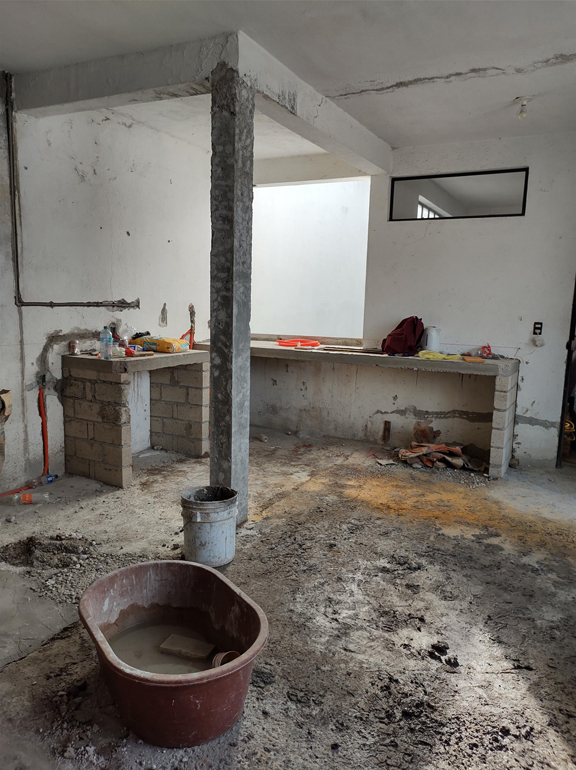
At the start of this month I moved to Manantial in colonial Allende into the home of my dear friend Veronica. Last weekend Vero left San Miguel on her way back to live in her native Chile. Veronica, with whom I was in a romantic relationship for seven years (our couplehood ending four years ago) is well aware that I have mother issues. A practitioner of Family Constellations, she also understands that such psycho-spiritual difficulties are passed down generationally.
Fully 80 years ago science confirmed this type of subtle inheritance, discovering cellular memory, the phenomenon by which the offspring of a mouse who learns to run a maze while they are in utero, learn to run the maze more rapidly than other mice. Also, people whose ancestors survived a famine are themselves metabolically better at holding onto calories, and so more prone to obesity.
I am prone to insomnia. I wake up, and, if my mind gets going, I cannot fall back asleep. I don't keep a phone or any other electrical device near my bed, so when I wake up I never know what hour it is.
Aware of this tendency to sleeplessness, when I wake in the middle of the night I focus on my last dream so as not to activate the thinking part of my brain, always hyperactive, because then it's off to the races.
Last night I woke up and couldn't remember my dream. As I lay in bed for 20 minutes, futilely trying to quiet down my intellect, I heard sounds of the approaching day: a distant cock crowing and the not-so-distant sound of some traffic rumbling along the Libramiento.
Relieved to so learn that it wasn't 3:00am, resigned that a return to dreamland was denied, I got out of bed and discovered that it was in fact 5:10am. Then I did what I always do on waking whether before or after daybreak: I washed my face, made a cup of tea and sat down to write.
Towards this end, I was comforted again because in those meditative 20 minutes of lying in bed avoiding thoughts, before consciousness fully returned, when I had already acknowledged the impossibility of sleep, but had not yet swung my feet out of bed, there had dawned on me a theme about which to write, an insight to develop.
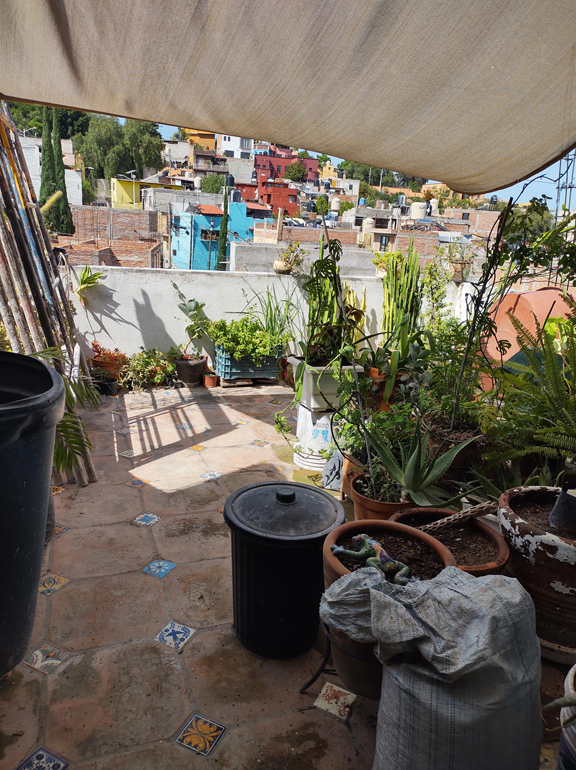
Grandma was a very strong woman. Her husband, my mother's father, had a "nervous breakdown" and Buppy had to take up the slack. It was as if the horse had gone lame and she, iron-willed, had to strap on the harness and herself pull the plow through the field.
(I remember once, as a very young boy, visiting where she worked sorting shade tobacco. It was a very large open room with long, high tables, counters, containing widely spaced work stations with people, my grandmother being one of them, sitting in front of low mounds of tobacco leaves such as are used to wrap cigars. I remember her there surrounded by the rich vegetable aroma.)
The insight I woke up with this morning was that my mother had inherited Buppy's hard-working, problem-solving attitude. But the problem was that my mother didn't have to work hard, that she had no real problems to solve.
That all changed when my father had his first stroke, devastating his vision and badly damaging his balance. For nine years Mom and I (she more than I) rather heroically cared for him at home until a second stroke took away his ability to swallow food.
It is unkind, but correct to observe, as I have often, that those nine years brought Mom some perverse relief. Before Dad's stroke she had to look for things to complain about. After his stroke she had things to complain about.
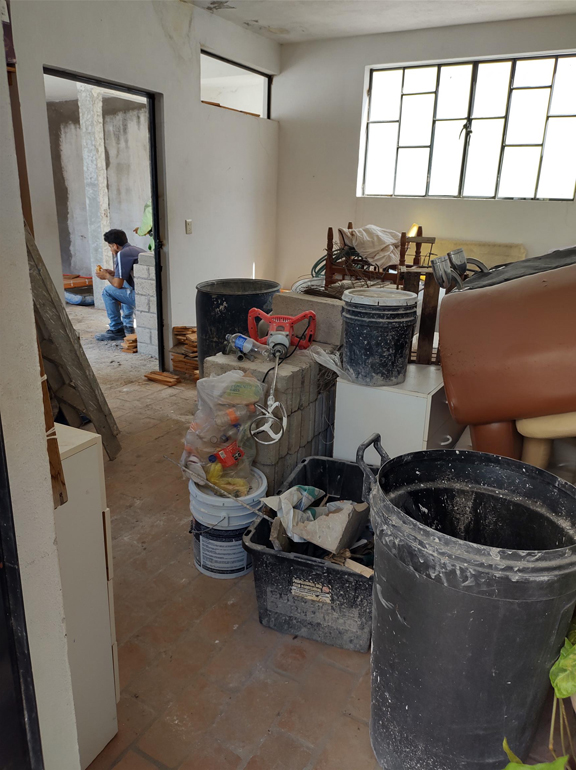
This morning, for the first time I understand my mother's cellular memory, that she was reenacting her mother's crisis mentality. Mom's genetic endowment was seeking expression. She was looking for difficulties; her iron will seeking challenges against which to steel itself.
This morning, for the first time, I understand why Mom wouldn't make things easier on herself; why, among other oddities, she wouldn't wait for me to get Dad out of bed, a process that included changing his wet diapers (at night he wore two) and bed pad (two diapers weren't enough).
Instead, virtually every morning I was awakened by her shouting at him (in their apartment one floor below mine in the Neo-Victorian whose first floor housed my medical practice). Her fury reverberated off the bathroom's tiled surfaces even after I, rushing downstairs half-dressed, arrived to take over.
This deeper understanding of Mom's inherited tendencies, seeing this family constellation, is liberating for me. A higher emotional order has been revealed. It is just as the collective image of an hitherto seemingly random set of stars becomes obvious, a constellation suddenly gelling in, popping out of the nighttime sky, a pattern coming into focus. And, of course, that inheritance is also mine. I am also influenced by that order, that constellation, that pattern, that familial tendency.
I also go around looking for problems. I catastrophize, reading into and feeling badly about things well beyond their real significance. Then, also very unsettling and adding to my discomfort, is the fact that suddenly and without reason I get over that suffering and feel better.
My seemingly random negativity and random recovery is disconcerting. It feels to me, if not quite crazy, then dangerously unstable. The experience is the mental-emotional equivalent of stubbing my toe; even while suffering the terrible pain I know that in a short while it will all be forgotten. Very recently, this all got worse, more acute. I didn't know it then, but it was coming to a head.
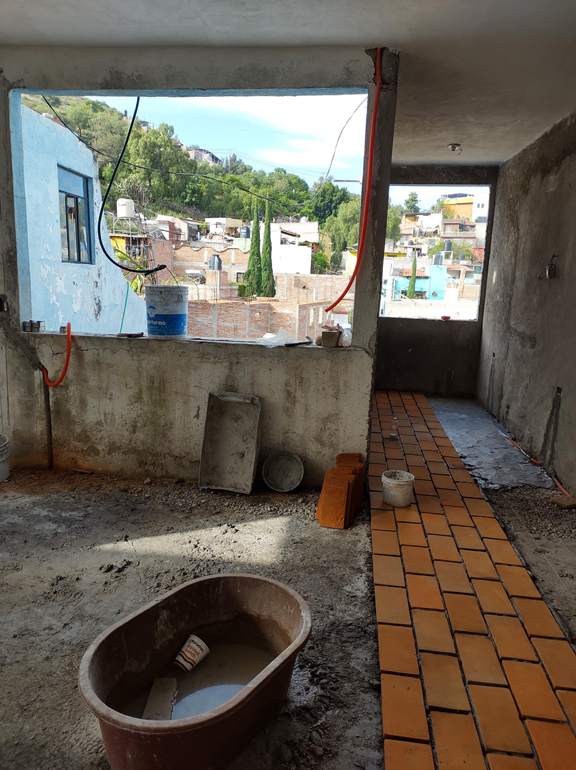
Two mornings ago a worker came down at my request from constructing my third-floor apartment to shave some wood off the first-floor door so that it would close better. He shaved off much more than was necessary, much too much. The whole day I felt terrible that I hadn't stopped him. I saw that he was being excessive, but I had given up agency. (This powerlessness is another subject that needs unpacking.)
The truth, as I see it now, is that no one, except maybe the landlord, will notice. And if the landlord does notice, will he care? We are in Mexico, and these are the people he hired. Yes, I should have done better. And, if I learn from this mistake, next time I will.
Two days ago, catastrophizing about the door, I stubbed my mental-emotional toe. Yesterday I felt better. This morning came the revelation.
In my doctoring career I found that emotions are like the trough and crest of a wave. Of equal amplitudes, to enjoy the heights one must plumb the depths.
It is good to be back in town, here in Manantial, in the thick of things like I was for 13 years (in colonia San Antonio) before moving to distant San Luis Rey two years ago. It is wonderful in many ways to once again jump on my bicycle and conveniently get wherever I'm going, without working up a sweat or driving my car. And with San Miguel Natural (for now, view on a computer or turn your phone sideways, sorry), Club Lokkal and my third-floor apartment all coming into view, even greater goodness is appearing on the horizon.
It remains a work in progress, a multi-layered, life-time project, but better constellating my mother issues (as Veronica always insisted I must) is allowing the world to better mother me.