Aldous Huxley
Español
June 28, 2026
by Philip Gambone
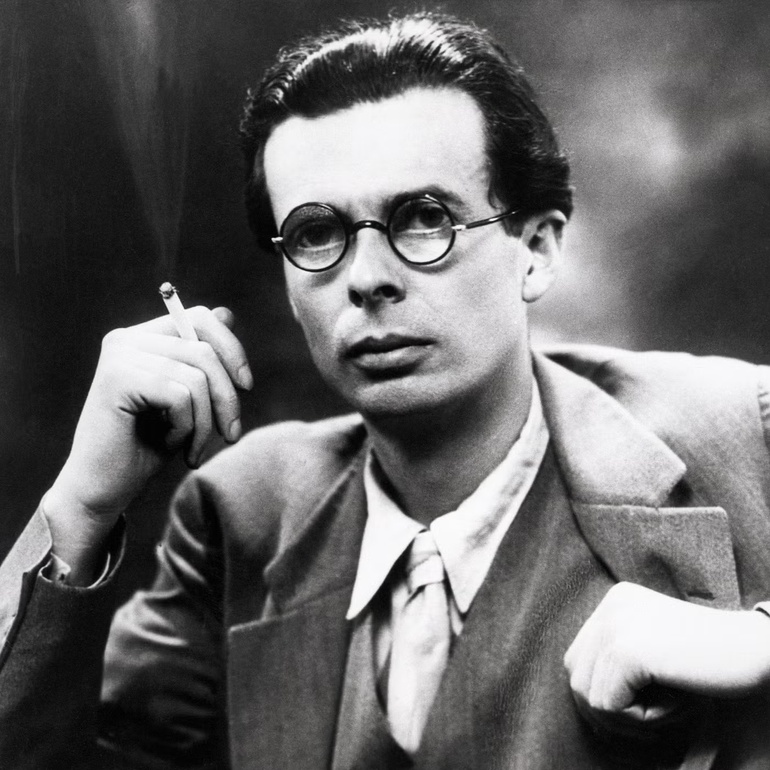
Aldous Huxley (1894-1963) is perhaps best known for his anti-Utopian novel Brave New World. But the prolific Huxley, who published close to fifty books, was a writer of rich and encyclopedic range. For him, being a novelist was not enough, notes Peter Firchow, one of Huxley's many biographers. "What he sought to be was at the same time a philosopher, a critic, a scientist, an economist, a moralist."
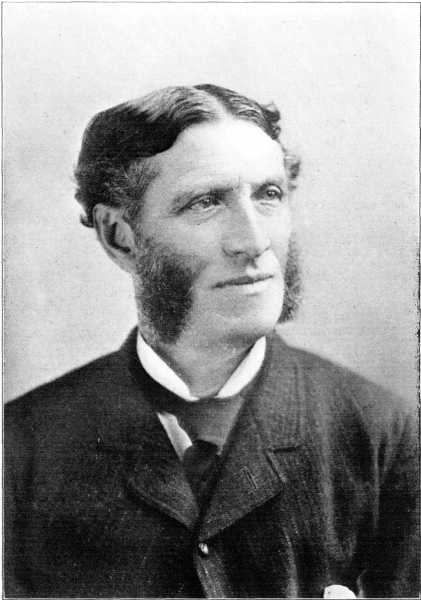
Huxley was born into a pair of renowned British intellectual families. On his mother's side, his grand uncle was the great Victorian poet and literary critic Matthew Arnold; on his father's side, his grandfather was Thomas Huxley, one of the most important scientific writers of his day. Educated at Eton and Oxford, Aldous impressed his friends as "formidably sophisticated" and "dazzling," a young man who had already read everything.
Matthew Arnold
*
After publishing four books of poetry, Huxley turned to writing novels. His early ones were characterized, as Kenneth Clark once put it, by their "bright conversations, in which people said things that would have shocked one's schoolmasters." These were cynical stories that "dripped with irony" and depicted "moral limbos," writes another of Huxley's biographers, Dana Sawyer. By the end of the 1920s, Huxley had emerged as one of the best of the modernists along with Virginia Woolf, James Joyce, D. H. Lawrence and T. S. Eliot. Brave New World (1932) further clinched his reputation.
In January 1933, inspired by his friend D. H. Lawrence, Huxley set off to explore Mexico. He sailed from Liverpool to the West Indies, stopping at Barbados, and then on to Trinidad, Caracas, Colon, Jamaica, British Honduras, and Guatemala. His final stop was Mexico, where his friend Roy Fenton found Huxley to be "quite different from what I expected from reading his books. His attitude seemed to me quite humble at times…. It was as if he were looking for something. How shall I put it? He seemed to be looking for an experience."
First edition book jacket
*
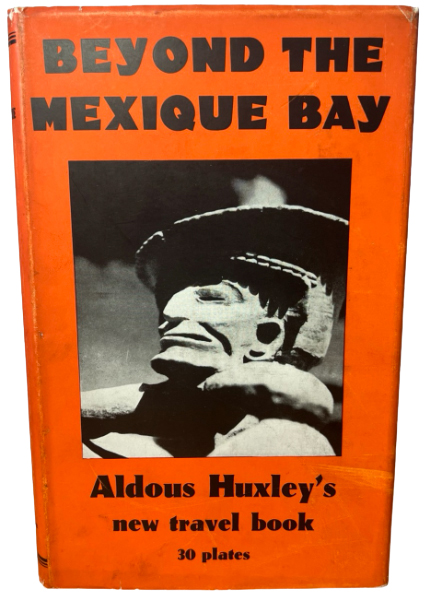
Huxley may very well have found the experience he was looking for in Mexico. His first biographer, Sybille Bedford, said that during his journey, he talked of the "unattainable, of primitive Mexico, wild Mexico." Huxley's visit challenged him to see the world differently and resulted in the publication of his third travel book, Beyond the Mexique Bay (1934).
In the book, Huxley described how—often in "withering heat"—he traveled by car, no mean feat in 1933. One of his vehicles had no horn and no foot-brake. He made another part of the journey by train, riding in "genuinely antique" coaches, where the crowds of passengers with their "vast and innumerable luggage" struck him as "profoundly comic."
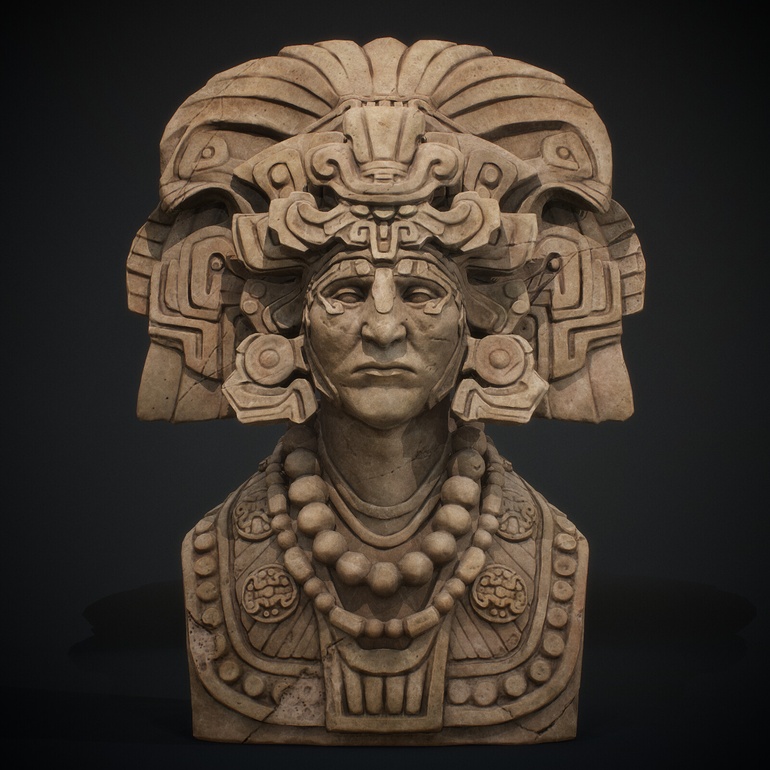
Mayan statue
*
Because he was interested in Mayan civilization, Huxley spent a lot of time visiting the ruins in Guatemala and the Yucatán. He was "left bewildered by the spectacle of so much technical accomplishment displayed by people having such inadequate technical resources." Of Mayan sculpture, he writes, "There is no sex in the art of the Mayas; but what a lot of death!"
Huxley confined himself to the southern part of Mexico. The landscape, with its "excess of tropical light," both fascinated and daunted him. He was "disquieted" by the barrancas (gorges or chasms), which he saw as "horrible gashes in the earth." They were "booby-traps put in your way by some insufferably waggish devil." And the vast hills, bare and utterly dry, were "grandiose emblems of a perfect hopelessness." There was, he thought, "something profoundly horrifying in this immense, indefinite not-thereness of the Mexican scene."
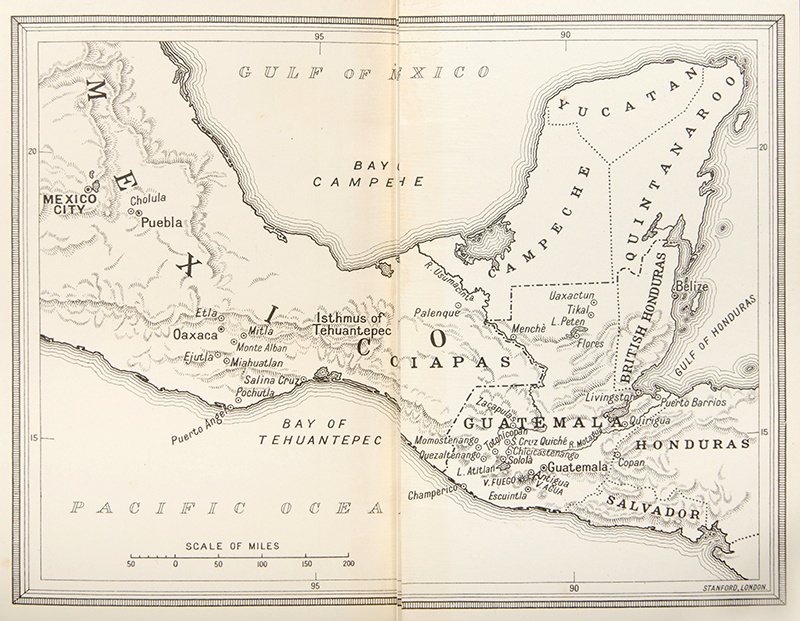
Huxley's Mexique Bay
*
Huxley did not mince words about the unpleasant and uncomfortable aspects of Mexican travel: the hotels were "forbidding"; the villages "dismal." He turned up his nose at the vulgarity of so much so-called art and the general deterioration of "taste." He thought that the "intemperate and hysterical enthusiasms" that tourists lavish on the handicrafts in Oaxaca were overrated. There was, he opined, "no reason for asserting that the pretty little pleasantries of the Mexican Indians are intrinsically significant works of art."
Another critic, Drewey Wayne Gunn, says that Beyond the Mexique Bay was "a travelogue of Huxley's mind." Indeed, Mexico became the canvass upon which Huxley freely developed his thoughts on a host of subjects. About Mexico's Indigenous people, he said that while they are "primitive," he also saw their virtues, especially their "human wholeness." He went on to ask an important question, one that is still relevant today: "Can we evolve a new society which shall combine the virtues of primitives with those of the civilized, but exhibit the vices of neither? How much of what is good in North American civilization can Mexico import and still remain Mexican?"
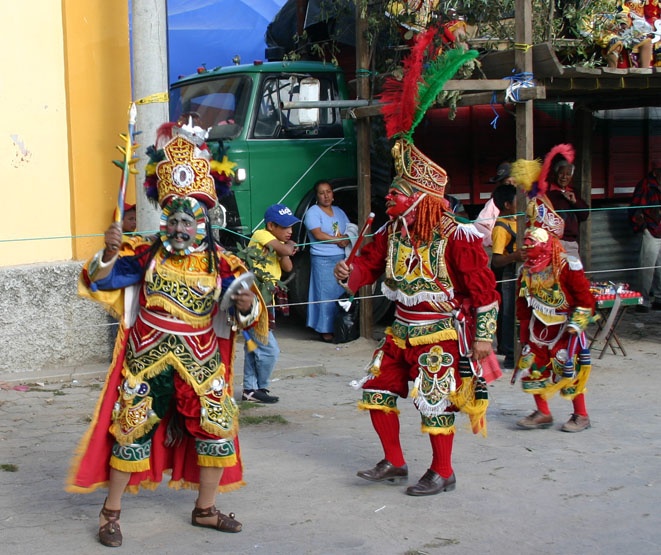
Baile de los Conquistadores
*
The enduring presence of Catholicism in Mexico, especially among the Indians, caught Huxley's attention as well. He deemed Mexican religion an "affair of magic, fetishism, and social activity … an excuse for fiestas." He found "extraordinary" the baile de los conquistadores, a festival during which Indigenous people "exalt the heroism, not of their own people, but of the men who reduced them to peonage, not of those who resisted the tyrants, but of the tyrants themselves."
The worldwide economic depression of the 1930s left Mexico in straitened circumstances. Huxley found that many communities were severely suffering. It was during these years that he began to formulate a philosophy of society rationally planned on equitable principles. Visiting a coffee estate, he noted how we more affluent members of the Western world enjoy a beverage whose existence depends on "a huge reserve of sweatable coloured labor."
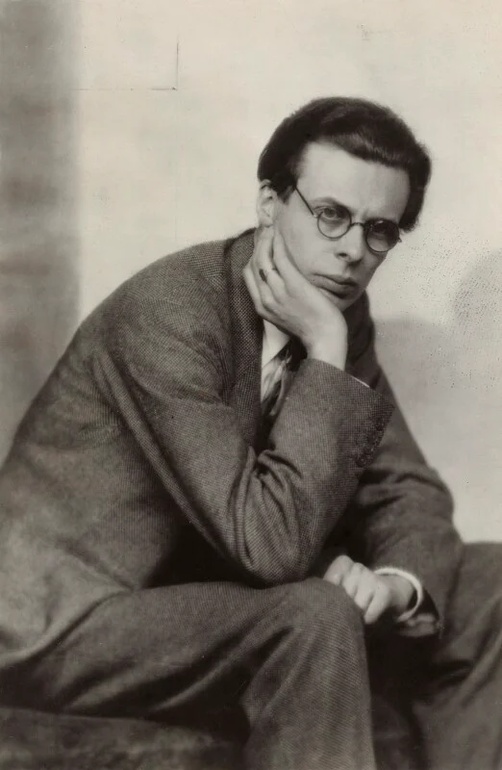
Huxley in 1934
*
Because he was writing during the rise of "mob leaders" like Hitler and Mussolini, Huxley spent a lot of time musing on the nature of nationalism, which he called a "philosophy of unnecessary and artificial hatred." The "exciting distraction" and "political circuses" that Europe's fascist mobsters cooked up was "filling empty heads with flags and verbiage and brass bands and collective hysteria."
On to Puebla with its bright and noisy plaza. Then to Cholula, "fairly bubbling with round domes"; and Mexico City, which Huxley found to be a "desert of urbanism and industrialization." During the weeks he spent there, he felt bad-tempered and concluded that the city, with its hopeless poverty, "was an argument against our present economic system."
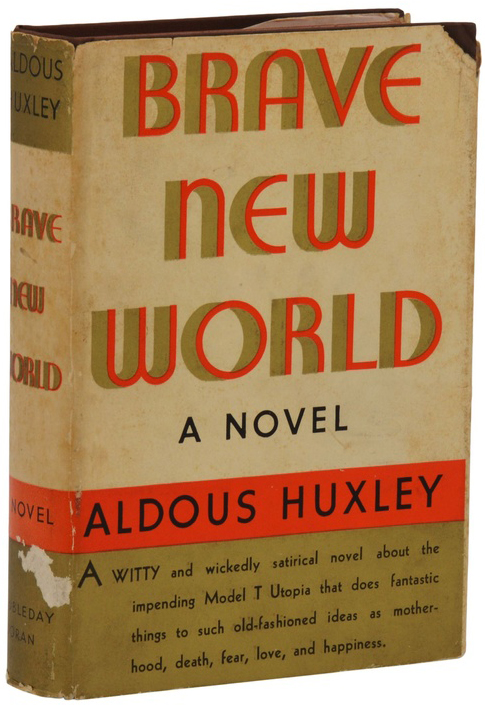
Brave New World (1932)
*
Paul Fussell in his book Abroad: British Literary Traveling Between the Wars, thought that Huxley exhibited "the difficulty experienced by the civilized mind in coming to grips with Mexico." It's certainly true that Mexico often bewildered, and sometimes downright annoyed, Huxley; but what I admire about Beyond the Mexique Bay is his sincere attempt to penetrate a country that continually challenged him culturally, artistically, and spiritually.
On the ship back to England, Huxley reread D. H. Lawrence's Mexican novel, The Plumed Serpent, which now he found an "artistic failure." (See my "DH Lawrence in Mexico" in Lokkal, July 16, 2023.) The return to "primitivism" that Lawrence advocated—"the supremacy and rightness of the blood"—was, Huxley concluded, a delusion. In his next novel, Eyeless in Gaza (1936), he bid farewell to Lawrence's philosophy of "primal crawling energy." There was more to human life than that. "Other ulterior purposes and organizations existed and were not to be ignored," he wrote. Huxley's 1933 visit to Mexico helped him confirm that view.
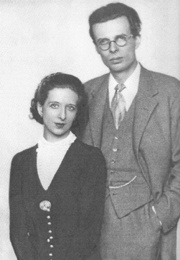
Aldous and Maria Huxley
*
**************
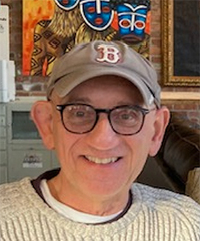
Philip Gambone, a retired high school English teacher, also taught creative and expository writing at Harvard for twenty-eight years. For over a decade, his book reviews appeared regularly in The New York Times. Phil is the author of seven books. His memoir, As Far As I Can Tell: Finding My Father in World War II, was named one of the Best Books of 2020 by the Boston Globe. His new collection of short stories, Zigzag, was published last year by Rattling Good Yarns Press. His books are available through Amazon, Aurora Bookstore, and at "Tesoros," the bookshop at the Biblioteca.
**************
*****
Please contribute to Lokkal,
SMA's online collective:
 ***
***
Discover Lokkal: Mission

Visit SMA's Social Network
Contact / Contactar