 Español
January 11, 2026
by Dr. David Fialkoff, Editor / Publisher
CiBanco made it easy to send money from the US. The drug cartels sent a lot. Trump put an end to that. I acted at the first sign of trouble, but I didn't go far enough.
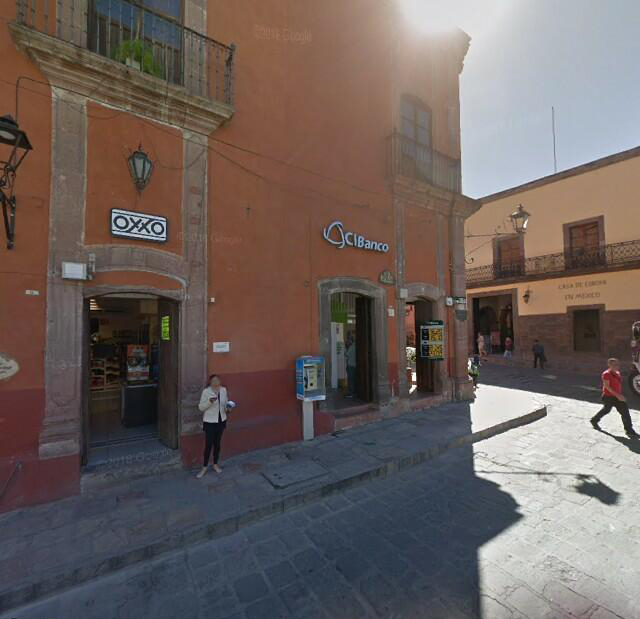
As soon as the US sanctioned CiBanco, last summer, I went to the bank in el Centro to withdraw all of my money. But I couldn't, at least not all at once. Elizabeth, the always helpful assistant there, explained to me that lacking paper checks, the maximum I could withdraw per day was $50,000. Filling out the paperwork to do that, she also assured me that the bank was secure.
I wouldn't have needed that many days to have withdrawn all my money. The trips to el Centro would have been few. And in retrospect, it would have been easy enough to have started a new account at another bank, instead of keeping my "fortune" under my mattress. But, as ever, it seemed easier to do nothing... at least in the short run.
I was out of the country for a month when CiBanco failed last November. Up in New Orleans visiting my daughter, the news came to me in a roundabout way. I was on the phone with a new advertiser, the head of an NGO, making arrangements to be paid for some publicity through a bank transfer. When I mentioned CiBanco, he, in a therapeutic tone, broke the bad news, "Dave, I'm sorry to tell you this, but CiBanco closed." Forgetting all professional decorum, my response was a one word expletive beginning with an f.
Regaining my composure, I reassured this gentle man that we'd work out a method of payment. Hanging up, completely ignorant of the Mexican banking system, I had a few anxious moments. Then, I thought to go on the Civil List. (Make fun of it all you want, it's there when you need it.) There, in several threads (organization is its strongest point) I learned that my money was insured.
On returning to San Miguel, I was in no great rush to arrange my banking situation: a) normally very busy, I was even more so, having just gotten back from a month away; b) I still had a lot of pesos under my bed, a good part of the withdrawn $50,000; c) fanatic about my personal autonomy, I resent having to do anything that I don't want to do; d) I don't always do what is good for me...
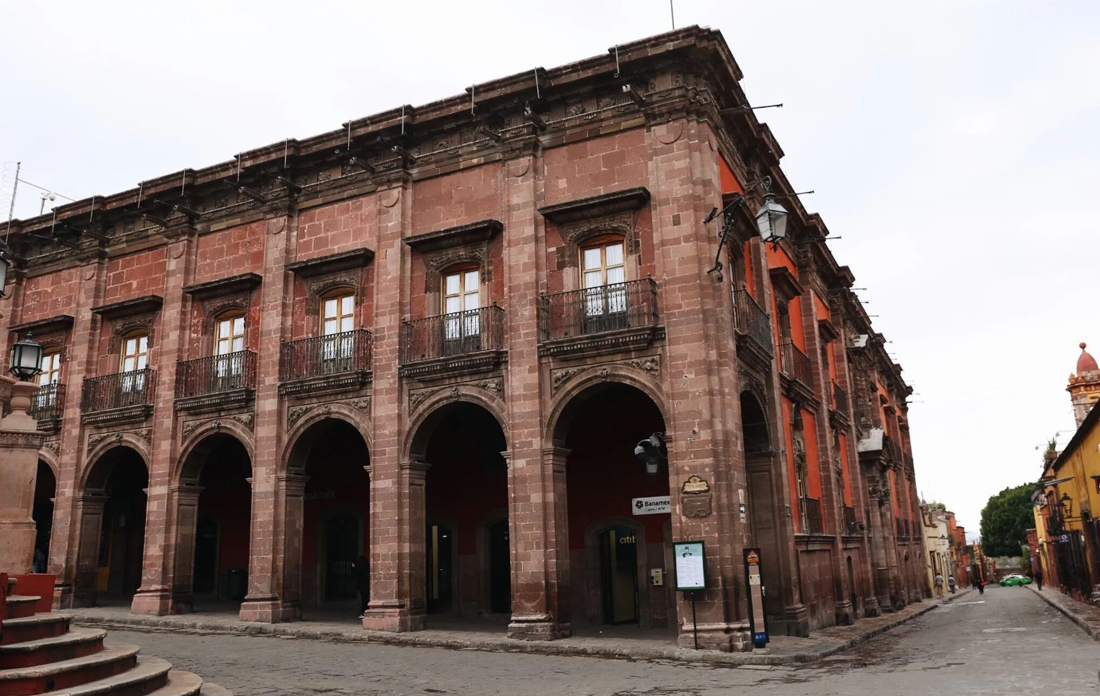
Still, nine weeks ago, I went into BanaMex in the Jardín and opened, or tried to open, an account. With a new account, Elizabeth, whom I had visited since my return, could help me navigate the government website to transfer my money that had been in CiBanco. Then, I would be able to continue doing business, including collecting money due from the NGO chief and other clients.
BanaMex told me that due to the high number of new accounts being opened by former customers of CiBanco, my account would not be ready for 2-3 weeks. Here, now, nine weeks later I'm still waiting.
I've spoken with the account executive, who forwarded my call to the branch manager. Then, I went and met with the manager in person. Together with the account executive we refiled some forms. Everyone has been nice enough, but they tell me that there is nothing that they can do.
I'm sure that many of you have a lovely relationship with BanaMex. But my paperwork along with that of four other accounts, is in some bureaucratic limbo at the bank's main office in Mexico City. Ten days ago the manager assured me that the problem would be resolved in two weeks. But, I know it might drag on for another nine weeks... or even nine months.
"Estamos en México" (We're in Mexico), and in Mexico you cannot be in a pinchehurry for anything. But I was as my pesos were growing short.
I have a debit card linked to my American bank that could get me pesos at any ATM, but in 14 years living here I've never done that. Someone told me, "If you're an expat and you are making any money here in Mexico, then you're doing alright." The very few times I've needed money sent from the US, I did it through CiBanco.
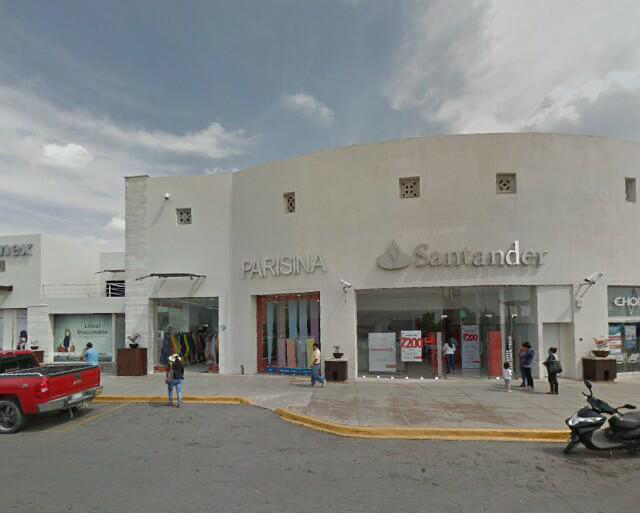
Still, with my pesos disappearing, this morning, Tuesday, in a burst of creativity that even Warren Buffet might admire, taking the bull by the horns, I got in my car and drove up to the mall to open an account at Santander. I really wanted a bank with a full-service office in el Centro, but I learned that Santander, like the former CiBanco, unlike all other banks that I checked, allows transfers from US banks.
Walking in, I identified myself to the machine at the door as "Aún no un cliente" (Not yet a customer) pressed the button and took my ticket. There were ten people waiting. I had brought a notebook to start writing this week's article, but as it was, I sat down next to a woman I recognized and struck up a conversation.
She, also a former CiBanco customer, had also come to open an account. (I wasn't the only procrastinator.) It was a little disconcerted when she complained that she had been waiting there for an hour and a half. I told her about my experience with BanaMex. She said, "I bet you didn't wait an hour and a half at Banamex." "No," I replied, "But I'd rather wait for 90 minutes and get an account than wait for 20 minutes and not get an account."
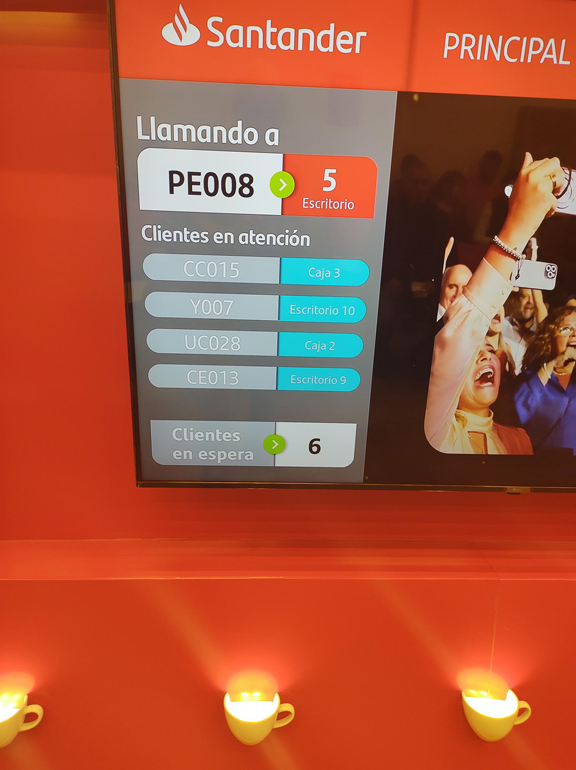
She complained also to a passing bank attendant, who came back with a couple of very short forms which we were to fill out and hand in when it was our turn. When I asked the attendant if the fact that my ticket was the next in sequence to my acquaintance's: UE111, UE112, meant that I would be called right after her, I was told that everyone has to wait an hour and a half.
My acquaintance's number came up on the screen, and she went off to station #9. I took out my notebook and began writing, always keeping one eye on the numbers on the screen. Those numbers, on the tickets and on the screen, were preceded by letters: PE, CC, Y, UC, CE. They appeared on the screen in no discernible pattern or order; lower numbers with the same prefix might be called after higher numbers; UC015 might be called after UC028.
This numerical oddity reminded me of another here in Mexico, the lack of a quantity discount. You see signs advertising a half of a liter of something for $50 pesos and a whole liter for $100. First of all, I could do that math in my head. Second of all, if you are trying to sell more of whatever it is, then a liter should cost $90 pesos, that is, less than the price of two half liters.
Sitting there, jotting down ideas, I wondered how long I would have to watch and puzzle over the matter, before I could figure out the pattern behind the sequence of ticket numbers appearing on the screen. Then, I remembered that I was in Mexico, and it might just all be random.
In these contemplations, I was reminded of the British code-breakers of World War Two. There at the ultra-secret Bletchley Park, they were greatly assisted in their efforts to decipher encoded Nazi messages by the fact that the Poles had cracked the German military Enigma code in 1938. Still, the efforts of thousands of code-breakers were required on a daily basis, because each day the Germans used a different index (changing the rotor arrangement on the Enigma machine, one of which the English had captured, along with its code manual, from a sinking German U-boat, several English sailors drowning in the process), and there were thousands of indices.
The Germans had a lot of trouble explaining the Allies' remarkable good luck at finding and destroying or avoiding their U-boats, but never once wavered in their statisticians' assurance that breaking the Enigma cipher was mathematically impossible. Montgomery knew exactly where Rommel would attack at El Alamein, the pivotal battle of the North African campaign, that prevented the Nazis from strangling the English-controlled Suez Canal or reaching the Middle East's supply of the oil that the Reich so desperately needed.
Because they were still applying it, mostly against the Soviet Union, the Allies kept their code-breaking prowess a secret for 30 years after the war. Then, when it was revealed that the Allies were privy to every German battle plan (except for the Battle of the Bulge, which the Germans kept hushed) former German soldiers were broken-hearted to think that Nazi arrogance and ineptitude doomed their valor. Admiral Doenitz, whose inability to consider the obvious (even when explicitly told by Swiss intelligence) doomed 75% of German U-boats and 10s of thousands of sailors, was physically attacked by his former subordinates at a military reunion in the 1970s.
Yes, American industrial strength played a major role in overwhelming our enemies, winning World War Two in both theaters. But the fact that we could read all German and Japanese "secret" military communications (we had cracked Tokyo's code as well) made a very difficult job more than a little easier.
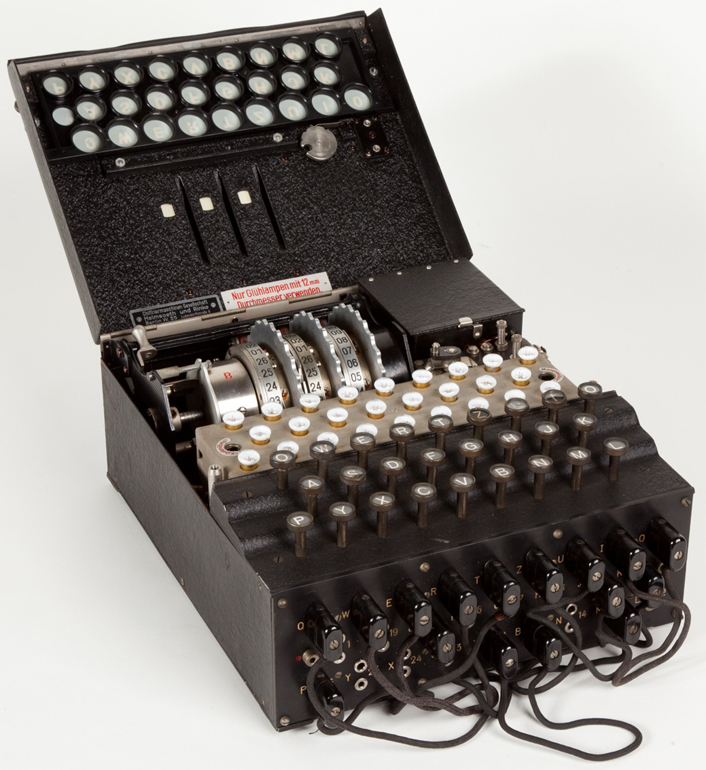
Nazi Enigma machine
*
Somewhere in these musings, my ticket number appeared on the screen beside a message directing me to station #9, the same station to which my acquaintance was called. Our similarity in ticket prefix and station number was a code-breaking clue, but I did not have time to consider it.
Seated at the station, the process was exactly the same as at Banamex, except this time, towards its end, I was taken to a machine where I deposited $4000, and, presto-chango, my account was opened, not in two to three weeks, not in two to three days, hours or minutes, but immediately.
I was unprepared for the fact that I could not deposit actual paper dollars (a roll of which I had in my pocket for the purpose of starting my account) for six months. The first two times I counted the pesos in my pocket, all that I had in the world, I thought I was $50 pesos shy of the $4000 I needed. But unfolding a bill, and counting a third time, I realized that I had just enough Mexican currency, on the dot. (Of course, I could have used my ATM card in the machine right there in the lobby to get $50 pesos more, but, at the moment, my thoughts didn't make it that far.)
Mission accomplished, I came home and found $600 pesos a pair of pants waiting to be washed, three green $200 peso bills; Sor Juana never looked so good. Tomorrow, I'll inform the customers who are in my debt where they can send their money.
In a couple of days, I'll bicycle up to el Centro, and Elizabeth will help me send my former CiBanco money to Santander. Then, I'll pedal over to a client who has $3500 for me. You'd think I'd have learned my lesson regarding delaying money matters, but you'd be wrong.
Meanwhile, I'll just keep my gringo dollars rolled up, tucked back where they belong. With the conversion rate being what it is, I'm sure Warren Buffet would agree that now is not the time to buy pesos.
**************
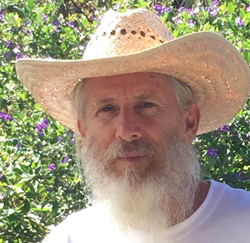
Dr. David Fialkoff presents Lokkal, public internet, building community, strengthening the local economy. If you can, please do contribute content, or your hard-earned cash, to support Lokkal, SMA's Voice. Use the orange, Paypal donate button below. Thank you.
**************
*****
Please contribute to Lokkal,
SMA's online collective:
 ***
***
Discover Lokkal: Mission
Visit SMA's Social Network
Contact / Contactar