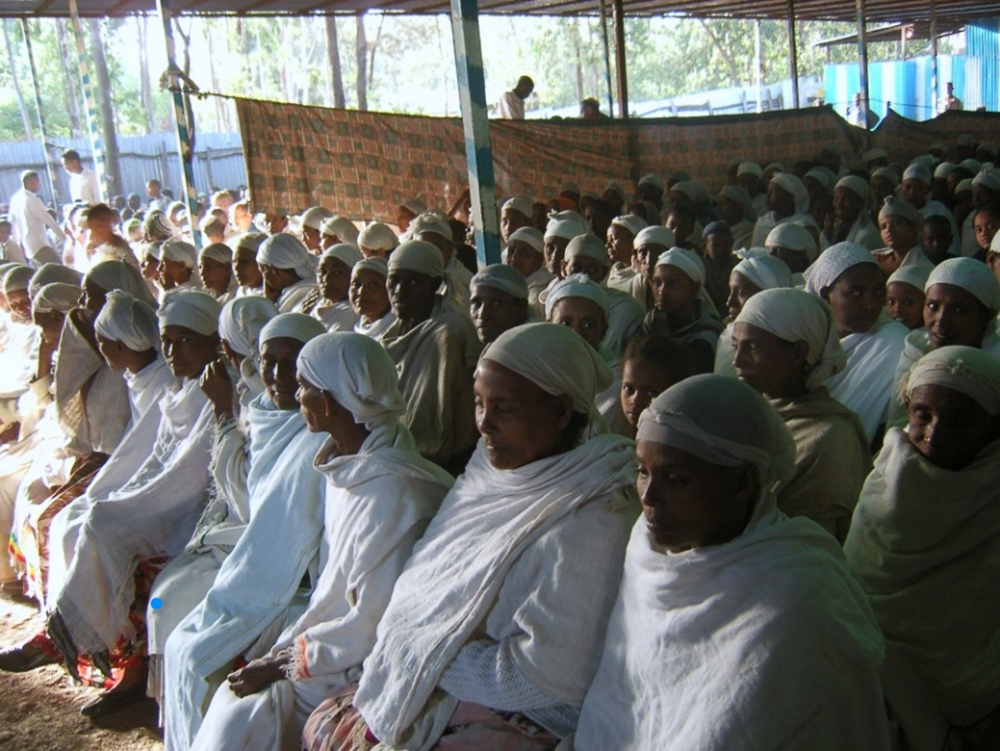
Synagogue in Gondar, women's side
Español
February 22, 2026
by Jeff Curtis
It is Friday night and I am sitting in the synagogue in Gondar, northern Ethiopia. The walls and ceiling are made of corrugated iron sheets which don't meet, and the floor is beaten earth. During the prayers, chanted in a mixture of Hebrew and Amharic, I can hear the cows and roosters scattered around the building. Sitting next to me is a thin young boy in a torn and grubby shirt, staring curiously and lovingly with huge black eyes at my pale face. Ethiopian Jews now known as Beta Israel have for generations been called Falash Mura – a very derogatory term meaning outsiders – but for now I am the outsider. Yet it doesn't feel that way as everyone welcomes me like family. It is often assumed that there are no Jews left in Ethiopia, however my wife and I lived for several months with the Beta Israel in Gondar.
That was back in 2018, when we started roaming the world nomadically to volunteer for small, grassroot charities. Our adventures have included the sheltering of wives escaping the mafia in Italy, helping special educational needs children in India, comforting abused and injured horses on the Galapagos islands, and volunteering in a refugee center in Greece, supporting people fleeing war torn places like Syria, Sudan and Gaza. Aside from our trips to SMA, it has not been the most comfortable retirement – we once lived in a shack with a leaky roof and came to realize after a few weeks that the drops from our ceiling were presents from rats rather than raindrops from the sky. Yet the way we have lived has been nothing compared to the levels of poverty we have witnessed, and nothing has shocked us more than the lives endured by members of the Jewish community remaining to this day in Gondar.
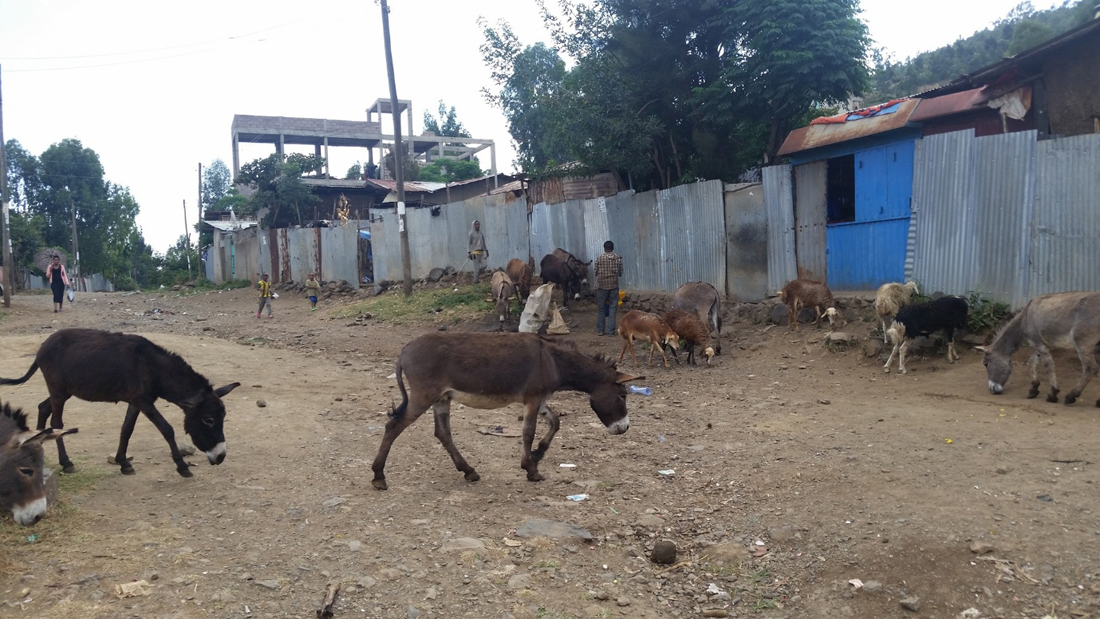
A typical street, outside of a compound where we volunteered
*
When we signed up to volunteer in Gondar for the small charity Meketa, we asked to live with the locals to avoid preferential treatment, but we were told by the charity's founders that we would not survive. It would have meant sleeping on dirt floors, sharing one faucet and one hole in the ground "latrine" with 20 families and having no proper hygiene facilities like soap or any privacy. Opting for a local business hotel with mattresses and cold water on tap was a better option even if our room was full of bed bugs. We felt like we had been transported through time to around the 16th Century: there were no street names or even regular roads, and the dirt tracks through the town were mostly filled with asses carrying sand and other building materials. We started to feel like asses ourselves for being there. The only motorized vehicles were tuk-tuks, called bajaj there, and small vans used as buses. Butchery took place during the night when packs of street dogs would fight and make an infernal din over the unwanted offal. In the morning, we would see them munching contentedly, huge bones between their paws, and the now boneless meat, by then covered with flies, was hung out by butchers to sell to passing customers.
From such a description, Gondar does not sound like such an enticing or welcoming place, yet we had the most profound life-changing experience in terms of witnessing extreme poverty and learning the true meaning of generosity from a community that had nothing but welcomed us, strangers, into their hearts.
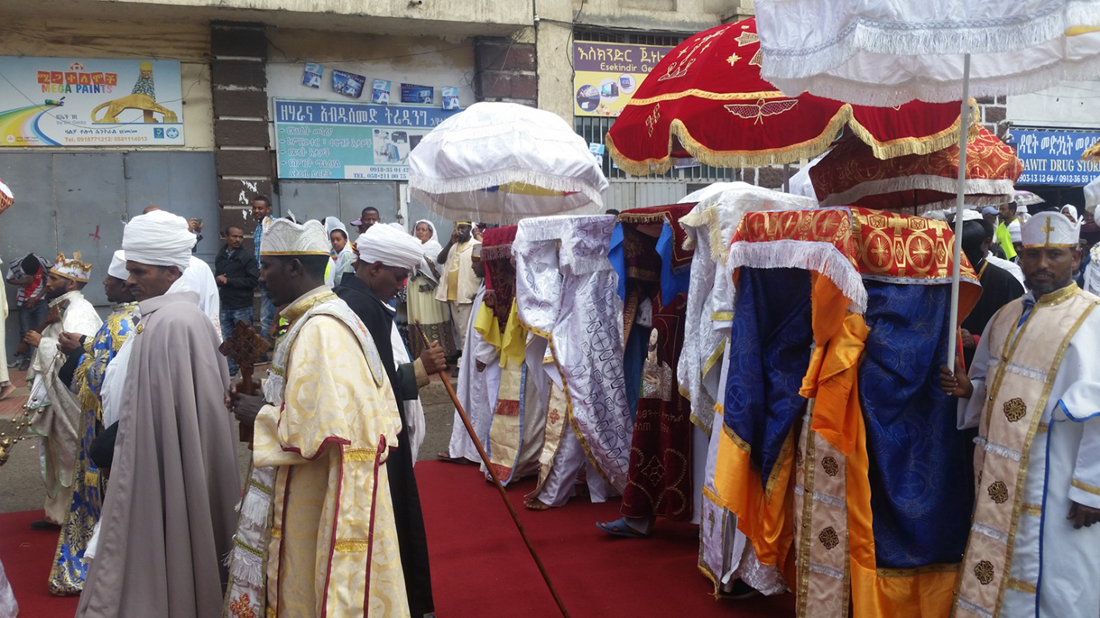
Priests parade a copy of the Ark of the Covenant
*
One of our many fascinating experiences was to see Ethiopian Orthodox priests parade a copy of the Ark of the Covenant through the streets of Gondar: a church is not consecrated as such without a copy of the Ark within its inner sanctum.
***
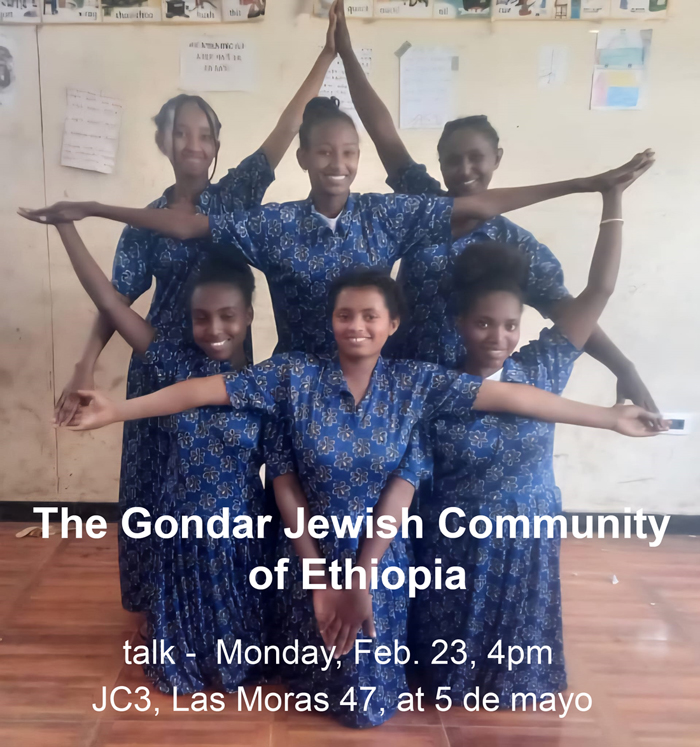 Tickets
***
Tickets
***
Gondar's Jewish community is supported by Meketa UK and by Meketa USA, a 501(c)(3) charity. "Meketa" means support in the local language, Amharic. Support is given by fostering economic independence, education, and providing aid to vulnerable individuals. Both are tiny grassroot charities, led by non-compensated voluntary trustees, who send every donation received to a local Jewish Ethiopian charity to help the community.
Currently, the charities are supporting an after-school club for 250 children, adult literacy classes, a microloans program, a girls' project to instill the importance of education, hygiene and empowerment and many other humanitarian non-political, non-religious activities.
People can help to sponsor a child ($40 per month pays for a uniform, books and support for the child's family), sponsor a college graduate ($20 per month pays for one student's college fees, accommodation, food and a laptop), buy some of the beautiful merchandise made by Gondar's Jewish community (some are available at the JC3) or even become involved as an advocate, volunteer or trustee.
www.meketausa.org
**************
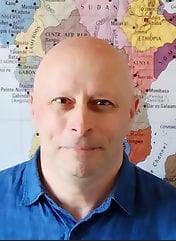
Jeff Curtis was born and bred in London, UK. He had a career in accountancy, but just like Michael Palin's accountant character in the Monty Python lumberjack sketch, he always yearned for the wild and wonderful. Finally, in 2018, he and his wife decided to become nomadic and volunteer for small charities around the world in order to help those in real need.
**************
*****
Please contribute to Lokkal,
SMA's online collective:
 ***
***
Discover Lokkal: Mission
Visit SMA's Social Network
Contact / Contactar