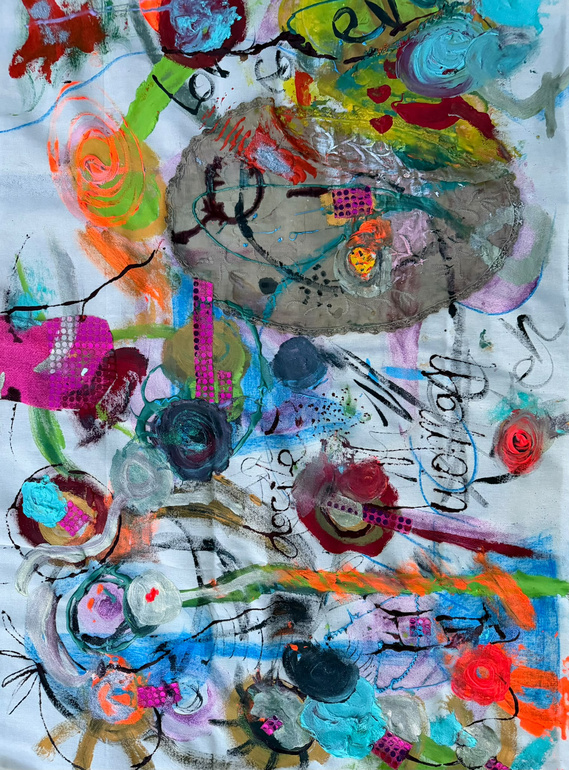
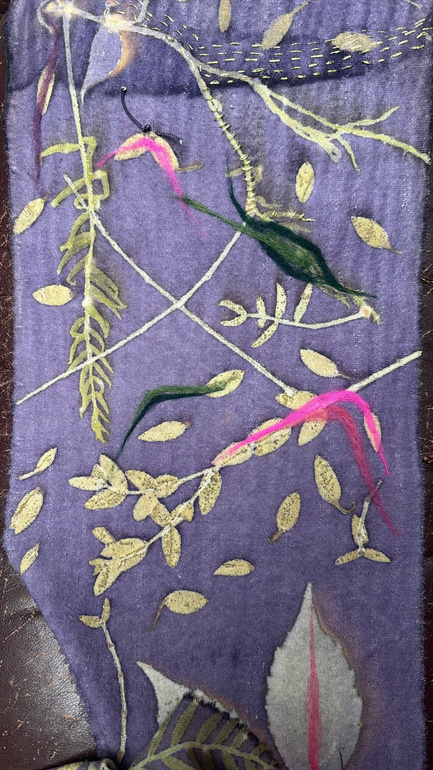
by Dr. David Fialkoff, Editor / Publisher Art by Hagar Fletcher
A vision quest is a Native American spiritual practice. The seeker of a vision, dream, or other spiritual experience, goes up a mountain and spends however much time it takes alone, fasting and praying, until spiritual guidance arrives.
I had a Lakota girlfriend. You are not supposed to call them Sioux. You are also not supposed to count blood "purity," but hers was three-quarters. The father of her two young sons being being full-blood, made her boys seven-eighths. Her father was some sort of chief.
One of the first things I did on moving back to Connecticut to open my naturopathic practice was to build a sauna. There, on the first floor of a neo-Victorian house where was my clinic for 25 years, I eliminated a wall that separated two closets (one a hallway linen closet and one associated with what had been a back bedroom) and created a place to sweat. Being able to get hot makes it easier to tolerate the cold. And I've been taking saunas since I was the age that my Lakota girlfriend's children were then, six and nine-years-old.
Now, the traditional ways are best: to build a sweat-lodge, heat up rocks, pile those inside, and pour water on them to create steam. But we just turned on my electric, redwood-lined (Finnish) sauna (it had a single elevated bench which sat two people "spaciously" and four if you didn't mind sweating on each other), and when it was hot, Stacey (that was her name), put her boys in, tossed some tobacco shavings on the lava rocks that sat in a pan directly over the oven (which, when splashed with water, produced a concentrated, biting cloud of steam) and gave her sons their first sweat right there, behind a closet door on my first floor.
The idea of the ordinary being spiritual is held by many traditions. Walking or living in a sacred manner is closely associated with the Lakota concept of walking the Red Road and with teachings of Black Elk: "all my relations," "every step in a sacred manner."
Wasichu, the Lakota word for white people, carries connotations of troubling ways of thought and behavior. Most troubling of all is European culture's division of life into the sacred and the profane. Nietzche's alarm, "God is dead" (see my "Anado, Nietzsche and Me") carries with it the warning that in the absence of formal religion (the glue that built and sustained meaning and high-trust societies), we would elevate secular ideologies (communism, Nazism, scientism...) into unquestionable faiths. Indeed, this moment, world-wide, is characterized by politics vested with religious, puritanical fervor.
When it comes to investing my religious fervor I take a more traditional route. Thinking about that, about Jews and Indians, I am reminded of a politically-incorrect joke:
An unemployed, middle-age Jew, reading the newspaper one morning, comes across a help-wanted ad from an Indian tribe looking for a chief. He applies for the job and gets it. With winter coming, the tribe asks their new chief how much wood to gather. Having no idea, the imposter calls the weather bureau, who tell him that it will be a cold winter. He sets the tribe to gathering in a lot of wood. After a while, he calls the weather bureau again to get an update. They tell him that it's going to be a very cold winter. So, he redoubles the tribe's wood-gathering efforts. Later again, he calls for another update. This time he is told that it is going to be very, very cold. He asks the weather bureau how they know. They tell him that they know because the Indians are gathering in a lot of wood.
The Jews don't fast for more than 25 hours at a time, and usually only from dawn to nightfall. We just passed through the fall Jewish holiday season, with four (or five, depending on how you count) festivals in 22 days. It was for me a vision quest. I didn't climb any physical mountains, but I did some fasting, chanting and praying, and I had some spiritual visions.
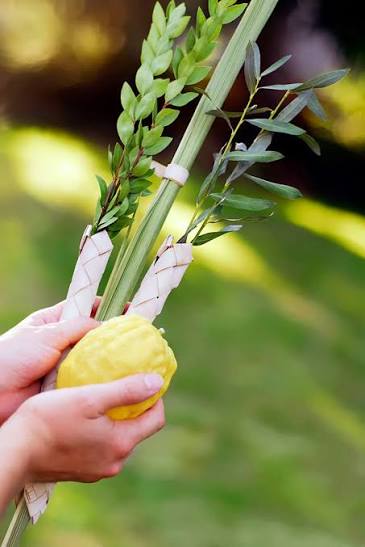
During the Festival of Sukkot (Tabernacles), we Jews are commanded to take the Four Species, that is to hold a particular set of four plants together and shake or wave them in the six directions (including above and below). Rabbi Daniel spent the intermediate days of that holiday traveling around town bringing his set of the Four Species to the homes of Jewish people so that they could fulfill that commandment.
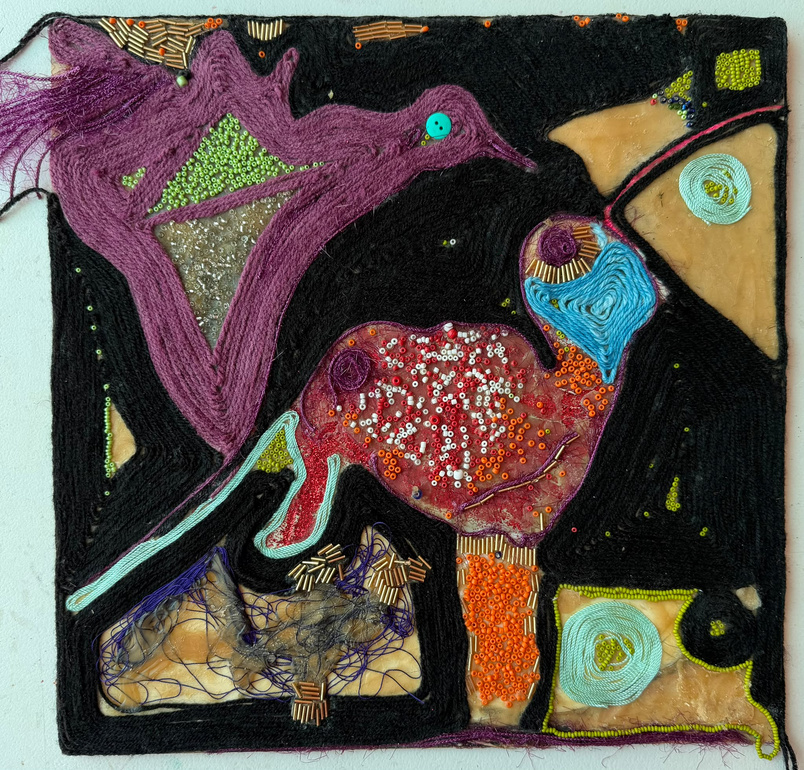
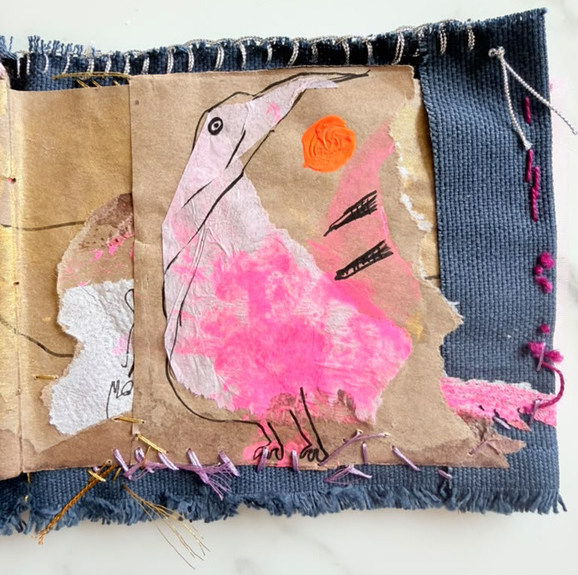
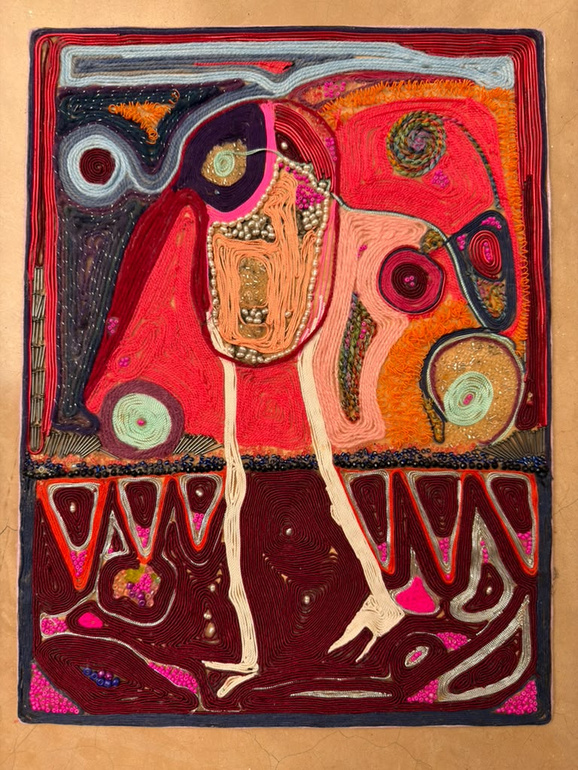
On one of those days, I had an appointment to meet with Hagar Fletcher, a client and friend whose art shows here. Four (or, depending on how you count, five) birds with one stone, I arranged for Rabbi Daniel to come at the same time to Hagar's lovely home, so that she and her husband Martin, those two wonderful (and wonderfully Jewish) people, could also "shake the lulav."
That done, the Rabbi gone on his way and Martin gone back to writing his latest book, I was alone with Hagar in her kitchen, where she, who is very health-conscious, talked with me, who am a naturopathic maven (authority) about the intricacies of the brunch she was preparing. I gave her my opinions and some culinary advice: "Why not mash the sardines and mix in the avocado?" Then, I took a macroscopic view telling her, "The what, your choice of ingredients to eat, is good and important. But, holistically, the how, the ritual with which you approach making brunch also has great health value."
Ritual adds meaning, and meaning is what it's all about. Significance is the alpha and omega. Purpose is the jewel in life's crown.
Normally, we value our heads most. We identify with our consciousness. Almost always, our frame of mind is the main determinate of our pleasure or pain. But there is an advantage to physicality. We are here to live in a sacred manner, to elevate this physical world up to (and indeed higher than) their original source in the spiritual worlds. Just as the ritual of her preparation elevated Hagar and Martin's brunch.
The last of the four (or five) recent Jewish holidays (the Rejoicing of the Law) emphasizes physicality over understanding. On it, rather than studying the Law, we dance with the Torah scroll that contains it. We acknowledge and celebrate Divinity not only with our head, but with our feet, walking, or rather dancing, in a sacred manner.
Meaning is the glue that holds our person and our society together. We can't do without it. When a gentile asked Rabbi Hillel to explain the whole Law while standing on one foot (i.e., quickly), Hillel replied, "What is hateful unto you do not do to another. The rest is commentary. Go learn." Going on a vision quest or to a house of worship is only to make you a better person when you come back into society.
Back in Connecticut, on the second floor of the neo-Victorian house (on whose first was my clinic with its sauna), I used to host large holiday feasts for family and friends, 25-30 people at a time. At one of these, my Cousin Ronnie-Anne told me that she didn't need standard religious practices to feel spiritual. I agreed, but suggested that perhaps that was because we were standing on the shoulders of our grandparents, who did perform those standard religious practices. I agree that you do not have to be formally religious, but I insist that we all need to do some things in a sacred manner, hopefully every step.
**************
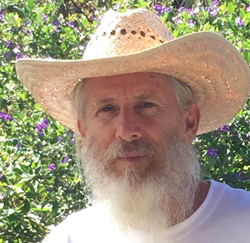
Dr. David Fialkoff praticed homeopathy and natural medicine as a licensed naturopathic doctor for 25 years. Now he is engaged in healing society: building community and strengthening the local economy by fostering local internet. "Facebook and Google make their money by selling ads next to our content. We can make our own social network and search engine for our own local community, and keep the profits circulating here in San Miguel."
************** *****
Please contribute to Lokkal, SMA's online collective/publicity association: