 Español
October 4, 2026
by Philip Gambone
"People leave their home places and go wandering to the far corners of the earth for many reasons—for adventure, for gain, for escape from failure or oppression or just plain boredom. My father came to this primeval jungle in southernmost Mexico for none of these purposes, but to build a good life according to his own ideas." So wrote Karena Shields in The Changing Wind (1959), her engaging memoir about her girlhood in Mexico during the first years of the twentieth century.
If people have heard of Shields at all, it is most likely through her connection to the poet Allen Ginsberg, who, when he was 27, stayed with her for several months on her cocoa farm in Chiapas. (See my: The Hero of Yajalón: Allen Ginsberg in Mexico (Part 2), Lokkal, August 9, 2026.) "I was walking around Palenque," Ginsberg wrote to his friend Jack Kerouac, "and ran into a woman who grew up around here—the edge of the most inaccessible jungle area of South Mexico—who had returned six years ago after various careers in the States, a professional archeologist whose family had owned the Palenque site so that she knew it inside out."
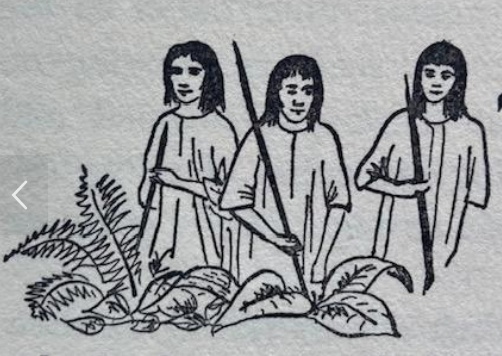
Ginsberg thought Shields was "perhaps the person in the world most emotionally and knowledgeably tied to these ruins and this area." He told Kerouac that it was "a great kick" to stay with her. "We live in an open sided room with continual fire for coffee and food at one end tended by an Indian, hammocks strung up across the room, a great unexplored mountain right ahead looking very near—a few hundred feet thru the brush behind the house are six native huts with families—who work on the plantation, a sort of feudal system of which she is queen and we are royal guests."
For the impoverished and exhausted Ginsberg, Shields became a "guardian angel," says historian David S. Wills. But she deserves to be known for more than the walk-on part she played in the Beat poet's life. By the time she took Ginsberg under her wing, Shields had already written a best-selling book about the Mexican jungle. Moreover, she earned at least four degrees, including a medical doctorate and made important scientific discoveries in archaeology, anthropology, and medical science, specifically, writes Wills, "in the fields of tropical disease and Mayan history." In addition to her chocolate plantation, she gave free medical care to the neighboring Indigenous people, learned how to fly a plane, and took up exploring and lecturing with a passion. Ginsberg thought she was "the only person in the world who knew of a lost tribe of Mayans living in Guatemala on a river who still possibly could interpret codices and were specially on a mission to keep alive Mayan flame."
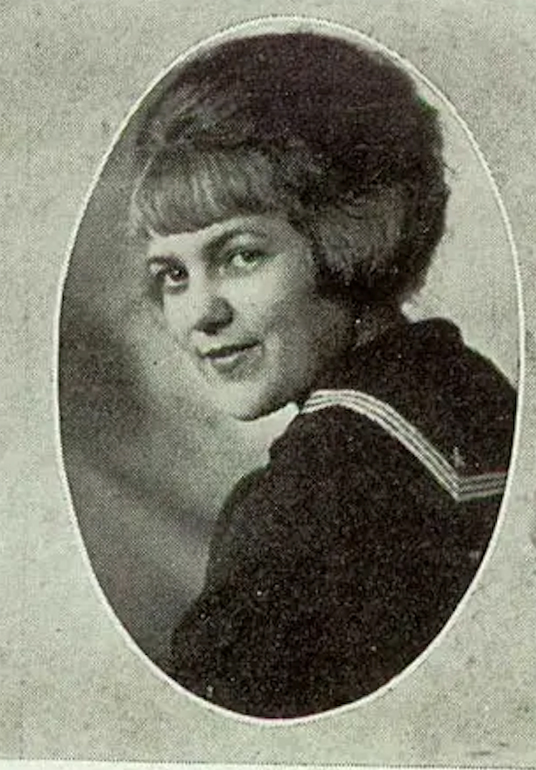
Karena Shields' high school yearbook photo
*
Karena Shields was born Catherine Mary Plant in Lorain, Ohio, on June 14, 1904. When she was three years old, her father moved the family to Mexico, where he had taken a position as the manager of a rubber plantation at San Leandro. Being so young, she arrived in a chamula, a rectangular box with a cushion and curtain, carried on the back of a servant. The family lived on the plantation until she was about ten, formative years in which she grew to love the land and its Indigenous people.
During her years there, which corresponded to the last years of the dictatorship of Porfirio Diáz and the first years of the Revolution, Chiapas was still more or less Indigenous land, far from main-traveled roads. Shields' father had deliberately chosen the place because, she says, he wanted to be in a "faraway spot where few civilized men had dwelt since the end of the Mayan empire a thousand years earlier."
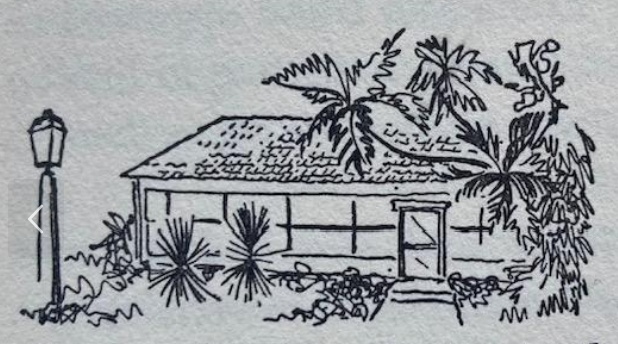
Shields and her sister lived "in a sort of delighted enchantment in which everything seemed possible. In the life around us, melodrama was ever present, sometimes funny, sometimes tragic." In San Leandro, she "came to know the meaning of things."
The Changing Wind is full of captivating vignettes. Shields describes the native Christmastime festivities, in which, with masquerades and whooping hilarity, everyone chased a red-suited devil out of town. The newborn Christ Child and Itzamná, the Mayan spirit that animates the cosmos, were, for her, "all mixed together somehow, until it was not very clear in my mind why there were differences in the names, for creation was God's; and if Itzamná had brought the new corn, and Christ had blessed it, and both had talked of the brotherhood of man, who could deny one for the other?"
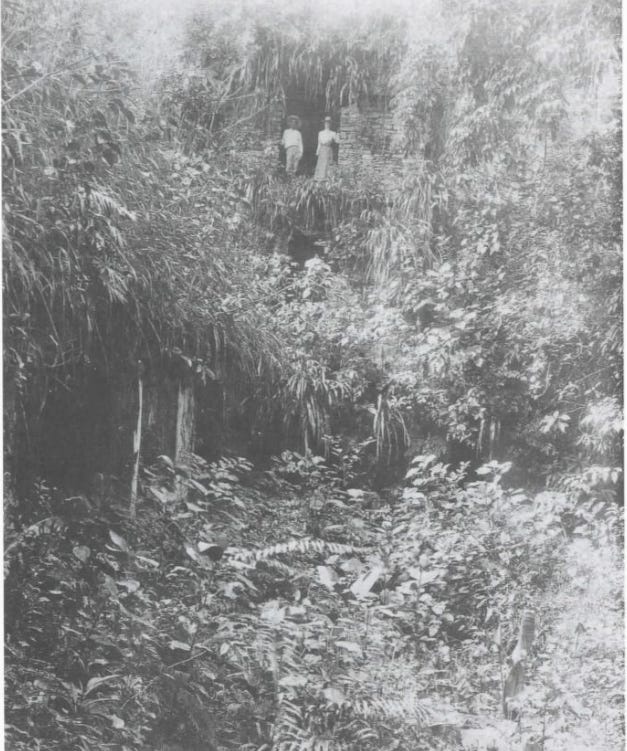
Karena Shields' parents in San Leandro
*
Shields' powers of description are on full display in the book: the tropical forest ("a great living beingness … this womb out of which had grown from time's own beginning all things that live"); the "green jade vase" of the limestone pool where she swam; the night sky filled with a multitude of stars. She was fascinated by the animals: the tepesquintla (a tropical rodent), the howler monkeys, white herons, jaguars ("sleek and mottled and terrible"), the toucan ("big-billed comedian of the forest"), and all the other "nameless listening creatures" in the jungle.
She describes a corn drink which she calls posole, "food and drink and tranquilizer all in one." Somewhat moldy and acidic with fermentation, it was drunk with sugar. The concoction, she wrote, "sets one back on his heels with the pure knowledge of what the mead of Valhalla was like."
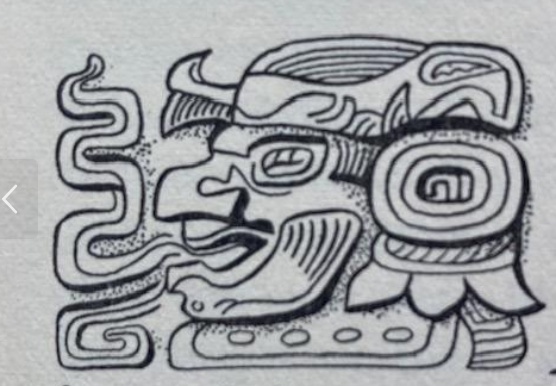
Along the way, Shields introduces us to several of the colorful characters she knew as a child. There's Don Lencho, a native witch doctor, and Charlie Ah Fong, their "excellently Oriental" Chinese cook, who keeps a Bible in Spanish and a Buddhist prayer scroll under his pillow. When asked why, he says, "I bow to all possibilities." Bartolo, the man on whose back she was brought to San Leandro, turns out to be overly fond of aguardiente and frequently ends up in jail, where he and his cellmates carouse through the night, "their only concern to keep the jailer sober enough to get Bartolo out by six in the morning."
Shields' most vivid and loving portrait is of the Indigenous mountain people, whom she calls the Karavís and who inspire in her a deep sense of wonder. Others are afraid of them, calling these native people witches, but she finds that their strangeness is "not strange at all, but something I seemed to know about, something I wanted to be with. I was happy, loving their faces that were so different from all the other faces I had ever known.…"
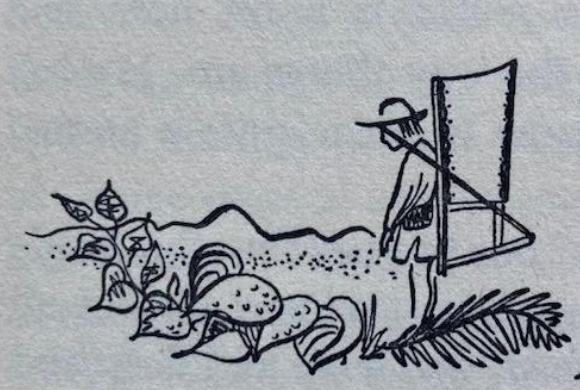
From the Karavís she learns that "reality was not the form or the fact, but the significance. They accepted the world in which they found themselves, not bleakly or with resignation, but with an assumption that it existed 'as is' and was a vast potential miracle. Their ability to evaluate the important and discard the unnecessary was profound and peaceful."
A self-described "jungle-trained child," Shields learned Mayan myths and wisdom from the Karavís. "Their words had no harshness, and their hands, even when they held a wild thing, gave it no fright." Ginsberg said of Shields that she had an "indefinite mystic hang-up." In The Changing Wind, we see why he might have thought so. The "intense awareness" of the Karavís, their sense of the world imbued with something omnipresent and divine, is something she could feel, too. The religion of others repelled her, "as if people and their minds got in the way too much."
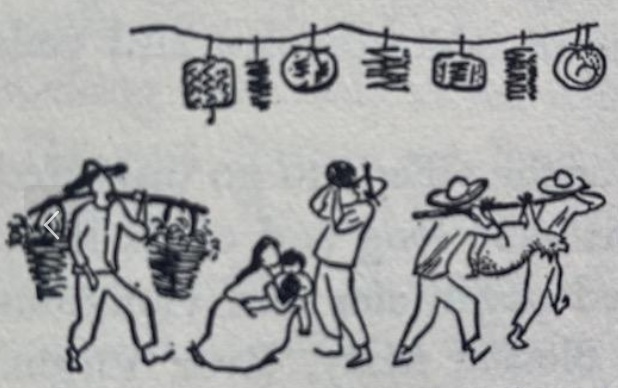
The Changing Wind ends around 1913, with news of the murder of President Madero and the growing restiveness in Europe prior to the outbreak of World War I. When the price of rubber collapses, her father announces that he is sending Karena and her sister back to the U.S. to continue her education.
For one who was so young at the time, Shields' self-declared "photographic memory" of her girlhood in San Leandro was prodigious. Or was it? Some have questioned whether The Changing Wind is truly a memoir, or whether she gave us something closer to a novel. For me, it doesn't matter. What's clear is that her picture of life in early twentieth-century Chiapas is vivid and engaging. Whether based on the actual experiences of her girlhood or embellished later with experiences she had when she returned to Mexico as an adult, Karena Shields' love for her adopted country and her deep respect for its people and culture are genuine. The Changing Wind is currently out of print. It deserves to find a publisher who will bring it back.
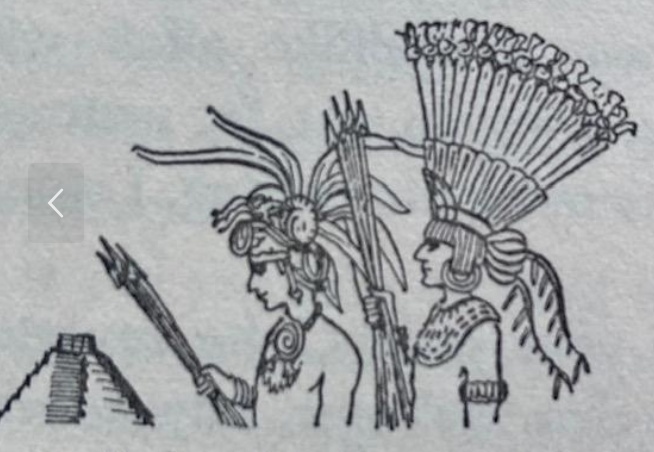
(With the exception of the two photographs, all the illustrations in this article, which are taken from the first edition of The Changing Wind, are by Ava Morgan.)
**************

Philip Gambone, a retired high school English teacher, also taught creative and expository writing at Harvard for twenty-eight years. For over a decade, his book reviews appeared regularly in The New York Times. Phil is the author of seven books. His memoir, As Far As I Can Tell: Finding My Father in World War II, was named one of the Best Books of 2020 by the Boston Globe. His new collection of short stories, Zigzag, was published last year by Rattling Good Yarns Press. His books are available through Amazon, Aurora Bookstore, and at "Tesoros," the bookshop at the Biblioteca.
The more than 100 articles about writers in Mexico which Phil has published in Lokkal are now available on his website:
www.philipgambone.com
**************
*****
Please contribute to Lokkal,
SMA's online collective:
 ***
***
Discover Lokkal: Mission

Visit SMA's Social Network
Contact / Contactar