San Miguel's Graveyard Sonnets
|
|
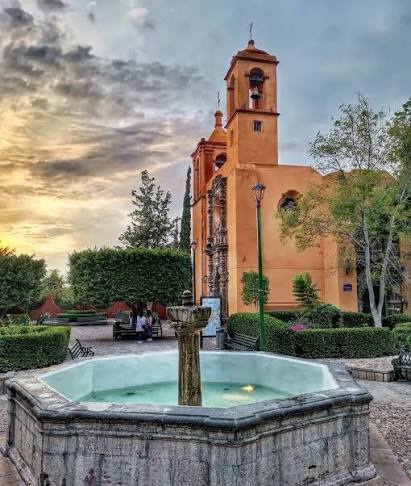
Templo de San Juan de Dios
Español
October 18, 2026
by Philip Gambone
In 1753, Father Juan Manuel de Villegas y Villaseñor, a priest of the Hospitaller Order of San Juan de Dios, began the construction of a hospital for the people of San Miguel, especially the Indigenous and the poor. Nearby, the tireless Father Villegas also established a church, San Juan de Dios, whose construction began in 1770.
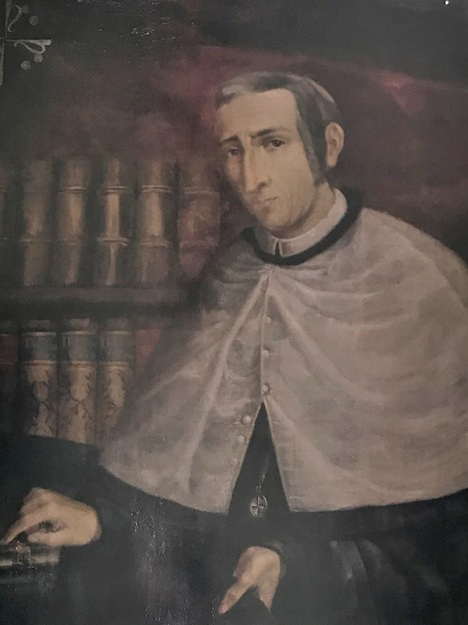
Father Juan Manuel de Villegas y Villaseñor
*
The reality of life and death, especially during an era when epidemics and famine were so common, dictated that a nearby cemetery needed to be laid out as well. The San Juan de Dios Cemetery—known by locals as the Panteón Viejo or old cemetery—was established in 1782 by Dr. Joaquín Hidalgo y Costilla, the brother of one of the leaders of the war for Mexican independence.
Cemeteries like the Panteón Viejo were designed as much to console the living as they were to inter the dead. A Scottish lady who visited a similar cemetery in Mexico City in 1841 remarked on the soothing effect of the "melancholy array" of the tombs with their gold-lettered inscriptions. "They are kept in perfect order, and the inscriptions, though not always eloquent, are almost always full of feeling, and sometimes extremely touching."
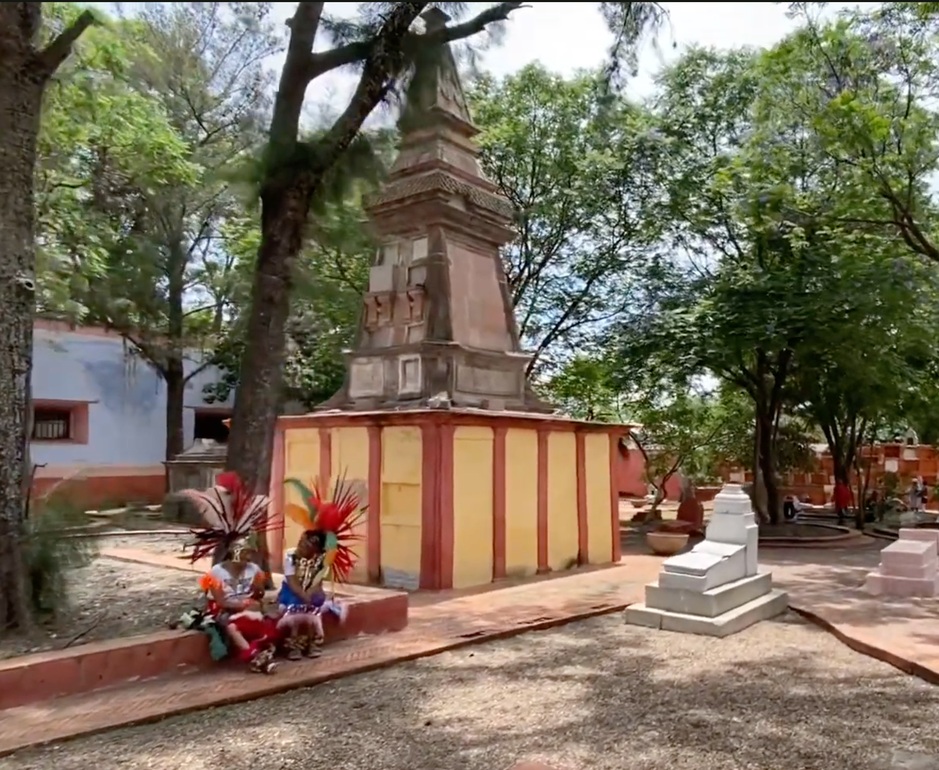
Panteón Viejo
*
The main entrance portal to San Miguel's Panteón Viejo is flanked by two such inscriptions—a pair of eighteenth-century sonnets chiseled on green quarry stone slabs. These mortuary or graveyard sonnets are typical examples of Catholic memento mori messages ("Remember you must die"), which were expressed in poems, sculptures, and paintings—sober reminders that a person's life on earth was but a fleeting moment in time. The Panteón Viejo sonnets are typical memento mori poems, confronting visitors and passersby with the admonition that they, too, would one day make the transition from life's pleasures and vanities to the leveling realm of death.
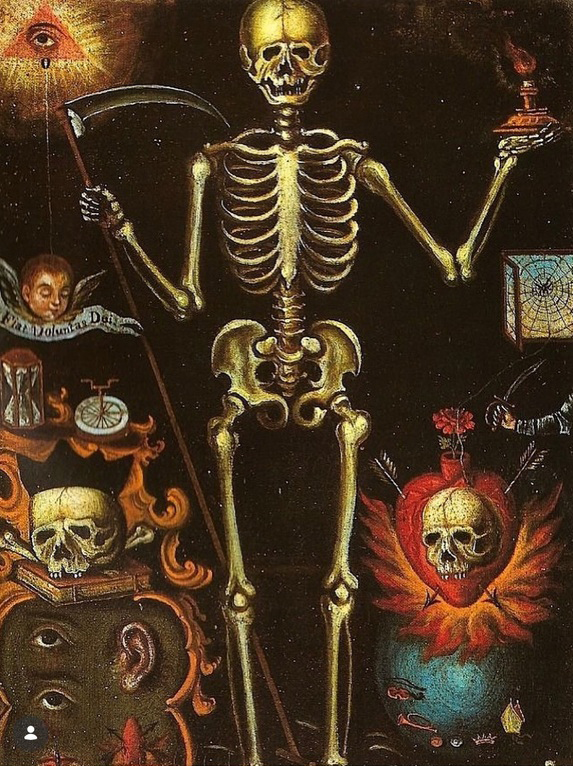
18th-century Mexican memento mori painting
*
The two sonnets were written by the eighteen-century San Miguel poet, Don Indalecio Caballero, who is buried in the cemetery. Caballero was "a liberal in the manner of a citizen of San Miguel, who left us an example of his lyrical style in the poems located in the exterior of the old cemetery," writes José Cornelio López Espinosa, one of the preeminent chroniclers of San Miguel's history. Not much more is known about the poet.
The engraved slabs contain misspellings, which could mean either that Caballero was not highly educated, or that the craftsman who carved the stones was careless. Here, with correct spelling and punctuation added, is one of the two poems. I owe help with the translation to my friend Natalie Taylor, herself a chronicler of all things pertaining to San Miguel.
|
|
|
|
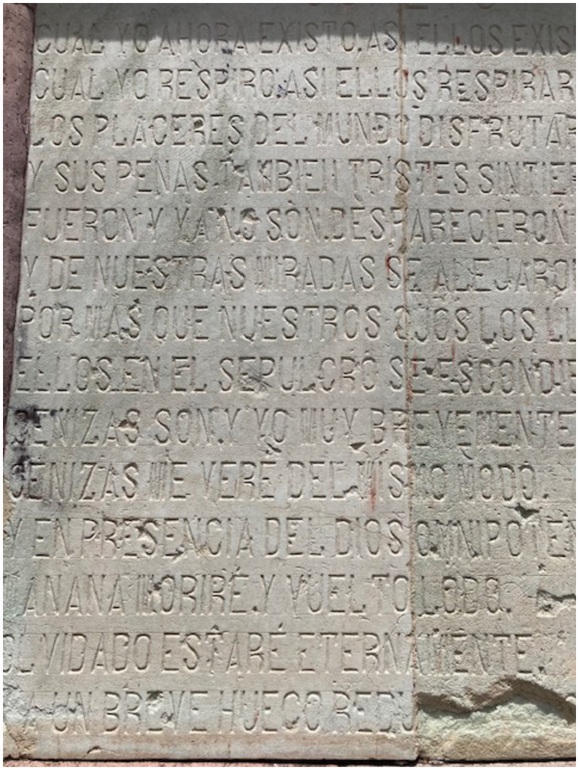
As I now exist, so they existed,
As I breathe, so did they breathe;
They enjoyed the pleasures of the world
And so too its sorrows they joylessly felt.
They were and are no more. They disappeared
And departed from our sight;
However much our eyes weep for them,
They are hidden in the tomb.
They are ashes. And I, soon enough,
Will likewise see myself as ashes,
And in the presence of the omnipotent God,
Tomorrow I will die and, turned to clay,
Will be eternally forgotten,
Reduced to a small hollow.
| |
|
|
Caballero's poem follows the neoclassical Spanish sonnet form: 14 lines, divided into two quatrains (four-line stanzas) with the rhyme pattern ABBA, followed by a six-line stanza (the "sestet"), which here rhymes CDCDCD. His style is typical of Mexican poems of the late eighteenth century, which moved away from the extravagantly ornate earlier Baroque style toward a more sober, more moralizing tone. It's not great poetry, but it hammers home the essential memento mori wake-up call.
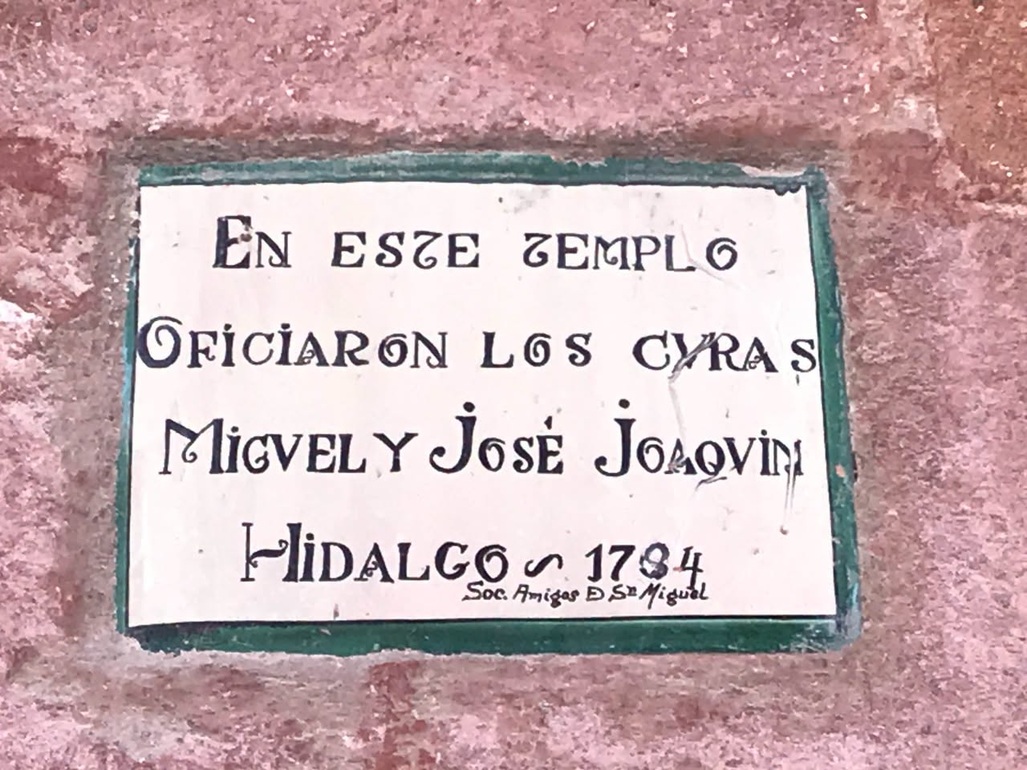
Plaque at San Juan de Dios
*
The second poem that flanks the entrance to the Panteón Viejo is more abstruse, though the same basic message—"the journey's end reduces all"—characterizes it as well:
|
|
|
|
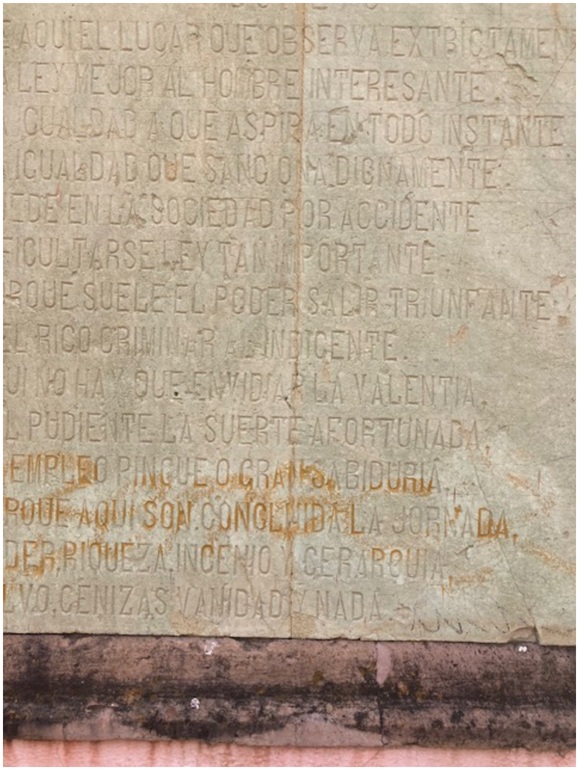
Here is the place that strictly upholds
The law that best pertains to the man of worth,
That equality to which all moments tend,
That equality that grants dignity to all.
In society, by chance or circumstance,
Such a vital law may face obstruction,
Because power often triumphs
And the rich criminalize the destitute.
Here there is no need to envy bravery,
The fortunate lot of the powerful,
Lucrative employment, or great wisdom,
For here, the journey's end reduces all—
Power, wealth, intellect, and rank—
To dust, to ashes, to vanity, to nothingness.
| |
|
|
It seems that Caballero established a bit of a cottage industry in graveyard poems, because this poem also appears at the cemetery in Atlixco in the state of Puebla. Again, not the greatest Mexican poetry, though I can think of a number of people in government today who could use a strong dose of this kind of reminder: your power, your wealth, your vanity, your puffed-up standing will amount to nothing in the end. Indeed, as we approach El Día de los Muertos, it's a sober if necessary reflection each of us might do well to ponder.
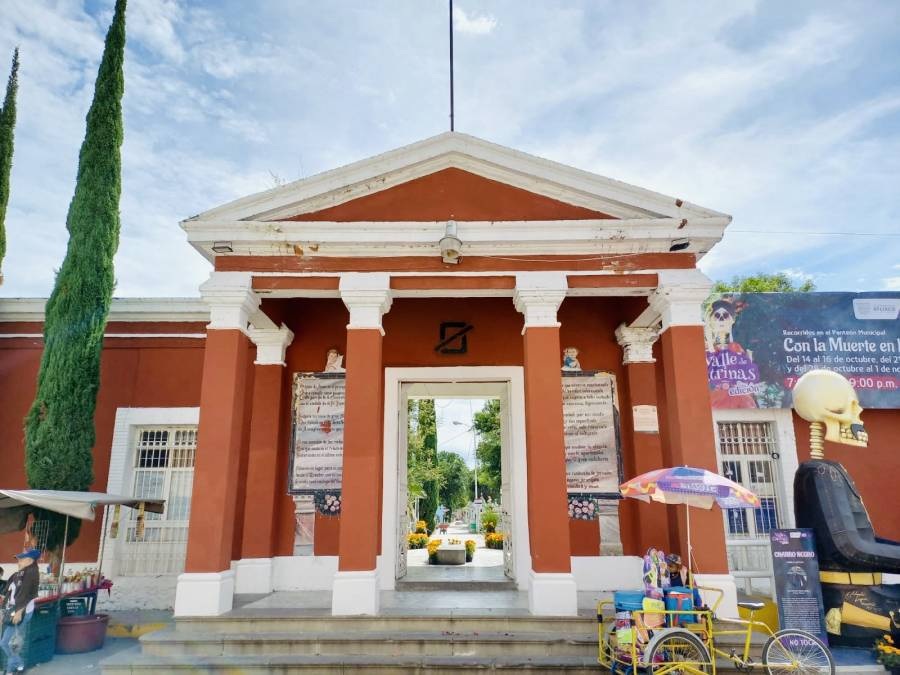
Panteón Municipal, Atlixco (Puebla)
**************

Philip Gambone, a retired high school English teacher, also taught creative and expository writing at Harvard for twenty-eight years. For over a decade, his book reviews appeared regularly in The New York Times. Phil is the author of seven books. His memoir, As Far As I Can Tell: Finding My Father in World War II, was named one of the Best Books of 2020 by the Boston Globe. His new collection of short stories, Zigzag, was published last year by Rattling Good Yarns Press. His books are available through Amazon, Aurora Bookstore, and at "Tesoros," the bookshop at the Biblioteca.
The more than 100 articles about writers in Mexico which Phil has published in Lokkal are now available on his website:
www.philipgambone.com
**************
*****
Please contribute to Lokkal,
SMA's online collective:
 ***
***
Discover Lokkal: Mission

Visit SMA's Social Network
Contact / Contactar

|
|
|
|
| | |
Click ads
Contact / Contactar
copyright 2026
|