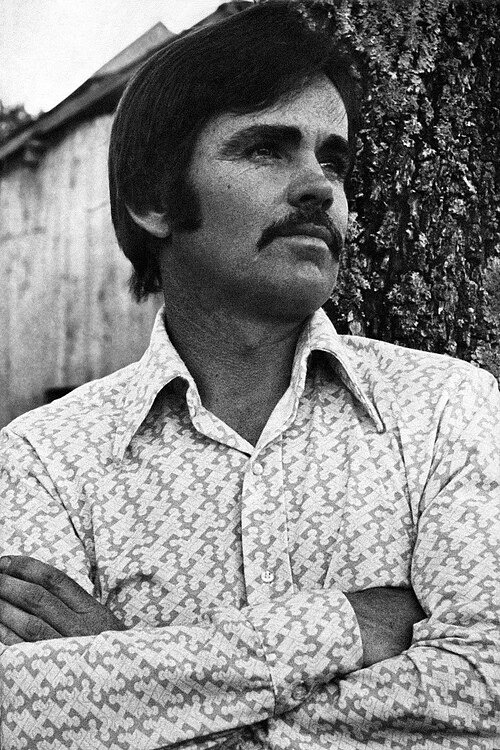
Cormac McCarthy in 1973
Español
November 1, 2026
by Philip Gambone
In 2006, the New York Times asked more than a hundred major writers, critics, and editors to identify "the single best work of American fiction published in the last 25 years." To almost no one's surprise, Toni Morrison's Beloved came out on top. It's an undeniable masterpiece, magnificent in every respect. Another author whose works received significant notice in the survey was Cormac McCarthy. (His 1985 novel Blood Meridian came in third in the survey.) McCarthy richly deserved the attention. He had already been awarded a so-called "genius grant" from the MacArthur Foundation, which recognized the excellence of his early work, and he would go on to receive the Pulitzer Prize for his 2006 novel The Road.
"His writing, cuts to the bone," wrote David Kushner in Rolling Stone. An unintended pun? McCarthy's novels are steeped in violence, including scenes that depict gruesome cuts to the literal bone. "Genteel" is not a word that could ever be applied to McCarthy's work. His focus was often on the untamed side of human behavior. In response to those readers who found his novels too dark, McCarthy once said, "If it doesn't concern life and death, it's not interesting."
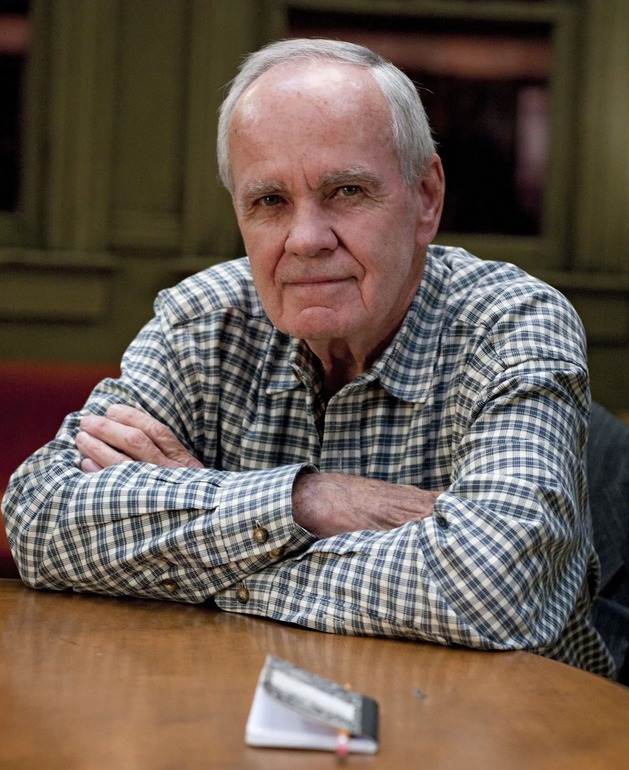
Cormac McCarthy
*
Life and death are at the heart of all of McCarthy's mature novels. In preparation for writing Blood Meridian, an epic about a sadistic gang of scalp hunters, McCarthy spent four years exploring Mexico and the Southwest of the United States, studying the violent history and culture of the area. Fascinated by the American West and its interrelationship with Mexico, he went on to write a trio of novels, collectively known as The Border Trilogy, that largely take place in Mexico. Those books, too, cut right to the bone.
The opening novel in the trilogy, All the Pretty Horses (1992), was McCarthy's first commercial success, winning both the National Book Award and the National Book Critics Circle Award. The book follows the adventures of two teenage drifters, John Grady Cole and Lacey Rawlins, who cross the border from West Texas into Mexico on an idealistic but dangerous mission. Initially, a reader might identify them as cowboy heroes in a romantic quest narrative. ("Like Huck Finn and Tom Sawyer on horseback," wrote Richard Woodward in the New York Times.) But as the novel progresses, a darker story emerges.
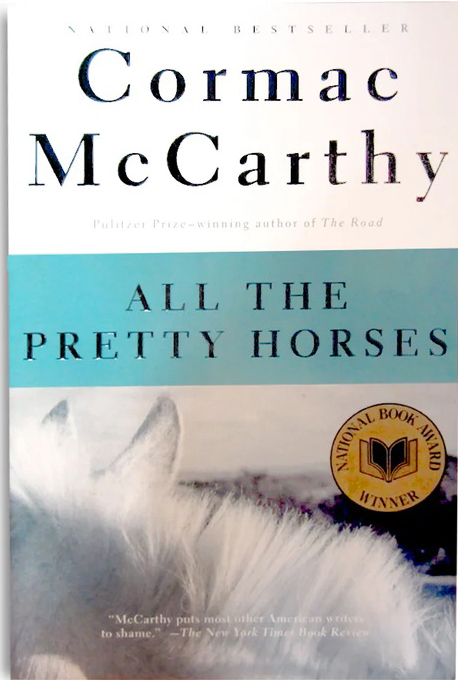
All the Pretty Horses
*
The novel takes place in 1949, a time when the border with Mexico was porous and migrant traders, vaqueros, and roving bands of sheep herders were able to cross back and forth without much hassle. In McCarthy's perspective, the border is less a political or cultural boundary line than it is just another of humankind's vainglorious conceits, meaningless in the vast scheme of things. What then, the novel asks, is truly meaningful, worthy of heroic commitment? That question becomes a major theme in this and the other two novels in the trilogy.
John Grady's life is all about horses. He has an uncanny way with them, able to tame even the wildest. "What he loved in horses was what he loved in men, the blood and the heat of the blood that ran them. All his reverence and all his fondness and all the learnings of his life were for the ardenthearted and they would always be so and never be otherwise." John Grady's ardent heart, his basic decency even in the face of hardships, treachery, and downright evil, is his most salient and winning quality. He gently resists his buddy Rawlins' cynicism and suspicious nature.
The boys find work on a Mexican ranch. Their fellow ranch hands turn out to be "some pretty good old boys" and ask them many questions about the United States. "To most the country to the north was little more than a rumor. A thing for which there seemed to be no accounting." In turn, ranch life and the Mexican countryside, where not much happens, appeal to the American teenagers. "This is some country, aint it?" Rawlins asks John Grady. "How long you think you'd like to stay here?" "About a hundred years," John Grady tells him.
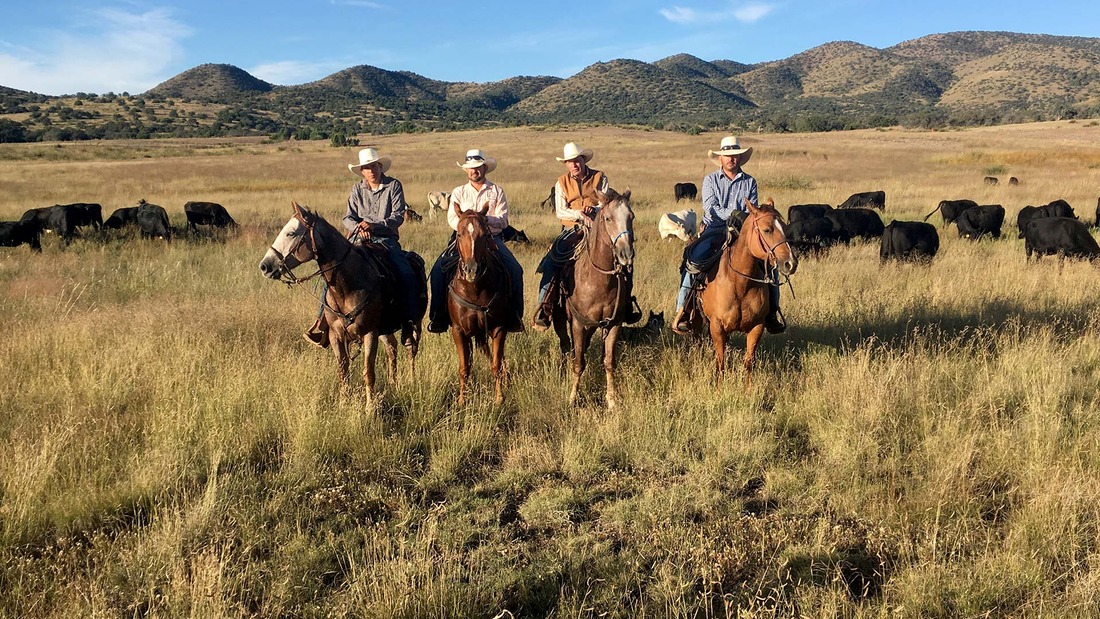
North Mexican landscape
*
But life for these "existential cowboys" turns out to be less romantic than it is fraught with peril. John Grady falls for a hacendado's daughter, a social faux pas that gets him and Rawlins into big trouble. Kidnapped, they are incarcerated in the Saltillo prison, a godforsaken place where every man is "judged by a single standard and that was his readiness to kill." John Grady's romantic view of Mexico turns out to be dangerously naïve. McCarthy is out to give his readers the fullest, least rosy, picture of humanity—its vanities, follies, and utter baseness as well as its fleeting moments of goodness, beauty, and courage.
The boys fall into many adventures and meet many characters—some good, others unspeakably depraved. They are driven to commit bloody acts of self-defense. McCarthy knows how to build suspense, taking us through scenes in slow, exquisite detail, much of it structured in dialogue. I will risk calling this novel a page-turner, aware of the middle-brow connotations of that term. But this is a page-turner, albeit one for readers of serious literature.
The harsh landscape of the Mexican borderlands aptly serves McCarthy as the setting for John Grady's quest, which becomes a test of endurance in the face of malice. (One character calls him a "gentle knight.") Like his literary idols—Dostoevsky, Faulkner, Melville—McCarthy explores the nature of evil, the unsettling presence of darkness in the world.
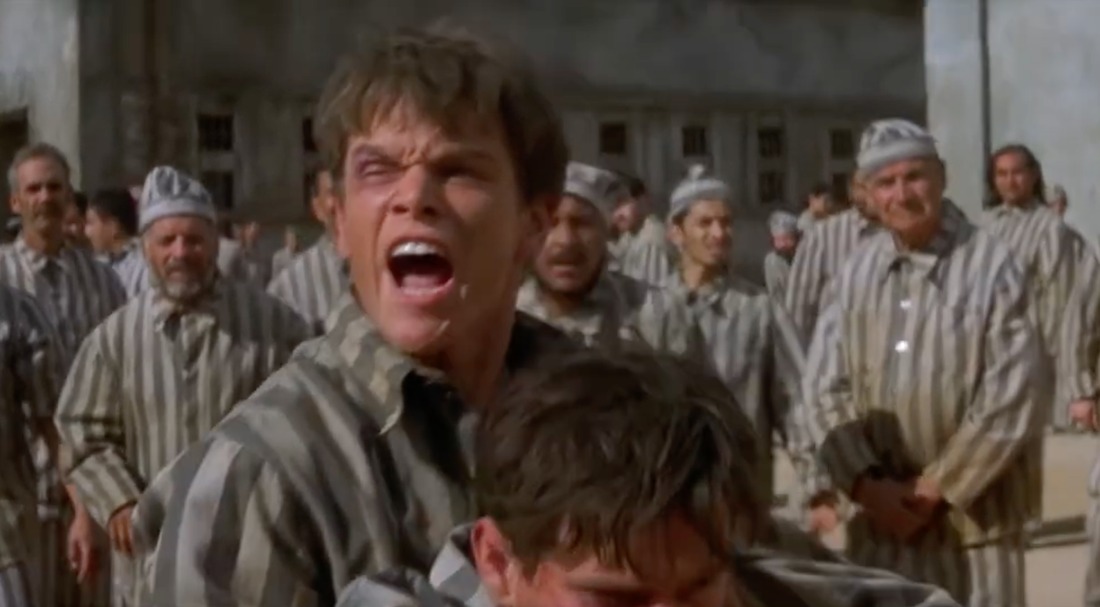
Matt Damon as John Grady in Saltillo Prison (2000 movie)
*
Another reason to read McCarthy is for his prose style, which is dazzling. He once listed what he considered the four greatest novels—Ulysses, The Brothers Karamazov, The Sound and the Fury, and Moby Dick—and that same magnificence of language informs his own style. His prose is not like any other American writer's. It's a splendid stew of modernist prose, high-mannered nineteenth-century exposition, baroque artifice, and cowboy lingo. Saul Bellow once noted McCarthy's "absolutely overpowering use of language, his life-giving and death-dealing sentences." There is nothing exaggerated about that claim. Moreover, McCarthy is not afraid to risk sentimentality but never descends into bathos. And because much of the novel takes place in Mexico, he includes a lot of untranslated Spanish.
A friend of mine does not read McCarthy because she says he's too dark. It's true that he peoples his novels with characters who believe, as one says, that "what is constant in history is greed and foolishness and love of blood and this is a thing that even God—who knows all that can be known—seems powerless to change." Nevertheless, many small, quiet instances of goodwill and decency—on the part of John Grady, Lacey, and several Mexicans they meet along the way—suggest that it is possible not to be defeated by evil.
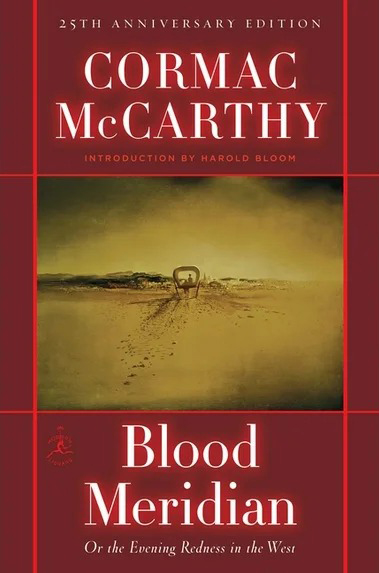
Blood Meridian
*
Lately, McCarthy has come under critical scrutiny for certain details of his personal life, including his ultra-masculine arrogance and problematic relationship with women. It would be a shame for readers to avoid the experience of reading the Border Trilogy as a protest against the author's personal behavior. McCarthy's "ardent heart" may have sometimes led him astray, but the intensity of his masterful artistry is a true and fine thing.
"You can't write good poetry unless you have a soul to express," McCarthy once said. Whatever "soul" is, All the Pretty Horses is a novel with plenty of it—the soul of Mexico, the soul of America, the soul of a teenage boy trying to make sense of it all.
**************

Philip Gambone, a retired high school English teacher, also taught creative and expository writing at Harvard for twenty-eight years. For over a decade, his book reviews appeared regularly in The New York Times. Phil is the author of seven books. His memoir, As Far As I Can Tell: Finding My Father in World War II, was named one of the Best Books of 2020 by the Boston Globe. His new collection of short stories, Zigzag, was published last year by Rattling Good Yarns Press. His books are available through Amazon, Aurora Bookstore, and at "Tesoros," the bookshop at the Biblioteca.
The more than 100 articles about writers in Mexico which Phil has published in Lokkal are now available on his website:
www.philipgambone.com
**************
*****
Please contribute to Lokkal,
SMA's online collective:
 ***
Discover Lokkal: Mission

Visit SMA's Social Network
Contact / Contactar