 Español
November 15, 2026
The meaning of a visual composition does not rely on its narrative quality but on its ability to transmit a stream of vital energy through the spectator's eye.
by Andrew Osta
I came into the art world in a strange fashion. The Soviet Union, where I grew up, did not have an artistic bent. The commonplace mentality was that material things mattered, while spirituality was a drug, an addictive falseness likened to opium. Almost the entire country worshiped money and possessions, but there was no legal and/or moral way to obtain either. People, including my grandfather, literally built their houses with bricks they had stolen from their work place. One man would steal cement from the factory that employed him, another would steal home appliances and they would trade. The police did nothing except extort and take bribes.
When the USSR collapsed, our currency became worthless and our savings vanished. We had no more money, just little paper coupons that served as a temporary currency. The government provided every family with X liters of milk, X kilos of sugar, X kilos of potatoes every month. Who would dare think about art in such a situation? Naturally, my family never expected that I could seriously take interest in such things, and tried to discourage me when I did.
I imagine artists have all kinds of reasons for making art. For me, art-making has to do with self discovery and emotional healing. I had never been to therapy, but the first years I spent making art were deeply therapeutic. I discovered myself and my "tribe" thanks to my art - today, my closest friends are all artists, musicians, writers, photographers, and collectors. It's a fascinating world full of fascinating people. And you have to be a creator or a collector to enter.
I began to paint in 2005 and began collecting in 2008. My first purchases were of indigenous Peruvian textiles - embroidered abstract representations of ayahuasca visions. These were spiritual, transcendental artworks. I thought of them as windows through which I might get a glimpse of the ultimate Truth. After moving to San Miguel in 2011, I formed friendships with artists who were also collectors. I think every artist I befriended also collected - usually works by his or her contemporaries.
For an artist, trading paintings is a great way to begin collecting. You compliment an artist by suggesting an exchange of a piece or two. If the artist agrees, you have become his or her collector! This is exciting because artists appreciate collectors and give them a special kind of entry to their private life. Acquiring an artwork is the absolute best compliment an artist can get, and the only one that means anything.
San Miguel artists like Toller Cranston and Bruce Stuart encouraged me to collect by initiating art exchanges with me. "You should have a painting of mine as a sort of insurance policy for the future," Toller Cranston would say. "But I have no money and your paintings are expensive," I would reply.
He never lacked solutions to any dilemma. "Have your mother buy it for you," he would suggest. "I will give you a 10% commission if your mother buys it. Or pay me $200 dollars a month until its paid for. You can afford that, can't you?"
As I was too financially insecure to buy one. I was living in a rented house and trying to save up for a place of my own. Buying art did not seem like a top priority until my friend Toller suddenly died at the age of 65. Toller and I ended up trading paintings, but once he was gone, I mourned intensely my indecision not to also buy. Not because I missed out on potential financial gains, but because I knew that me purchasing something would have meant a lot to my friend. It was really a way of telling him that I loved and appreciated him, and by never following through, I left those sentiments unspoken.

Toller Cranston had been an obsessive collector. I took my inspiration from him, and following his death, began to collect the work of my artist friends. During a trip to Europe in 2014, I fell in love with Russian iconography and purchased my first antique icon. It felt amazing to collect something that was also present in all major art museums. It is considered bad luck (or bad karma) to resell sacred art such as icons, so I built up my collection for myself and my children, not for resale.
In 2017, I visited Ukraine and discovered an artist I really liked. This led to multiple purchases and a strong friendship. Since then, I purchased work from over 15 Ukrainian artists, mostly to support them during the war. Whenever I look over my purchases, they bring me joy.
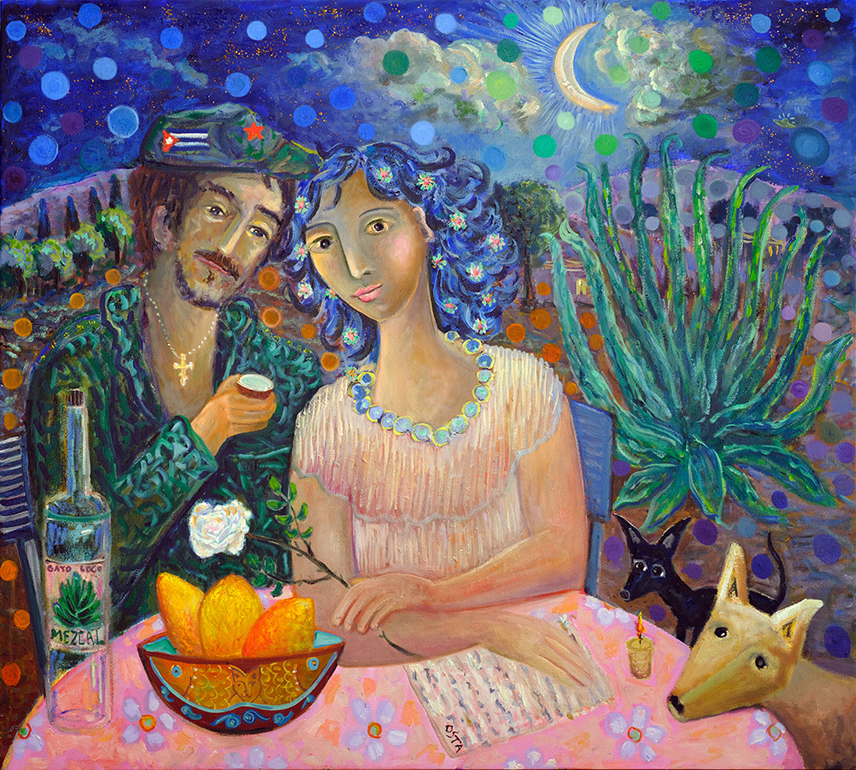
Cuban Couple
*
My next destination was Cuba. I had visited the country when I was eight years old, and again in my 40's. What I found on that struggling, collapsing, beautiful island was a huge amount of talent, both musical and artistic, and an absolute lack of financial support. I immediately set out to help artists by either purchasing their work outright or offering it to my collector friends. Soon a San Miguel friend, Deb Bickel, joined in. Together, we purchased work from over a dozen different artists. Their genuine gratitude made us feel like the effort has been worthwhile, even if in our excitement we bought too much work.
As a final piece of advice, I suggest you collect from living artists or at least from people you know and trust. There is a huge amount of fake art out there, on eBay and in many online auction houses. If you are able to get a a Picasso for $300 dollars, it is not a real Picasso and is worth nothing. Why not instead spend the money to help a living artist instead?

Buy online
Many of my own pieces, paintings from my collection, and works by my Cuban and Ukrainian artist friends are available here. That auction is now over, but you can still purchase unsold pieces by writing me directly at Andrew@andrewOsta.com and specifying the lot number. Or WhatsApp me at 415-139-5169. Happy Collecting!
***
 Andrew Osta
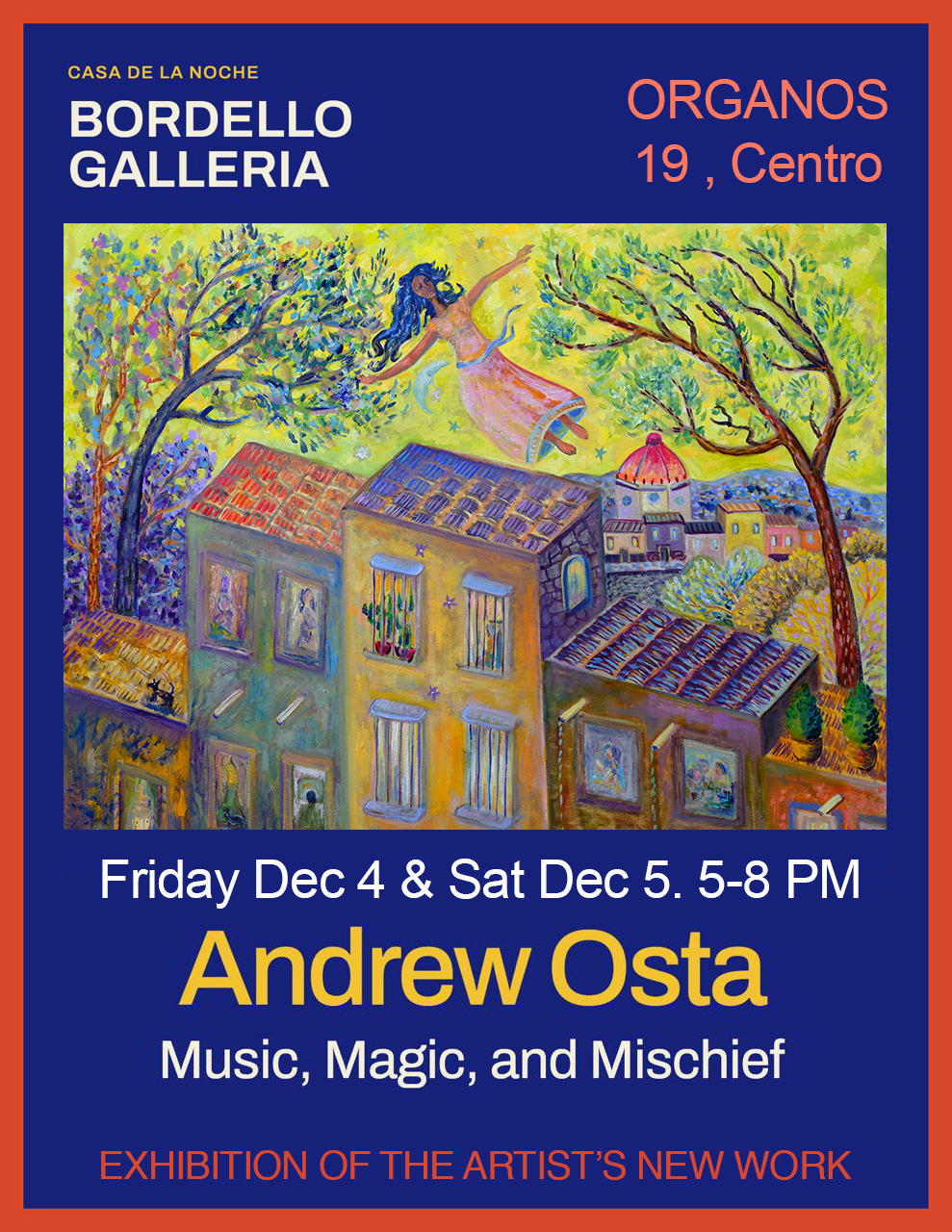
ongoing Exhibition and...
Meet the artist at his
Magic, Music, and Mischief closing party
Friday, Saturday, December 4, 5, 5-7:30pm
Bordello Galería, Organos 19
***
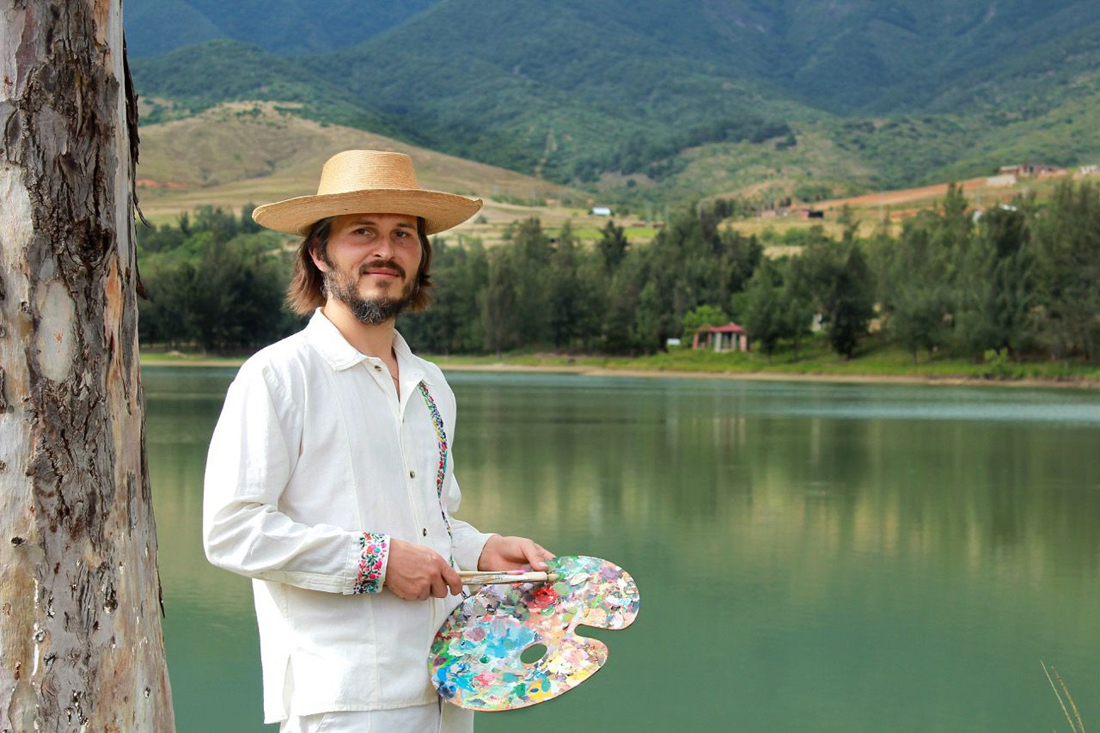
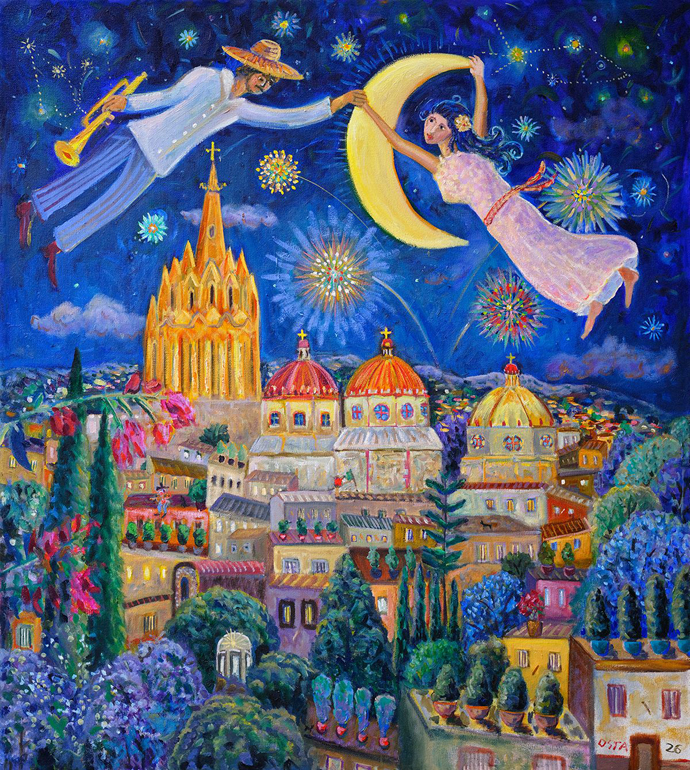
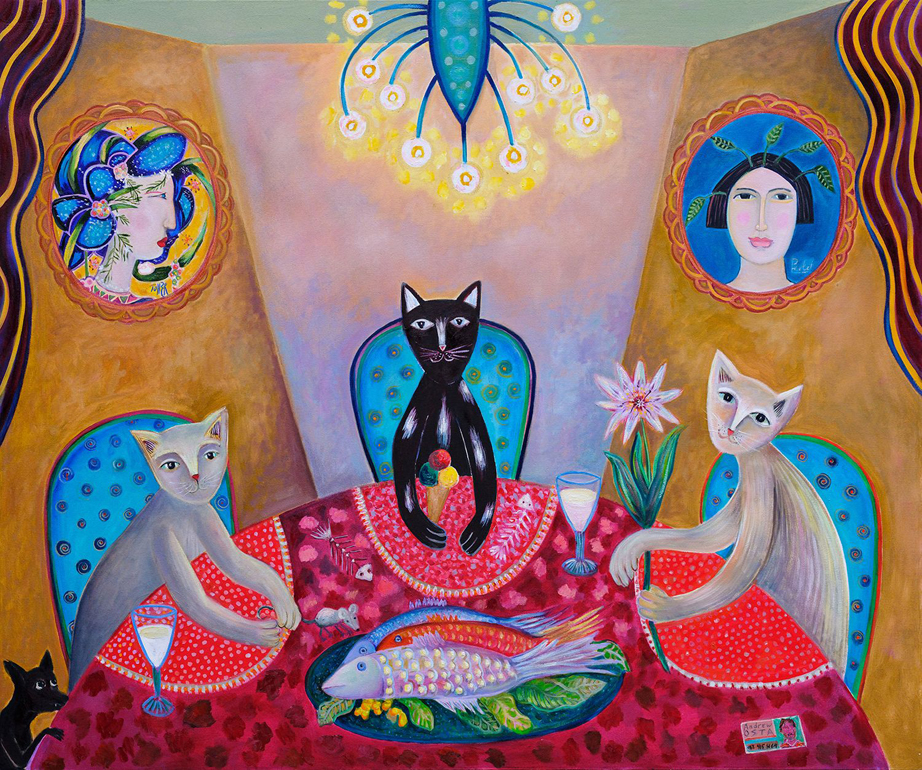
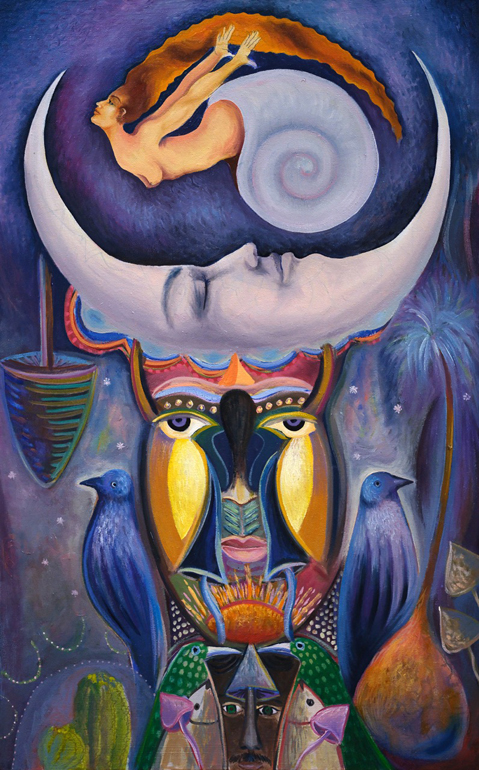
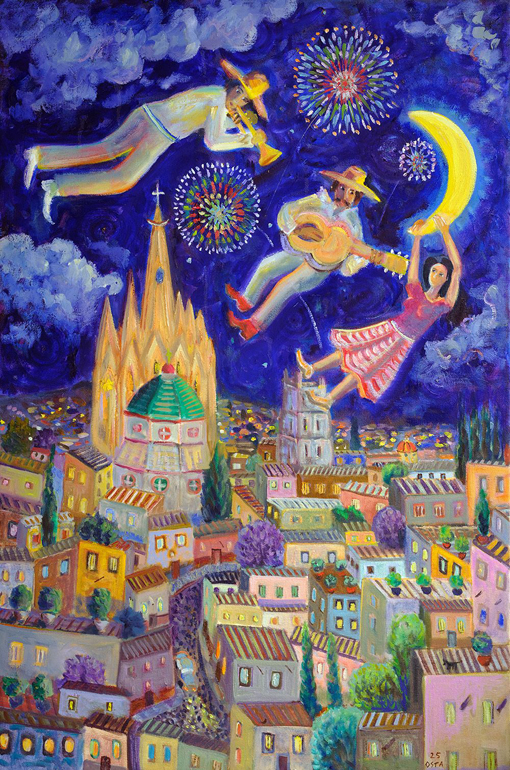
Andrew Osta, born in Kyiv, Ukraine, first arrived in San Miguel in 2011. At the time he was the youngest working artist in town. Andrew was strongly influenced by San Miguel's extraordinary ambiance. His artwork underwent a transformation: surreal jungle themes inspired by his travels in Peru and his experimentation with ancestral medicinal plants, gave way to joyous expressions of street dogs, dining cats, magical views of San Miguel's downtown, and flying mariachis. Osta's collectors, some of whom have dozens of the artist paintings in their homes, insist that the artist succeeds in capturing the elusive magic of San Miguel in a uniquely personal way. The exhibition isn Tres Fuentes will combine Osta's San Miguel themes with his complex surreal work, as well as some impressionistic plein air landscapes painted in Oaxaca.
www.andrewosta.com
**************
*******
Please contribute to Lokkal,
SMA's online collective:
 ***
Discover Lokkal: Mission
**************
*****
Por favor contribuya a Lokkal,
Colectivo en línea de SMA:
 ***
Descubre Lokkal: Misión

Visit SMA's Social Network
Contact / Contactar