 Español
June 7, 2026
This story is fictional. Any resemblance to actual persons living or dead is entirely unintended and coincidental.
by Dr. David Fialkoff, Editor / Publisher
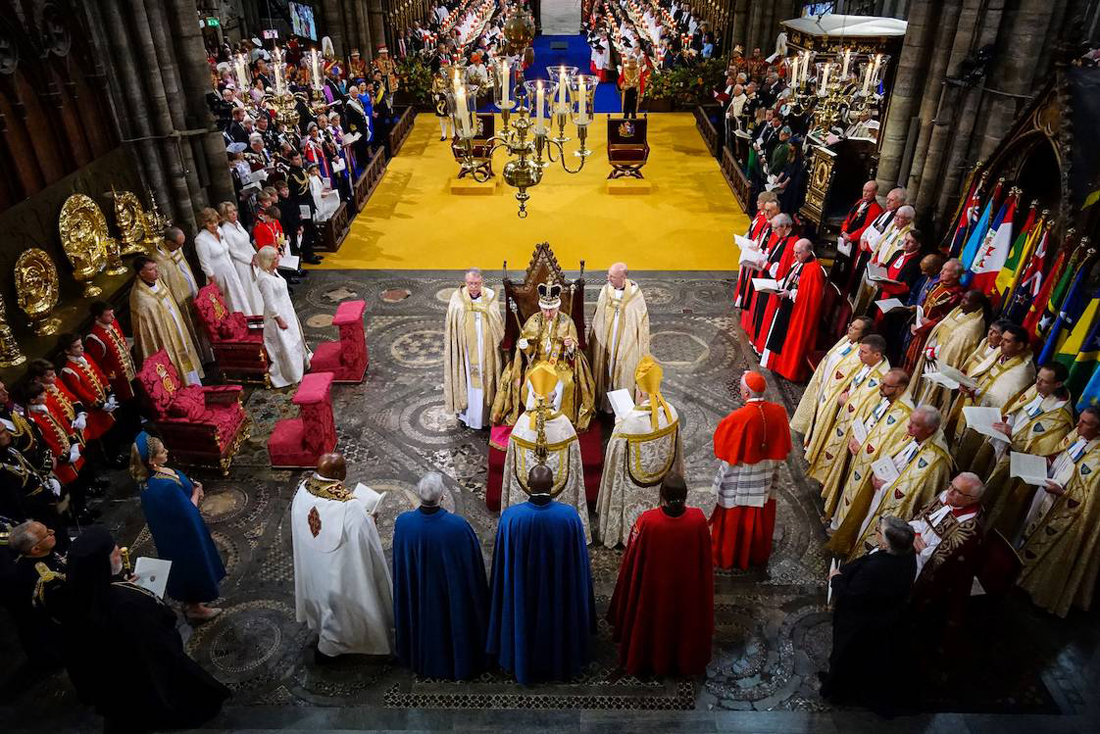
The coronation of King Charles followed the ancient ceremony for crowning the kings of Israel. The oil used to anoint the monarch, the most sacred and theologically significant moment of the coronation, was consecrated in Jerusalem, deepening the connection to the biblical tradition.
The coronation was many things to many people. But to the true believers, and certainly to those who most closely participated in it, it was ritual magic, a full-on magical ceremony, whose intention and action spiritually transformed Charles, if not England.
I'm not really a monarchist. And I recognize that the reigning materialistic worldview has little room for magic, spirit or kings. The dominant way of thinking today, postmodern philosophy, reduces everything to power relations; love, ideals and morality be damned. Captured by this nihilism, university English departments now teach great works of literature only as vehicles to assert one group's dominance over another, glorifying those in power. Seeing that royal occasion as propaganda: pageantry, pomp and circumstance designed to oppress the masses, is the cynically rational version. But I am interested in the story, both of great literature and the coronation of kings and queens.
And why, if you are trying to impress the masses, would you arrange it so the actual anointing of the monarch, the most sacred and theologically significant moment of the coronation is hidden, not for the people at all, shielded as it was from television cameras by a canopy held by four Companions of the Order of the Garter? Wouldn't it make more of an impression on us to see the Archbishop of Canterbury using the Coronation Spoon, the oldest surviving item of the Crown Jewels, dating to the 12th century, anoint Charles on his hands, breast, and head with holy oil, following the ancient ceremony of the investiture of kings of Israel?
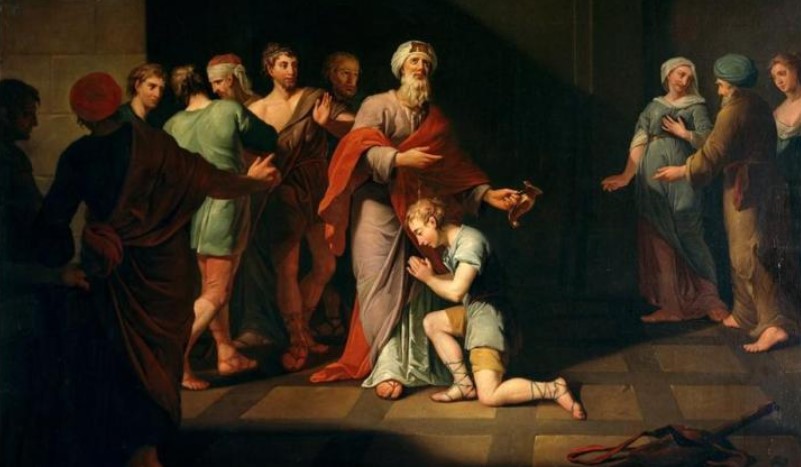
Every Saturday I participate in a little magical ceremony of my own, also untelevised. Today's orthodox synagogue service, also based on ancient Hebraic ceremonial practice, mirrors and substitutes for the services that took place in the Temple in Jerusalem. The Jews believe in magic, most of all the true believers, the kabbalists. But you don't have to be conversant with things mystical; you only need to attend and keep your eyes open to realize that the Jewish prayer service is a precise ceremony, possessing a detailed etiquette governing each step, including, quite literally, the way one steps.
Of course, not everyone attending synagogue is aware of either the mysticism or the etiquette involved. And this is fine because intention, that is, heartfelt prayer, beyond form and rules, is the most important component of the service. Still, according to orthodox thinking (two Jews, three opinions), if you can offer your heartfelt prayer within the traditional form and rules, keeping in mind things prescribed and proscribed, so much the better. For, as is usually the case, when you understand the context, the details become more significant.
Hypervigilant, borderline obsessive, slightly mystical as I am, I am right at home with the ceremonial minutiae of the synagogue service, about which books, both practical and mystical, have been written. Overthinking as I do, dizzying myself with a kaleidoscopic array of mental perspectives about anything that might in any way be important, I am comforted to be in an environment where everything is important. Overly-concerned with doing things correctly, synagogue, where there actually is a right way to do things, is one place where my compulsive thought finds a home. (Publishing, or rather editing, is another.)
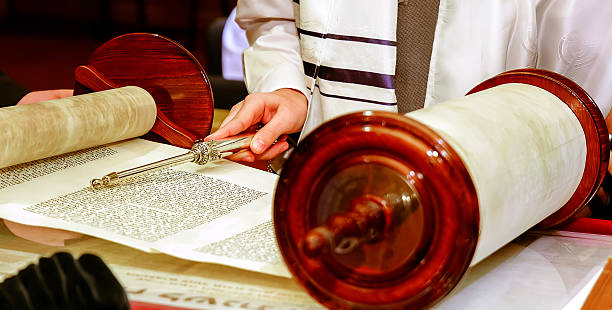
Of course, we are not all the same. The synagogue is a big tent. Come and pray, as much or as little as you like, and in your own way and you will be very comfortable, you will find a home. Still, if you actively participate in the collective ceremony, for example, being called up to the Torah while it is being read, you may be gently guided in the proper etiquette involved. The congregation coming together, functioning as one, magnifies the magical effect. As in any game played together, there are certain rules.
Having attended synagogue twice daily for seven years, and then twice weekly for another 20 years, and being a lover of details, I am well-schooled in the synagogue's optional and essential rules, the etiquette of the Jewish prayer service. Up in Connecticut, although it embarrassed me at the time, a very learned man called me the "assistant rabbi" of that congregation.
Here, too, in San Miguel, I like to keep people on the right page. Being an "elder brother" in this regard, when encouraged I will advise certain receptive "younger" members, people newer to orthodox Judaism, as to how to enhance, to improve their ceremonial observance, and I get a lot of positive feedback for doing so.

All spiritual traditions agree that meditative action is the goal. Intention, kavanah in Hebrew, is the main mystical element, transforming the mundane into the sacred, and elevating the sacred to a higher level. What you think is going on, is going on, at least for you; so why not improve the way you think about what is going on?
Recently, seated side by side with another congregant I did just that, after the event. Leaning over and whispering in his ear, I advised B. in the future to take the shortest route to the central platform when he is called to the Reading of the Torah, "because you are eager to arrive." A moment later he turned to me and in a low voice suggested quizzically and correctly, "And when you go back from the Torah to your seat you should take a long route because you don't want to leave."
Continuing my whispering, I warmly congratulated B. on his deduction. Again, somewhat more loudly he told me, "My wife is always teaching me things [about Jewish law and etiquette]. Now I have something to teach her. And for that she will give me a kiss."
Now here is the rub. B.'s conversation, as soft and unobtrusive as it was, caught the attention of another member of the congregation, X. X., never missing an opportunity to oppose or "correct" me, told me to be quiet several times as B. and I had this very significant, very heartfelt, very brief exchange, which no one but X. even noticed. Later, B. observed to me, "It was strange because I was the one making noise, and X. was shushing you."

The irony is that X. is largely ignorant of all synagogue etiquette. Instead, his comportment in that house of prayer is governed, inappropriately, by his very stilted, non-Jewish social formality. The irony is compounded in that with more than one psychiatric diagnosis, including Attention Deficit Disorder, X. has difficulty keeping his eye on any ball, let alone one in intricate play. Don't get me wrong, some of my best friends have psychiatric diagnoses. But, unlike X., they don't tell me how to behave.
The irony is further compounded in that X.'s compulsive hostility towards me is antithetical to the togetherness, the good-fellowship that makes a congregation. His aggression contrasts starkly with the unity at the heart of spirituality. It is a perversion, a blackening of the good magic that is communal prayer.
One episode, where he repeatedly mocked me while carrying the Torah, even as he passed it to me to be placed into the ark (a small ceremonial closet), still appears to me as particularly satanic. His witchcraft, for that is what it was, cast a spell over me, bothering me for days, weeks and months, in synagogue and out, to the point that I stopped attending.

Discussing the situation, the rabbi mentioned that some people with Attention Deficit Disorder create drama because drama gives them something big and loud on which to focus. Maybe it's that simple. After coaxing and reassurances from the rabbi that things would be different, after a pair of months away, I returned.
The bad news is that things didn't change. The good news is that I did. Now, I go farther physically and further psychologically out of my way to avoid X. Now, when he does confront me, I put up my guard, shielding myself from the destructive incoherence, of which he himself is clearly the principal victim.
It still saddens me, but I no longer expect to be understood by him. He is dearer to me than some crazed street person, but he is in the same category. If X. doesn't want to be friendly towards me, if he won't let me be friendly towards him, I can at least be a better friend to myself.
All along in my difficulty with X., I have been reminded of a chassidic story regarding humility:/p>