 Español
May 31, 2026
by Charles Miller
From a very early age my mother, the librarian, instilled in me the virtue of curiosity as well as teaching me how to use the library to search for answers to my questions. One day during the time I was still in elementary school the New York Times arrived at our house. It included a book review of a new history of the Himalayan countries, and it briefly mentioned the legend of the abominable snowman. When I next rode my bicycle downtown to the Marshall Library I asked at the front desk about any books on that subject. Without looking up from her desk, the librarian pointed her bony finger toward the stacks and in a tone that invited no further inquiry said "fiction."
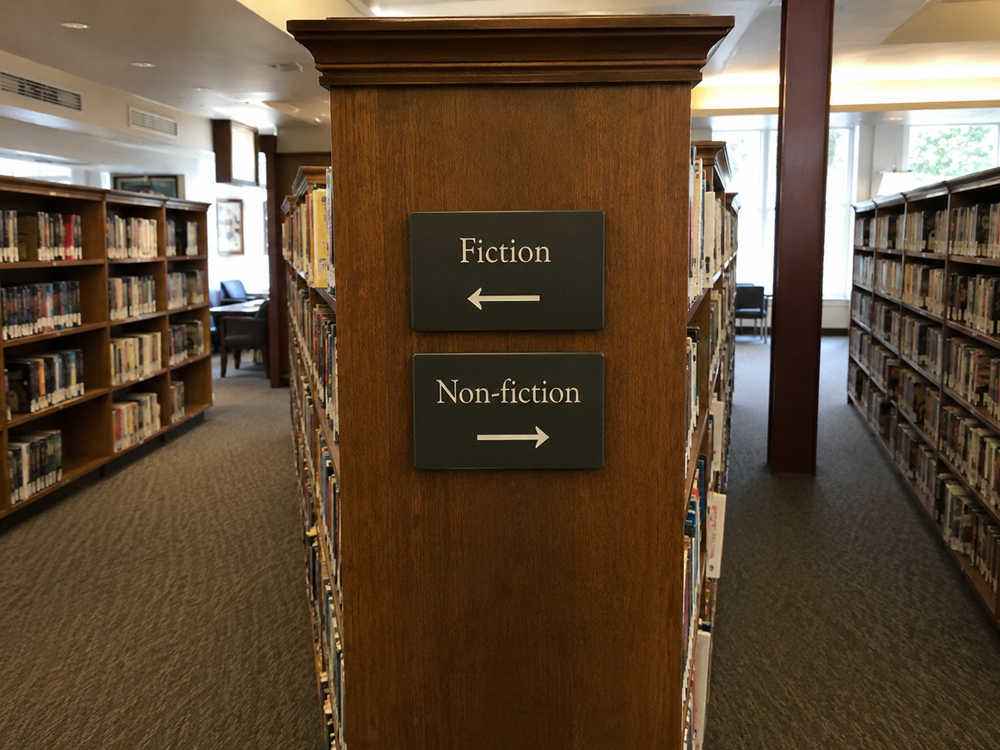
Libraries, book stores, and even Blockbuster Video (when it still existed) all employ common standard classifications of high-level genres. The broad categories are fiction and nonfiction. Fiction can be subdivided further into genres including science fiction, romance, adventure, humor, etc. Nonfiction categories include history, biography, technology, business, travel, and hundreds more. Deciding whether a work is fiction or nonfiction is usually done by the publisher and reinforced by catalogers/librarians when the item is processed for a library or when a work is put on the market for sale. And this is something that is increasingly missing today.
An absolutely fantastic resource available for free on the internet is YouTube. Every minute of every day approximately 500 hours of new video is uploaded to YouTube. Lamentably, a large part of this is so completely lacking in value as to be worse than worthless, however; there are many thousands of hours of high-quality content worth watching. Finding quality videos is complicated by the fact that YouTube does not classify content as fiction or nonfiction in any meaningful way.
National Geographic, the BBC, the Smithsonian, the History Channel, TED / TEDx, the Metropolitan Museum of Art, the Louvre and many many other reputable organizations have vetted channels on YouTube. They try to use each channel's verified badge, publication history, and institutional website links to confirm the authenticity of their videos, but it is a Sisyphean task to stand apart from all the flotsam.
YouTube thumbnail pictures all too often convey false or exaggerated information in an effort to accrue advertising clicks. Recently I saw a video the title of which said it was a documentary about the new Airforce One aircraft. The ridiculously Photoshopped thumbnail picture depicted a Boeing 747 with eight jet engines and machine gun turrets.
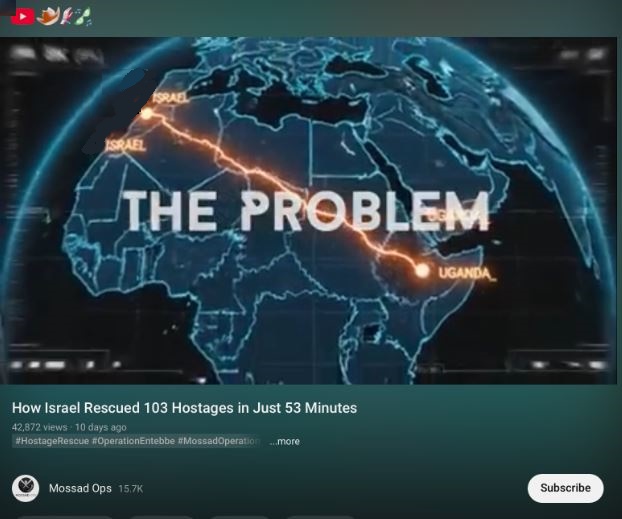
While pursuing a list of historical documentaries, one title indicated it was a history of the heroic 1976 raid by Israeli Defense Forces to rescue the hostages at Entebbe, but the thumbnail picture showed a map with Israel situated on the Straits of Gibraltar. Sorry, but I am not going to watch a video when its creator cannot even find Israel on a map.
With thousands of hours of new videos being uploaded daily, and the proliferation of low-quality creators, this makes discovery of reputable channels harder. Monetization incentives mean that creators are rewarded for attention-grabbing rather than factual thumbnails and content. In spite of all this, there is much worthwhile information and entertainment to be found on YouTube. You just have to be willing to look for it.
**************

Charles Miller is a freelance computer consultant with decades of IT experience and a Texan with a lifetime love for Mexico. The opinions expressed are his own. He may be contacted at 415-101-8528 or email FAQ8 (at) SMAguru.com.
**************
*****
Please contribute to Lokkal,
SMA's online collective:
 ***
***
Discover Lokkal: Mission

Visit SMA's Social Network
Contact / Contactar