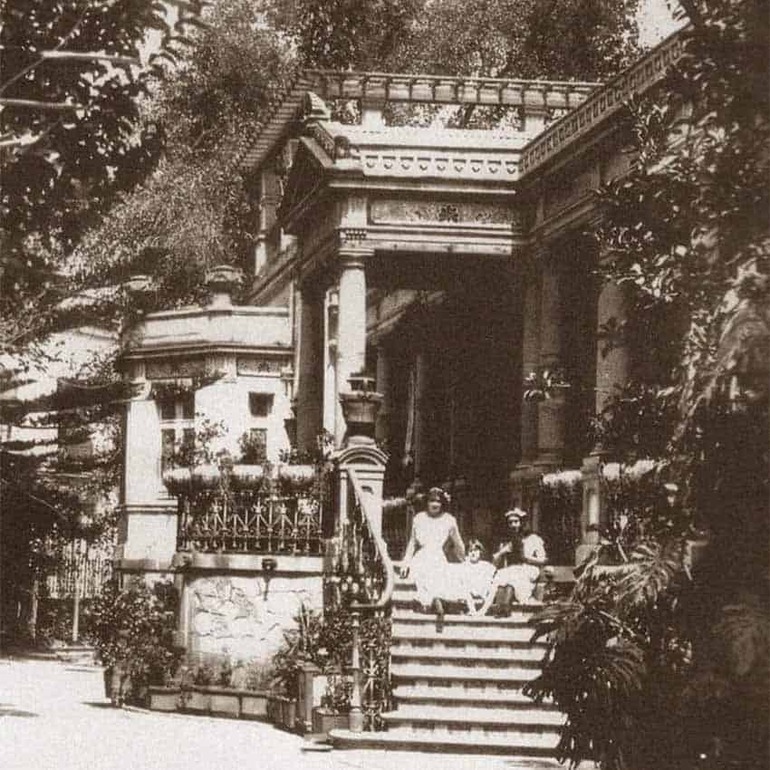
The sisters Rivas Mercado at home as girls
Español
July 5, 2026
by Catherine Marenghi
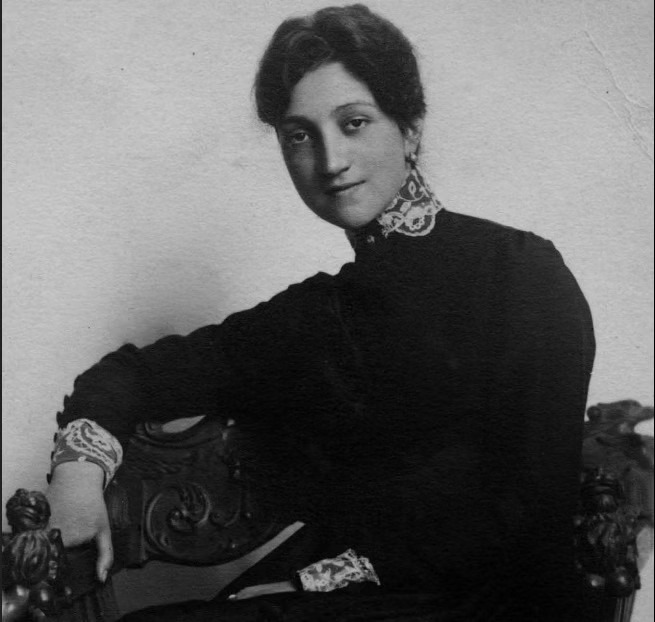
There is one woman in whom the threads of Mexican art, literature, film and history converge in spectacular fashion. Her name was María Antonieta Rivas Mercado Castellanos (1900-1931). In her short life, she left an indelible mark on Mexican culture, although her name is not widely known. Brilliant, educated in Europe, and heiress to a fortune, Antonieta became both muse and patron to the young writers, artists and musicians of the 1920s who were eager to break with the strictures of the past and represent the modern world. She consorted with everyone from Diego Rivera, Frida Kahlo, Tina Modotti, and Federico García Lorca, to bullfighters, Communists, and ambassadors.
Two artists rooted in San Miguel de Allende were particularly inspired by her and spent many years creating epic works in her honor.
Peter Leventhal (1939-2019). This acclaimed painter, sculptor, and printmaker arrived in San Miguel in his sixties, and he became fascinated to the point of obsession with Antonieta. He believed her to be the most underrated and underappreciated figure in Mexican history, and he devoted several canvases to her. One of these paintings, Antonieta's Last Night, was recently donated to Rivas Mercado Museum in Mexico City by Leventhal's widow, artist Terra Mizwa. Leventhal and Mizwa shared gallery space at Fabrica Aurora until his passing, and Mizwa continues to work and show her art there.
Kathryn S. Blair (1920-2019). Her bestselling historical novel In the Shadow of the Angel, based on the life of Antonieta Rivas Mercado, was written during the author's many years residing in San Miguel. She was inspired to write the novel after learning that her husband Donald Antonio Blair Rivas Mercado was the son of Antonieta. Based on decades of research, the book is acclaimed for its historical accuracy, vivid detail, and deep connection to Mexico's cultural identity, and has been dubbed the "Gone With the Wind" of Mexico.
More on these artists later. First, a bit of Antonieta's personal story:
Antonieta Rivas Mercado was a Mexican intellectual, writer, feminist, and arts patron. Born to a wealthy family, she was the second of four children of noted architect Antonio Rivas Mercado and his wife Cristina Matilde Castellanos Haff.
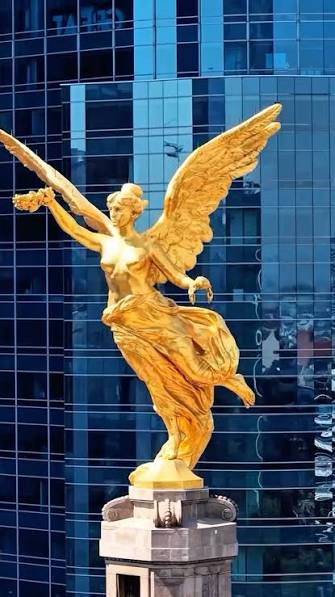
Her father was famous for creating the renown Angel of Independence, commonly known by the shortened name El Ángel, a victory column on the major thoroughfare Paseo de la Reforma in Mexico City. El Ángel was built in 1910 during the presidency of Porfirio Díaz to commemorate the centennial of the beginning of Mexico's War of Independence. In later years it was made into a mausoleum for the most important heroes of that war. Topped by a 22-foot gilded statue of the winged Nike, perhaps the most recognizable landmark in Mexico City, it has become a focal point for both celebration and protest.
Around 1910, during the Mexican Revolution, Antonieta's parents separated, and her mother moved to Paris along with Antonieta's older sister Alice. Antonio Rivas Mercado refused to let his wife move back into the family's palatial house, and as a result, Antonieta had to assume more responsibility at home. With her father's permission, at the age of 18, she married British-born, American-raised engineer Albert Edward Blair, and gave birth to their son Donald Antonio (the future husband of author Kathryn Blair) on September 9, 1919.
The young family lived on a ranch in the state of Durango, but the union was not a happy one. Antonieta repeatedly sought separation from Blair, but he did not consent, which led to her suffering severe bouts of depression.
Antonieta eventually moved to Mexico City and again tried, unsuccessfully, to file for divorce and to obtain financial support for her son. In 1927, her father died, and Antonieta became responsible for the care of her parents' house and her siblings.
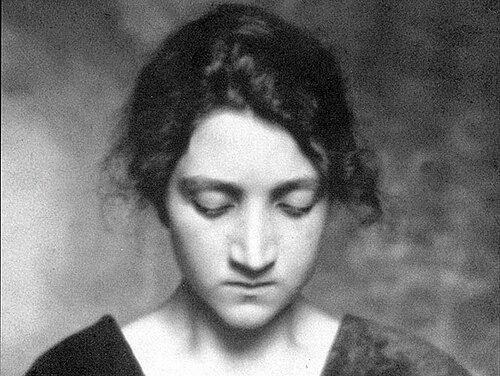
Antonieta Rivas Mercado
*
With her substantial resources, she financed and promoted major cultural projects. For example, she became a principal founder of the innovative Teatro Ulises, which broke with conventional theater tradition of the time. Also, she encouraged and funded the formation of literary lounges and helped establish the Orquesta Sinfónica of Mexico City. It was said that knowing Antonieta Rivas Mercado helped open cultural doors.
In these years, she fell hopelessly in love with her friend, the painter Manuel Rodríguez Lozano, an affection that was not reciprocated. Through this association with Lozano, she met Los Contemporáneos (The Modernists), a group of young Mexican intellectuals who recognized the emergence of an unprecedented universality of cultural expression. Sharing their vision, she not only became their patron but also a member. Antonieta wrote for the magazine Los Contemporáneos as well as the Spanish periodical El Sol.
In 1928 she entered the political arena, championing the cause of women's voting rights in the campaign of presidential candidate José Vasconcelos Calderón, with whom she shared a vision of an educated, just, and democratic Mexico. Antonieta devoted her heart and her money to his campaign. In 1929, she had an affair with Vasconcelos, but this also proved to be fruitless, since Vasconcelos was married.
After Vasconcelos lost the presidential race in 1929, he and his supporters were chased out by the new government. Caught in the vortex of the fraudulent election of 1929, her lover defeated, violence flaring, and her fortune dissipated, she kidnapped her son, as she did not have legal custody, and fled to New York, where she met author Federico García Lorca.
In 1931 she moved with her son to Paris to be with Vasconcelos. When he rejected her, she resolved to take her own life. By all accounts, on February 11, 1931, Antonieta entered the Notre-Dame Cathedral at noon, a .38 caliber gun in her purse. Ironically, she had received the gun from José Vasconcelos during his presidential campaign for her own protection.
She stopped in front of a carved crucifixion, pausing in reflection. She turned to a side altar in which a small, modern crucifix sat on the altar, and it was here where she took the revolver in her hand, pressed the barrel to her chest, and shot herself once in the heart. The Canon of the Cathedral immediately ordered the doors shut and everyone was sent away. For three unprecedented days, the cathedral remained closed; first deconsecrated, then exorcised and then reconsecrated.
This tragic suicide was captured in a series of Peter Leventhal paintings, including Antonieta's Last Night, which shows a somber Antonieta in a dark coat with the Seine and Notre-Dame Cathedral in the background. Another Leventhal painting depicted a more graphic image of Antonieta as a fallen martyr, resting at the base of a crucifix inside the cathedral after inflicting her mortal wound.
Antonieta was also immortalized in Diego Rivera's Mexico City mural, "El que Quiera Comer que Trabaje" ("He Who Wants to Eat Must Work"). In 1982, she was portrayed by Isabelle Adjani in the film Antonieta, which was directed by Carlos Saura. And in November 2010, to celebrate the bicentennial of the Mexican Independence, the opera Antonieta by Mexican composer Federico Ibarra was presented at the Teatro Flores Canelo, Centro Nacional de las Artes in Mexico City. Mexican mezzo-soprano Lidya Rendón starred as Antonieta, in a staging by Antonio Morales and Rosa Blanes Rex, conducted by Enrique Barrios.
In 2010, during Mexico's Bicentennial, Antonieta was officially recognized as a primary promoter of modern Mexican culture, and President Felipe Calderón called her "our national Angel."
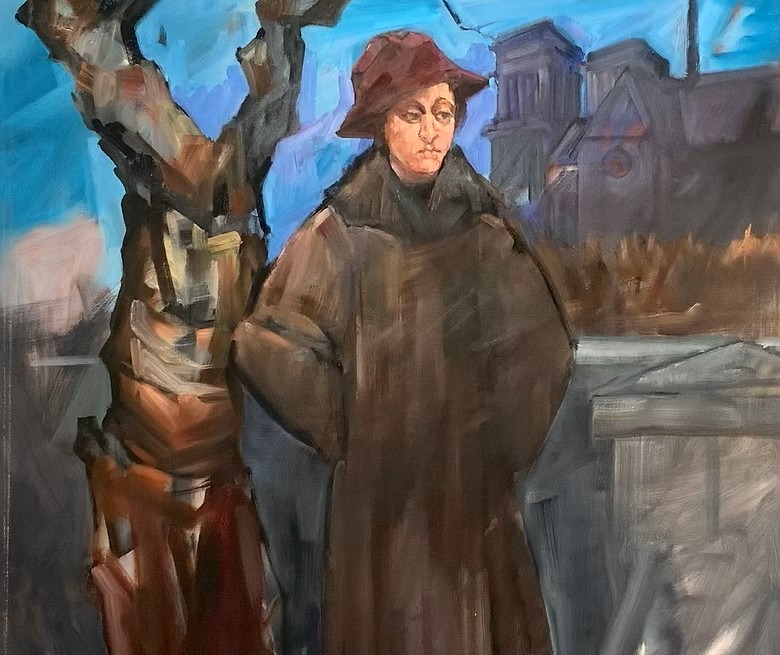
Antonieta's Last Night
Peter Leventhal's Magnum Opus
Born in New York City in 1939 to immigrant parents, Leventhal devoted his life to drawing, painting, printmaking, and sculpture, with more than 40 solo exhibitions to his name. After 35 years in New York and Brooklyn, which included teaching art to gifted students, he moved to Mexico to settle in San Miguel de Allende, where he met his wife Terra Mizwa and lived until his passing in 2019. Despite living with Parkinson's disease, with severe tremors in his right hand, he managed to switch to his left hand and continued creating art through his final years.
When he first arrived in Mexico, Leventhal had searched for a subject both serious in content and grand in scope. He wanted the subject to be particular to Mexico but tied uniquely to his own personal experience and beliefs. He found the events leading up to and following the Mexican Revolution of 1910 a compelling subject for an ambitious and extended art project – what he called his Magnus Opus.
Leventhal held a deep distrust of those who seek political power, and the intellectuals and ideologues who form the cultural apparatus that supports them. This view would be fully ingrained in his ambitious art project on Mexican history. He wrote in his private journals, "The cultural apparatus mythologizes some and demonizes others. There are persons who are ineradicably awful. Victoriano Huerta comes to mind. Others are more complicated. Pancho Villa, for instance. I'm interested in the arrival of Villa and Zapata into Mexico City, but also in the cultural world of artists and others involved in the life of the country at that time.
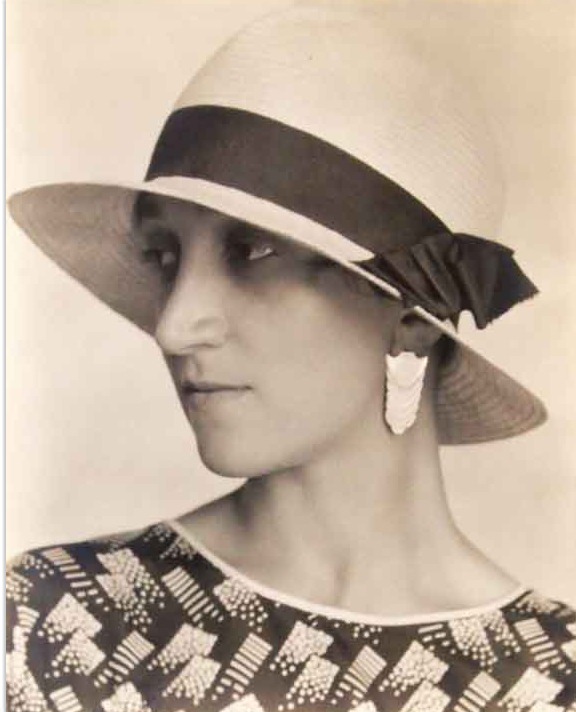
Antonieta by Gamas
*
"The single political figure in the Mexican revolution and its aftermath who rises above the all too human qualities of self-aggrandizement and betrayal is Francisco Madero, and for this Mexico is to be commended, as most often no one comes out of the revolutionary situation untainted."
His initial entrance into the project focused on the events surrounding the Communist Party of Mexico. Many of the characters he found intriguing were members of the party. Also, his family had been involved in revolutionary communist activity in Eastern Europe.
"I was appalled by the role of intellectuals in forming social and cultural life, and the duplicity and lies with which intellectuals are prone to be led. I am fascinated with how ignorance plagues us far less than pretensions of knowledge, particularly when that knowledge becomes fanatic and then murderous," he wrote.
One of the first events he painted was the assassination of Julio Mella, a Cuban political activist, journalist, and one of the founders of the original Communist Party of Cuba. Mella was assassinated in 1929 while walking home late at night with famed photographer Tina Modotti.
In his research for this painting, Leventhal came across the story of the death of Antonieta Rivas Mercado. He researched her life, which included meeting author Kathryn Blair in San Miguel and reading her historical novel In the Shadow of the Angel. In this and other readings, he found what he considered to be a disturbing discrepancy between the adulation accorded Tina Modotti and the negligence accorded Antonieta. It struck him first as odd, and then as infuriating.
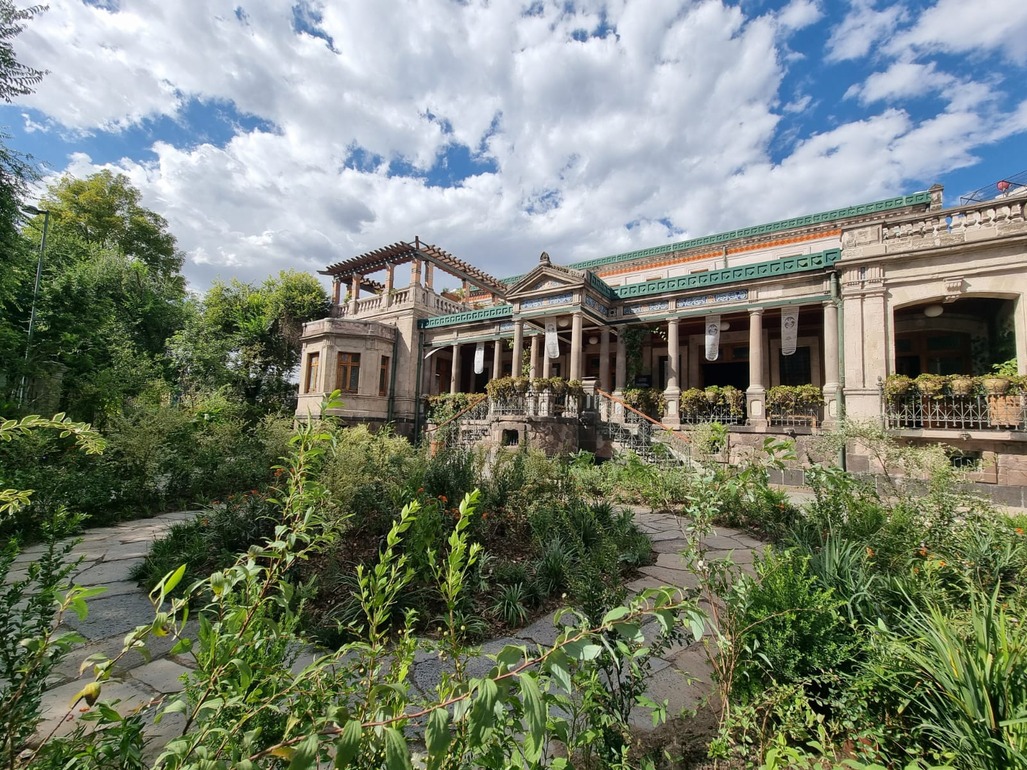
Casa Rivas Mercado facade
*
At this point the focus of his great project shifted dramatically to the life of Antonieta Rivas Mercado, whom Leventhal regarded as the pivotal figure in the history of modern Mexico. "Her tragedy reflects the tragedy of the Mexican revolution, and perhaps all revolutions. How and why such an outstanding person had been neglected for so long made me more convinced of her significance," he wrote.
It was at this point that he learned two things of critical importance to his project. One, Antonieta was romantically connected with José Vasconcelos, the "cultural caudillo" of the Mexican Revolution. As the first Secretary of Public Education (1921–1924), Vasconcelos expanded rural schooling, championed literacy, and supported the muralist movement. Leventhal was fascinated by Vasconcelos's concept of "La Raza Cósmica," a new, harmonious mixed-race civilization. He was projected to win the presidential election of 1930, but lost in what Leventhal viewed as "blatant fraud."
To organize his project in all its complexity, Leventhal hired a young man named Adrian, age 18, to become his administrator. On the second day of this association, he decided to outline his idea for the entire project, which included documentation both visual and written, and a book, which he had already started and now had to be put on hold because the essential theme had changed.
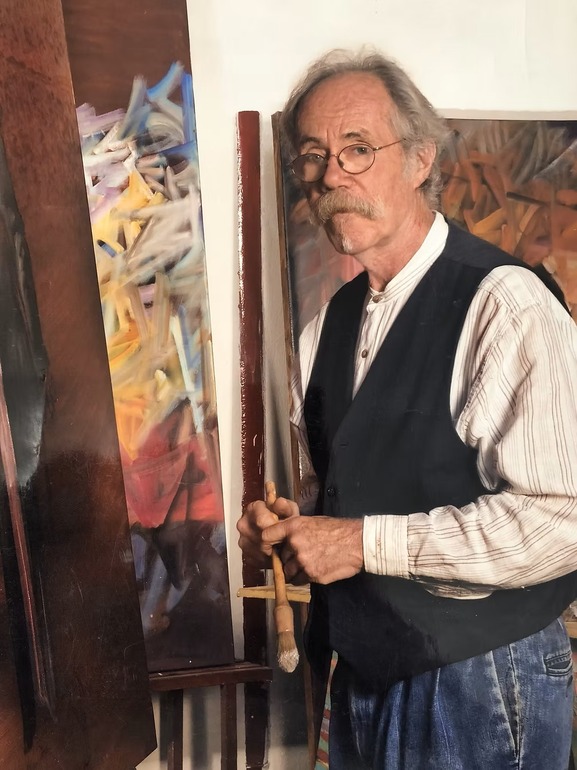
Peter Leventhal
*
He asked Adrian his full family name and what involvement his family might have had with the Mexican revolution. He answered, "Do you know of the Rivas Mercado family? I am the great grandson of Antonieta Rivas Mercado, and my grandfather is her son."
"Literally the hair on my head stood on end," Leventhal recalled. "I have always believed that our ideas, thoughts, and conceptions come from outside us. Now, I am sure."
He decided to make Antonieta the center of his project. He started a large triptych, in which the side panels graphically illustrated her suicide in Notre-Dame Cathedral. The center panel at first depicted Antonieta's involvement with the literary and artistic milieu she so vitally supported and then evolved into a depiction of her connection to Mexican classical music and her dedication to educational reform. The two side panels depict the moments before her tragic suicide and the immediate aftermath as she slumps to the ground.
As Leventhal recalled, "Kathryn Blair related to me that in her research, she had visited Notre-Dame and concluded that the only altar fitting the scenario was now barred with a metal gate. One day, Kathryn said she was peering over the grating when a strange blue light filled the space. Her companion asked if she was wearing the fragrance of roses. I painted that scene as Kathryn described from her experience, and I put three very Mexican angels into the picture, two of whom support Antonieta as she slides to the ground. I used as models two young Mexican children, the children of people who work in the studio complex where I work," Leventhal explained.
Another painting of Antonieta concerns her relationship with José Vasconcelos. In this scene, Antonieta comes upon José dozing at a desk. Behind him, mask-like specters float in a dark haze. They represent various personages in the epoch of the revolution, none of whom, in Leventhal's view, served the cause of democracy and popular liberation particularly well. They included the man Leventhal viewed as archvillain of the revolution, General Victoriano Huerta; artists like David Alfaro Siqueiros, Diego Rivera, and José Clemente Orozco; along with Luis Morones, Plutarco Elias Calles, and others. The title of this painting is The Sleep of Feeling Breeds Monsters, a play on the title and theme of a print by Francisco Goya.
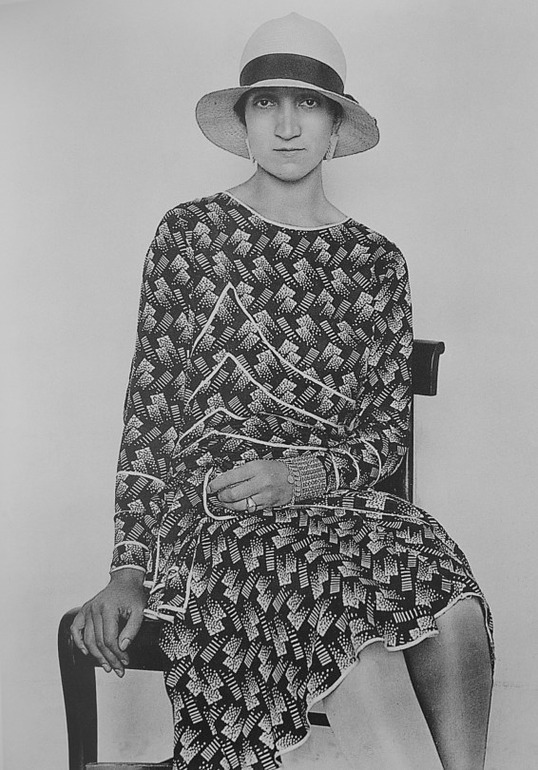
Antonieta, photo by Tina Medotti
*
Leventhal also depicted in a painting two aspects of Antonieta's life in the decade of the 1920s. As Leventhal saw it, Antonieta supported, nurtured, and was critically vital to a segment of Mexican cultural life of that decade, in particular, the counter-cultural movement of Mexico; by contrast, he felt the Muralistas and Nacionalistas were supported by the state apparatus.
Leventhal sought to capture Antonieta as the embodiment of a woman emancipated from the strictures of a traditional feminine role. "Antonieta, an exceptionally graceful woman with a rich and various inner life, managed to live a life designed by herself, innovative, inventive and, one might say even, extemporized. I have seen a letter written by the great Spanish poet Federico García Lorca, extolling Antonieta in these terms. Antonieta had met García Lorca in New York city on the campus of Columbia University, where I happened to do undergraduate work in the ‘50s," Leventhal wrote.
Leventhal was also an admirer of Antonieta's father, Antonio, not only for his creation of the Angel of Independence – "the fulcrum balancing the old epoch of Mexico and the New" – but for his work as a sculptor.
"One afternoon an excited woman reentered my studio after I had shown her some examples of the project, and she asked if I realized that a piece of sculpture by Antonio Rivas Mercado, a head of Moses, was being shown in an adjacent gallery. Adrian and I quickly went to see it. The monumental head was clearly the work of a master artist. The signature Antonio Rivas Mercado on its side gave us that little chill that such synchronicity brings," Leventhal wrote.
In speaking of his Mexico project, Leventhal wrote, "These paintings might be characterized as history paintings. It is not a mode much in favor with artists nowadays. At one time it was considered the epitome of painting. So I'm working in a manner unfamiliar to me except that it requires all my powers as a figurative artist to give it vital form. In that regard I never work from photographs. This is no exception. I find people here in San Miguel who I feel fit the character, and sometimes the physiognomy, of the historical personages with whom I am dealing. I paint a portrait directly from life of each of them, sometimes more than one, and then transcribe them into the situations I am dealing with.
"This project has been taxing because it has required of me an enormous amount of research. Yet I am grateful to have embarked on it because the research has revealed to me a history of enormous interest, of compelling events, of exceptional characters. It has allowed me a small entry into the life of Mexico, a place I have always found compatible. I am now an older man, with various afflictions that haunt old men. My strength and my stamina may not be that of a young man, but I hope some wisdom has accrued to me over my lifetime. And perhaps this compensates for loss of muscle."
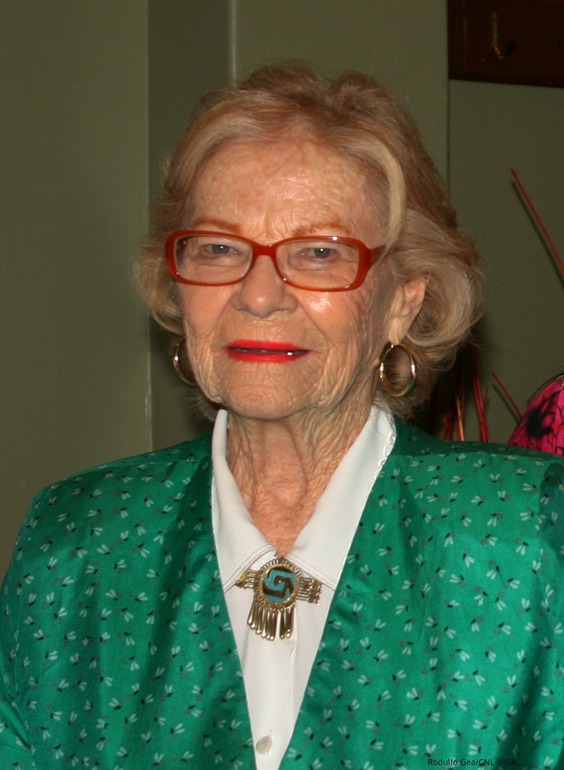
Kathryn Blair
Kathryn S. Blair
Kathryn Skidmore Blair was born in Cuba in 1920 to parents of American origin. The family moved to Mexico City when she was three years old. She later was sent to the U.S. to complete her education and graduated from the University of California in Los Angeles. The 1941 attack on Pearl Harbor motivated her to work as a radio commentator in Hollywood.
She worked for Nelson Rockefeller in the Bureau of Inter-American Affairs, where she created a radio program that aired in the U.S. and Latin America. During this time, she met and married her first husband and had a child. After the marriage ended in divorce, she decided to return to Mexico.
In Mexico City she married Donald Antonio Blair Rivas Mercado. She was fascinated by the stories Donald told about his grandfather, the architect Antonio Rivas Mercado. When Kathryn Blair learned that her husband's mother, Antonieta Rivas Mercado, had committed suicide at Notre-Dame Cathedral, she knew she had found something to write about.
Blair learned about the suicide from a letter she received from a family friend in California, congratulating Blair on her marriage. The friend wrote, "How wonderful that you married Donald Blair. Too bad that his mom committed suicide." Blair had never heard that story, which she thought was strange.
According to Mariana Blair, Kathryn Blair's granddaughter, the story of Antonieta's suicide was something of a family scandal, not only because of Antonieta's ill-fated affair with Vasconcelos, which precipitated the suicide, but also because suicide is a mortal sin in the Catholic faith. When Blair began the research for her novel, she approached Antonieta's husband, now her father-in-law, and asked, "What can you tell me about Antonieta, your ex-wife?" he replied, "That is a closed chapter of my life."
Blair's husband Donald was a child, living in a guest house in Bordeaux, when his mother took her life. The official story that Donald had been told was that his mother had become sick and was hospitalized in Paris. The boy was sent back to the United States on a ship and later told that his mother had simply passed away.
Blair began her research with interviews of the Rivas Mercado family, obtaining first-hand accounts. This research began in the 1970s and took over 20 years, but it allowed her to capture the life of her subject with great accuracy and detail. Blair and her husband moved to San Miguel de Allende specifically because it offered a quieter location for writing her book.
It was in San Miguel that she started putting together all the puzzle pieces to write the historical novel In the Shadow of the Angel, which was published first in Mexico, in Spanish, in 1995. It became a bestseller in Mexico. It was later published in the U.S. in English in 2001.
According to Mariana Blair, "My grandmother wrote the book in English thinking that it would be published first in the United States. She had several agents, but no publishing house in the U.S. showed interest. So it was translated from English to Spanish. The English version was later self-published."
In the Shadow of the Angel captured the story of a woman who defied tradition and class to bring change to her country, and she paid the ultimate price for her passionate rebellion. Her rollercoaster life paralleled Mexico's struggle for national identity: the final decade of a long dictatorship that ended in the lavish Centennial celebration in 1910; the chaos wrought by ten years of violent revolution; and the ensuing brutal struggle for power among the generals who established the social and political order by which Mexico is governed today.
Set between 1900 and 1931, the novel intertwines Antonieta's personal story with Mexico's political and social upheavals, including the final years of the Porfirio Díaz dictatorship, the Mexican Revolution, and the post-revolutionary struggle for power.
Antonieta emerges from the pages of this book as a brilliant, cultured, and scandalous figure. She dared to seek a divorce, which was unheard of in her time. Her ill-fated marriage to Albert Blair and her obsession with men who rejected her became her personal via crucis.
As Mariana Blair put it, "My grandmother's book rescued Antonieta from obscurity while launching her own literary career." Other works by Kathryn Bair include Breve relato de la historia de México and El diario de Lucía.
In 2016, Kathryn donated her personal archive to the IBBY foundation in Mexico City, which includes her extensive research for In the Shadow of the Angel – everything she gathered over 20 years for her novel.
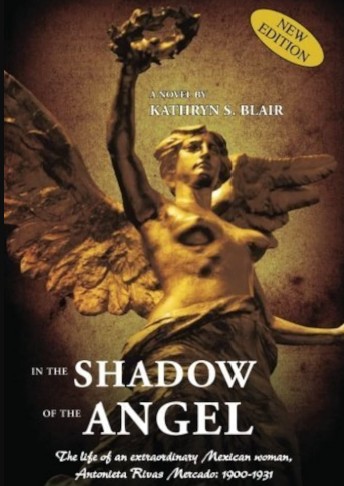
Celebrating Antonieta
Susan Page, founder of the San Miguel Literary Sala and the San Miguel Writers' Conference, was captivated by the book In the Shadow of the Angel. In 2010, she organized a group event to celebrate the novel, including meeting with Kathryn Blair, a trip to Mexico City, an inside tour of the Angel of Independence monument, and a visit to the former home of Antonieta.
"Kathryn was thrilled with the idea of putting together a program on the book, and she was a great help in the project. She put me in touch with the Antonieta Rivas Mercado Foundation and with several relatives who were still alive. We put together a panel of family members, and Kathryn gave a wonderful talk. We also invited book groups all over San Miguel to read the book and come to the next Writers' Conference to share their experiences.
"We held a cocktail party in the very house in San Miguel where Kathryn lived when she was writing the book. The generous new owners were happy for us to do this. In Mexico City we visited Antonietta's sister's mansion on the Reforma, which is now a private club. Kathryn gave us a tour of that house telling us where Antonietta and her sister played and the location of their rooms, and she shared stories about events that happened there. Then we toured the family mansion that Antonio Rivas Mercado built, although we only saw the outside; it was being renovated. (It is now fully restored.)
"In the book we had learned how Antonietta, as a young girl, had to live in the basement during the devastating 1910 revolution. She used to look out the basement window at the house across the street which had been commandeered by revolutionaries. We got to sit in that very window and look out, just as she did all those years ago," Susan added.
After that weekend, Kathryn and Susan became dear friends. "I visited her in Mexico City several times, where she lived after her book was published, and I became good friends with her daughter, Vivian. Kathryn also came to San Miguel occasionally. We stayed in close touch. I attended her memorial service in Mexico City in 2019. She died at age 99."
Recently Terra Mizwa, Peter Leventhal's wife, approached Susan about donating the painting Antonieta's Last Night. "It is the first I had ever heard of it," Susan said. "She said she wanted to donate the painting and requested ideas for potential recipients. I instantly thought of the Rivas Mercado house and contacted Kathryn's granddaughter, Mariana Blair, who helped make the arrangements with the Director of the house.
"We owe our deep gratitude to Peter's wife, Terra Mizwa, for her great generosity and thoughtfulness in donating this painting to the house where Antonietta grew up. There could not be a more appropriate place for this painting to live. It is a perfect fit and a lovely gift."
Final Notes
Peter Leventhal died in 2019 – the same year as Kathryn Blair. Terra Mizwa has organized a showing of Leventhal's paintings at Lavinia's Framing and Gallery, which will be open to the public through the summer of 2026.
.
The Peter Leventhal painting Antonieta's Last Night will be collected from Mizwa in San Miguel and delivered to the Mercado Riveras House in Mexico City in July 2026. Mizwa also donated another of Leventhal's Antonieta paintings to a children's school in Leon. "Antonieta had spent a lot of time creating programs for children, for art and music, so this donation was a way of honoring Antonieta," Mizwa said.
The Rivas Mercado House is currently open to the public and houses numerous artifacts and photos of Antonieta. It was designed and built in 1894 by the architect Antonio Rivas Mercado as a family residence and architecture office-workshop in the then nascent Colonia Guerrero. It recently re-opened after extensive restoration. After the damage of the 1985 earthquake and decades of abandonment, more than a decade of restoration brought the house back to life. More about the museum is at https://casarivasmercado.com/.
**************
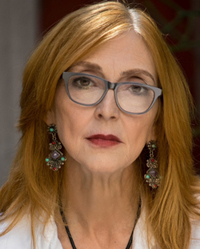
Catherine Marenghi is a local poet, novelist and memoirist who has been active in the San Miguel literary scene for more than a decade. She has published three poetry books, a memoir, and a historic novel. A native of Massachusetts, she has made San Miguel her permanent home.
www.marenghi.com
**************
*****
Please contribute to Lokkal,
SMA's online collective:
 ***
***
Discover Lokkal: Mission

Visit SMA's Social Network
Contact / Contactar