 Español
February 1, 2026
by Audrey Jacobs
Luis Fernando Romaña did not begin as a textile artist. He began as a painter. For six years, painting was his primary form of expression. He worked with vision, color, and emotion, often seeing the finished work clearly in his mind before it ever touched the surface. But after years of painting, something shifted. The visions stopped.
What followed was what Luis describes as a dark period in his life. A time when inspiration disappeared completely. Not because of a single event, but through a convergence of experiences that forced him inward. Some traditions call this facing the shadow. For Luis, it was a long process of integration that lasted close to six years.
During that time, he stopped creating art altogether. He worked all kinds of jobs. He learned about life outside the creative process. And he waited, without knowing if his creativity would ever return. The turning point came unexpectedly.
While traveling in Nayarit, a region of Mexico considered sacred by many indigenous communities, Luis visited a gallery showing artwork by the Wixárika people, an ancient indigenous culture from the Sierra Madre Occidental whose traditions have remained largely untouched by colonization. There, he encountered yarn-based ceremonial artwork.
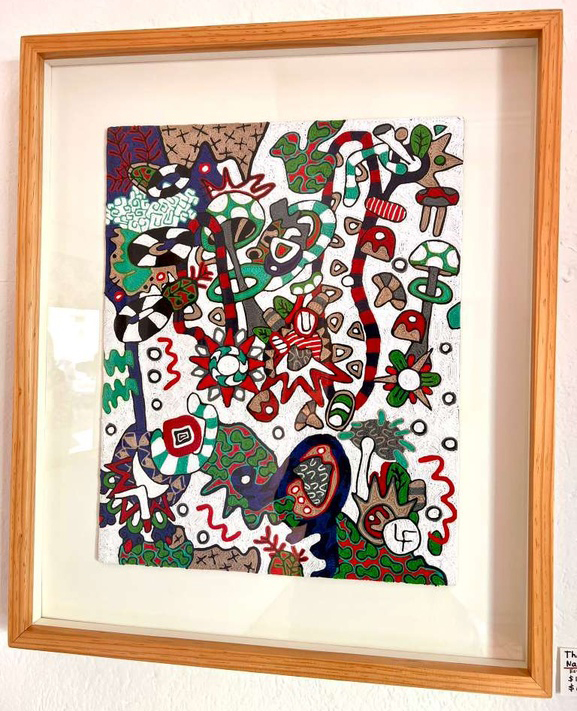
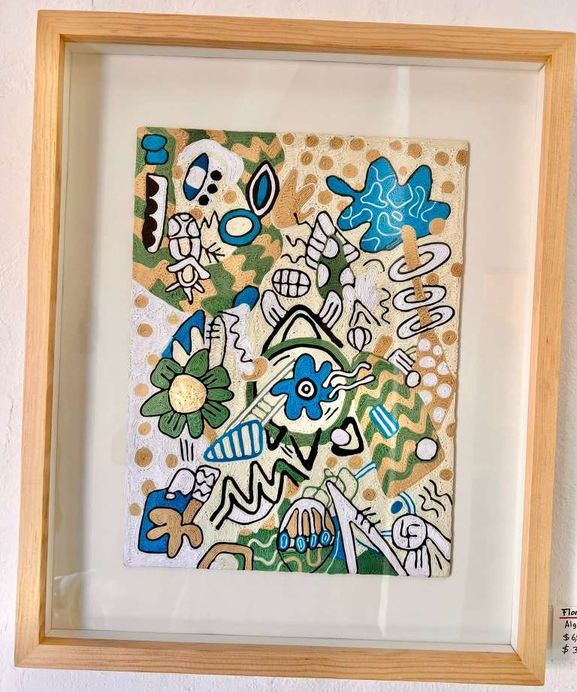
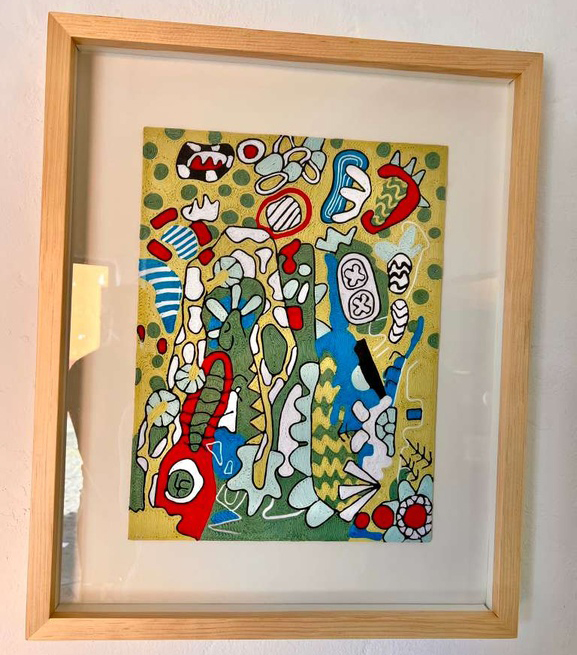
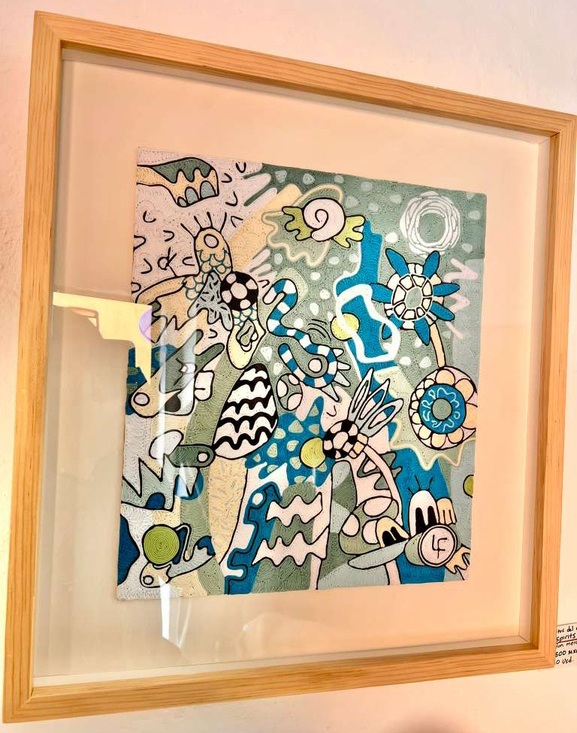
The pieces were made with acrylic or wool yarn pressed into wax on wood, forming dense, symbolic compositions. Ceremonies, paths, cosmological symbols, and spiritual narratives emerged through thread rather than paint. The work was intuitive, spiritual, and deeply rooted in ancestral practice. Something opened in him.
That night, after seeing the work, Luis had a vivid dream. He does not describe himself as someone who regularly dreams intensely, nor does he attribute the experience to any substances. But this dream felt real.
In it, five elders appeared and handed him the technique. Not as instruction, but as permission; permission to use the method; permission to carry it forward in his own way.
It took him weeks to trust the experience. After years of creative blockage, he was cautious. But eventually, he found himself walking into an embroidery store, buying yarn, and beginning again from zero. He did not seek instruction from other artists. He says he already knew what to do intuitively.
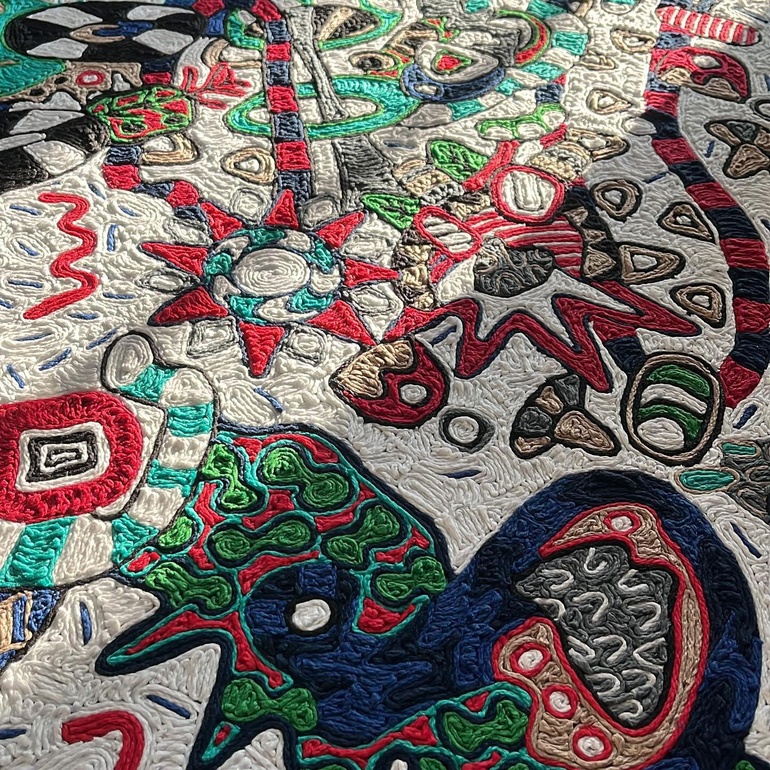
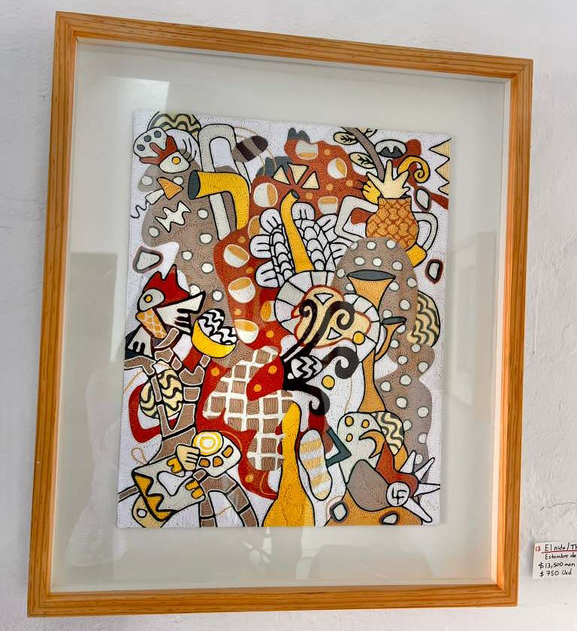
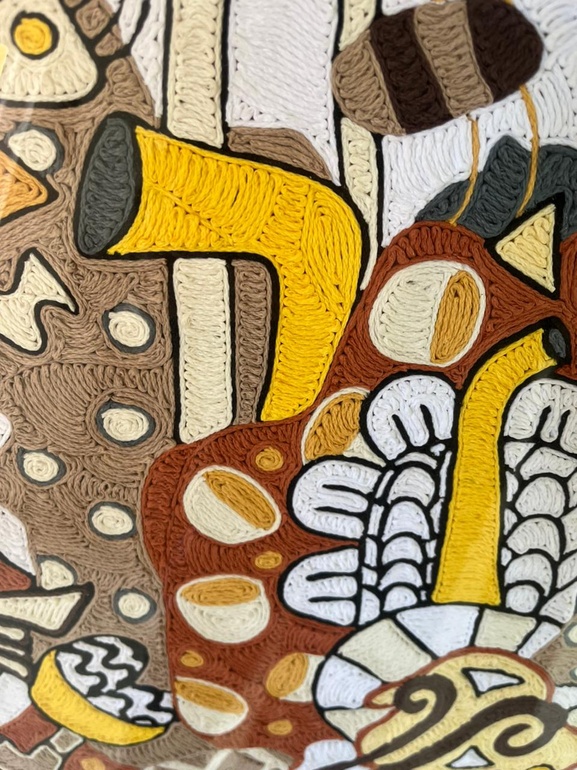
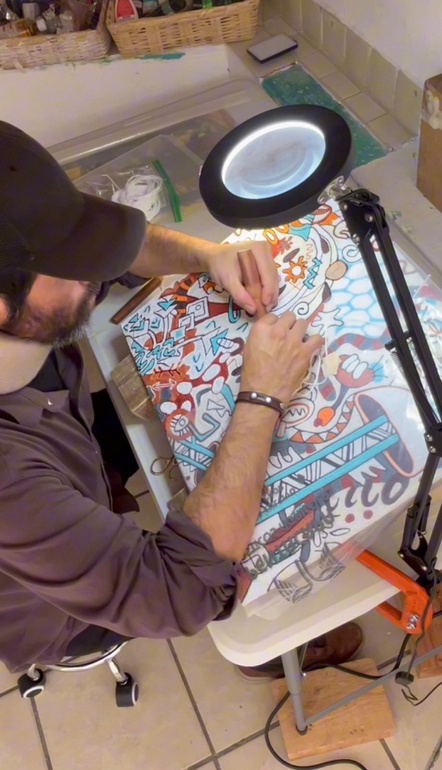
What followed were months of experimentation, trial and error. Luis chose cotton yarn over acrylic, drawn to its texture and visual depth. He researched materials and settled on a traditional wax called cera de Campeche, a wax produced in southern Mexico and used by indigenous artisans for generations. The wax is molded and placed onto wood, allowing the cotton thread to be pressed into the surface and preserved for decades. Some traditional Wixárika works using this method are over 100 years old.
detail
*
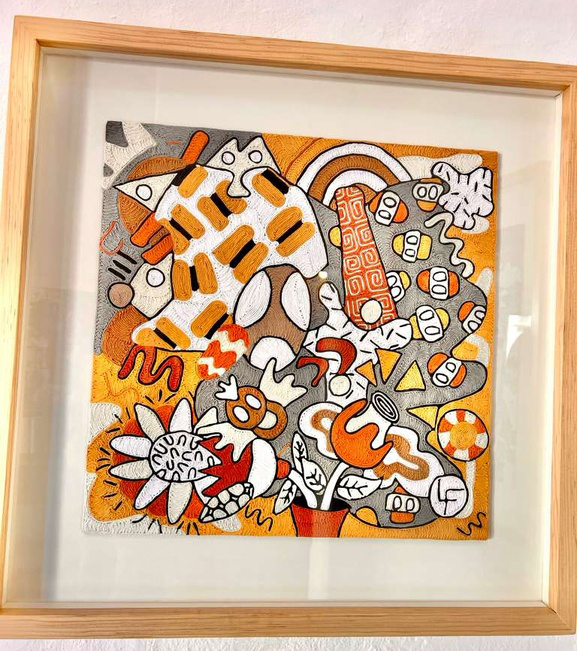
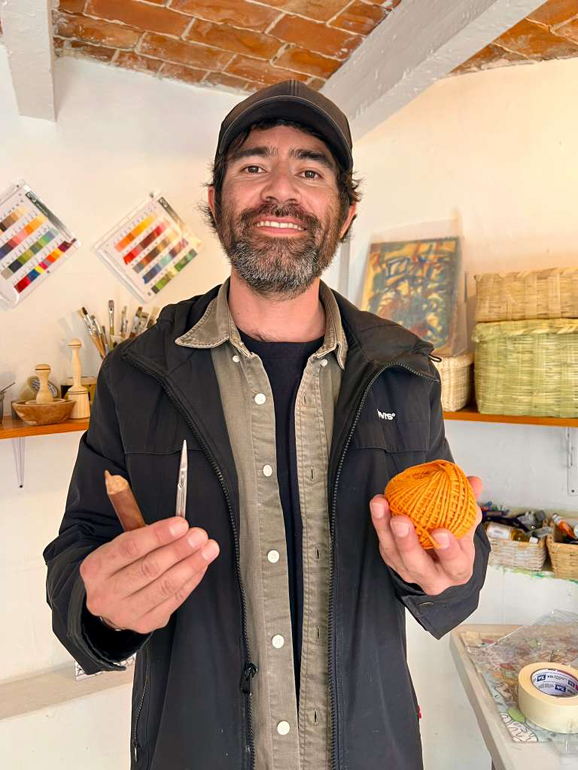
Luis carves his own tools. Each piece takes approximately one to two weeks to complete. He works three to five hours a day, pressing thread into wax, building the composition slowly. There is no sketch. No predetermined image. He selects five or six colors at the beginning and allows the figures to emerge organically as he works.
Snakes, mushrooms, animals, abstract forms, and symbolic pathways appear repeatedly. The process is intuitive and physical, rooted in repetition and presence rather than planning.
Luis does not claim to replicate indigenous art. What he creates is contemporary work that uses an ancient technique, guided by respect and permission. His pieces sit at the intersection of personal vision and ancestral method, honoring tradition while allowing it to evolve.
This is not weaving as decoration. It is weaving as a form of art and limitless creativity.
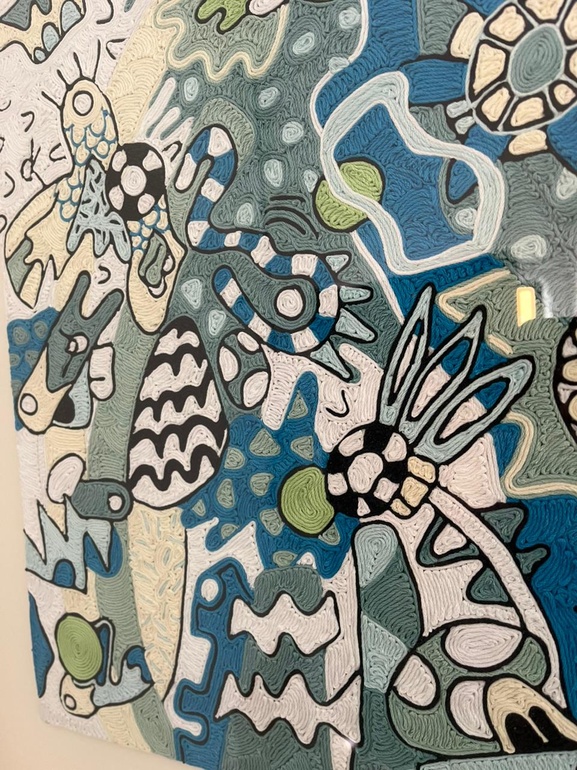
detail
*
Luis Fernando Romaña was born and raised in Mexico and is based in San Miguel, where I met him during the Guadalupe Art Walk, an annual gathering of local artists and makers. I was honored to purchase a piece of his work entitled Living Nature to hang and enjoy in my San Miguel home.
Luis's work is unique not because it imitates tradition, but because it honors one of the country's most ancient indigenous art forms and carries it forward into a contemporary visual language that is entirely his own.
What he creates is rare: rooted in lineage, guided by intuition, made with a level of devotion that can't be rushed or replicated. This is not weaving as decoration. It is weaving as a form of art and limitless creativity. Like all true craft traditions, it reveals more the longer you sit with him and his art.
Instagram: @coyoteweavers
Facebook: Coyote Weavers
**************

Audrey Jacobs is a writer, storyteller, and experience designer who moved full-time to San Miguel de Allende in 2025. A sixth-generation Texan who spent 34 years in San Diego, she is a TEDx speaker and the former organizer of TEDxSanDiego, where she produced more than 80 TEDx talks.
She has written about life, business, and culture for more than a decade and now documents local culture and community in San Miguel. Known for connecting people and ideas, she considers herself a master matchmaker and is passionate about giving back to the community through gathering, storytelling, and shared experiences.
She is the mother of three grown sons and loves to dance and host dinner parties, especially Shabbat dinners.
To follow her personal blog sign up on her website:
www.CasaAvra.com
**************
*****
Please contribute to Lokkal,
SMA's online collective:
 ***
***
Discover Lokkal: Mission
Visit SMA's Social Network
Contact / Contactar