|
 Español
April 19, 2026
by Dr. David Fialkoff, Editor / Publisher
I just finished listening to Absalom, Absalom, William Faulkner's moving tale about the fall of a family and the South itself. I download eAudiobooks from the public library website that I share with my daughter up north.
I probably could have checked the book out of our Biblioteca. However, I listen rather than read because I have a lot of time to listen (when I am doing something routine: exercising, cleaning or some types of computer work) and very little time to actually sit down and read.
While looking on the library website for my next eAudiobook, I went into "checkouts and holds" tab and noticed that my daughter is reading Michael Pollan's latest book, A World Appears: A Journey into Consciousness. This was somewhat a coincidence as right then, in one of the many tabs open on my computer, paused, I was halfway through listening to a podcast with Michael Pollan provocatively titled, "Your Mind is Lying: Michael Pollan Explains Why You Can't Trust Your Own Thoughts."
I like his work a lot, but I don't need Michael Pollan to inform me that I can't trust my own thoughts. I already know that I cannot trust my own thoughts (including the thought that I cannot trust my own thoughts). Scientists (and Pollan is very scientific) prove something that just from daily experience has always been obvious to the whole of humanity, and then they act like they have just made a significant discovery.

I like Pollan best when he is writing about plants, as he did in his first volume, The Botany of Desire. In that book he wrote about four plants: apple, tulip, potato, marijuana, that, by making themselves valuable to human beings, have assured their continuance (the biological imperative), and spread around the world.
In the podcast (paused somewhere on my computer) to which I was listening he does talk about plants. He claims that plants are conscious (or "sentient," as he prefers to call it) citing the following facts as proof:
|
|
|
|
An Italian scientist, Stefano Mankuso, wanted to see if the plant could navigate a maze. So, he put a little bit of nitrogen fertilizer in one corner of a maze and the roots of the plant found the most direct path to the fertilizer. If a mouse did this, we'd say it was intelligent.
Plants can hear. You can play a recording of a caterpillar chopping on a leaf, and the plant will send molecules that taste bad or are toxic to its leaves. It will also alert other plants in the vicinity that there are caterpillars around. Plants can also hear water passing through a pipe. Trees get into your septic lines because they hear that sound of water and move toward it.
Plants can see. There are vines that will actually change the shape of their leaves, as a camouflage, to mimic the shape of the leaves of a plant they're trying to climb up.
Plants have a sense of self and other. If a plant is shading itself, it doesn't react. But if another plant is shading it, it will try to grow higher to reach the sun. If a plant is in a pot with a similar plant, it will share the nutrients. But if they are unrelated plants, they will compete. So plants have a sense of kin, of self and other. They are tribal.
There is a great science fiction story concerning our relationship with plants: An alien species comes to Earth. They live in a dimension of time, different than ours, such that a second for them is an hour of our time. So, they look at us, and just see us as immobile columns of meat. We're not doing anything. They can't see our behaviors, because our behaviors are so slow compared to theirs. And they decide, "Well, we're going to salt and smoke these people and create jerky for the ride home." And they eat us. The suggestion is that we're doing something similar with plants. But now that we have time lapse photography. and with that, when we speed it up, we can actually watch their behaviors. Plants do have behaviors.
| |
|
|
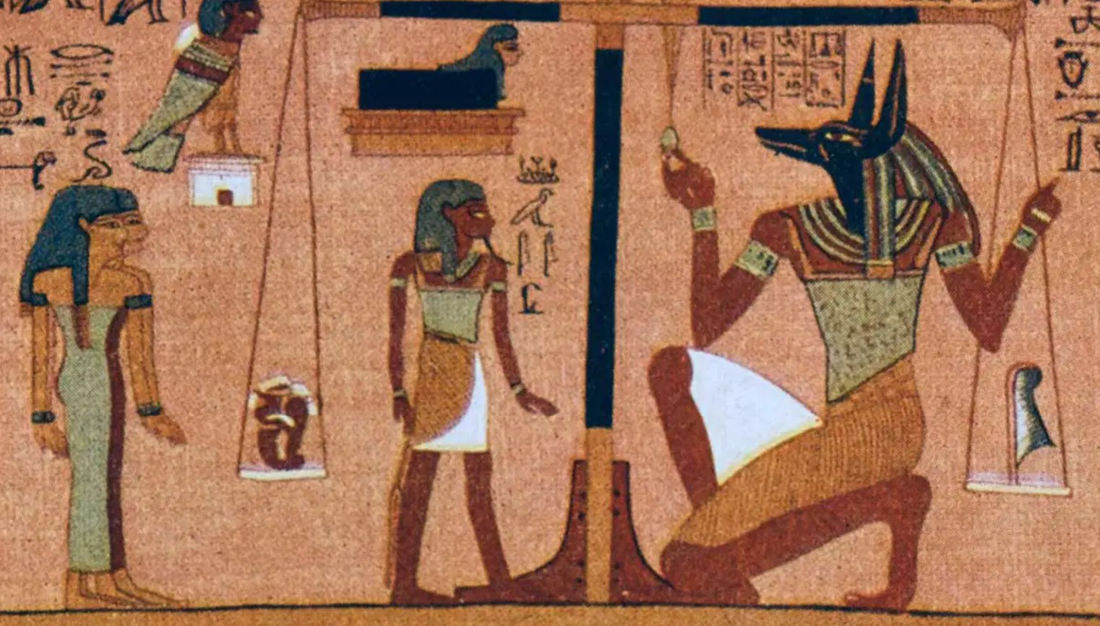
Weighing the heart
*
In the podcast (and presumably the book) Pollan asserts that we today are "cerebrally-obsessed." He observes that our fixation on the brain (and particularly the larger, more complex human prefrontal cortex) as the seat of consciousness is historically a new phenomenon. The Egyptians, he tells us for example, believed that the mind was in the heart.
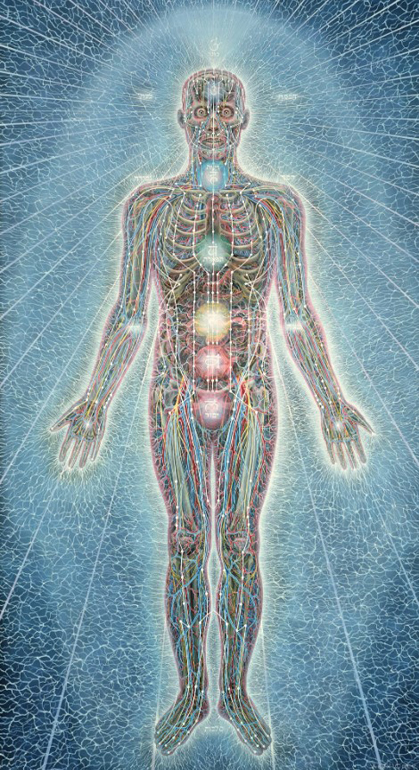
Centering sentience in the body (being hungry or tired certainly affects my mood) explains how plants and other creatures, who lack large, complex prefrontal cortices, brains or even neurons, might experience consciousness.
Commenting on AI's attempt to recast the neuron in silica, Pollan suggests (referencing Michael Levin) that while neurons are the quickest at it, consciousness is present in all cells. He notes that knowledge and experience (unlike software in a computer) actually change the structure of the brain (unlike the hardware of a computer). For those, and a host of other reasons, he concludes that lacking sentient bodies, and despite the fantasies of scientific nerds, machines will never approach consciousness, let alone attain it.
Again referencing the work of Michael Levin, Pollan talks about the intelligence of cellular bioelectric fields. Levin has been able to rebalance a cancer cell's bio-electric field so that it remembers that it is living among other sister cells, and stops madly replicating as if it were every cell for itself.
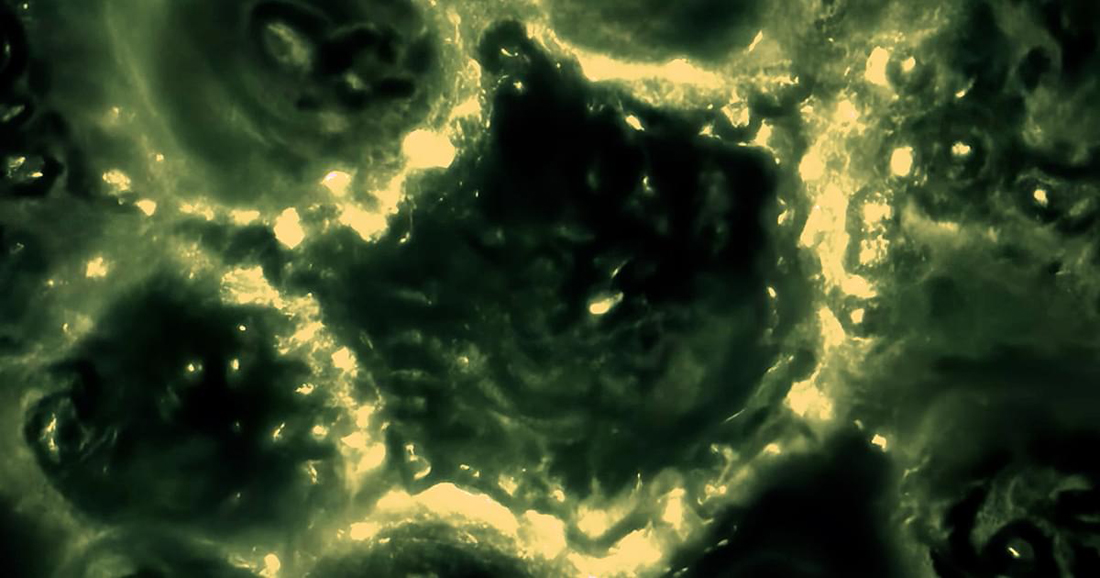
Although the scientific method requires a slower, step-by-step accretion of knowledge ("Look what we discovered!"), my poetic imagination is free to jump ahead. And in doing so, I hearken back to the scientists of yesteryear, who weighed the dying person and then his corpse to see if they could detect the weight of the soul. Finding no difference, they concluded that there was no soul.
It seems probable, if not obvious, that the bio-electrical field of the cell is just the tip of the phenomenon, the smallest part, as required by science's reductionist technique. But surely there are higher, more inclusive levels associated with the bio-electricity of life. And surely, we may call the integrated, harmonious whole of these subtle, non-material forces (thoughts, feelings, consciousness, sentience...), all of which disappear from the body on death, the soul.
With Walt Whitman, "I sing the body electric."
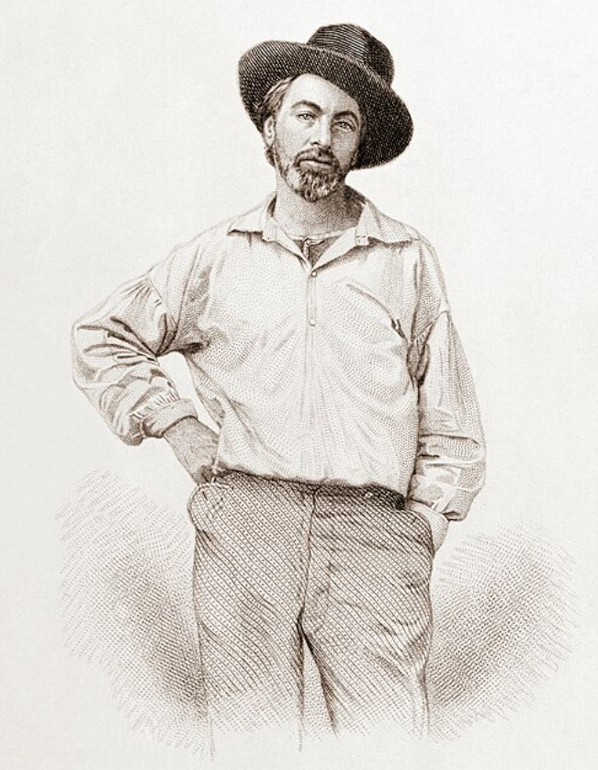
Walt Whitman
**************
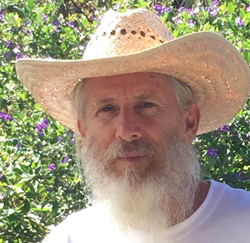
Dr. David Fialkoff presents Lokkal, public internet, building community, strengthening the local economy. If you can, please do contribute content, or your hard-earned cash, to support Lokkal, SMA's Voice. Use the orange, Paypal donate button below. Thank you.
**************
*****
Please contribute to Lokkal,
SMA's online collective:
 ***
***
Discover Lokkal: Mission
Visit SMA's Social Network
Contact / Contactar

|
|
|
|
| | |
Click ads
Contact / Contactar
copyright 2026
|