Stridentist Poets
Español
April 19, 2026
by Philip Gambone
By the early 1920s, as the Revolution petered out, a new era began for Mexico. The embattled country, breathing a sigh of relief, embraced modernization, which arrived with a loud but different kind of revolutionary bang. Automobiles, airplanes, radios, skyscrapers, electric elevators—Mexico was "cosmopolitanizing" itself.
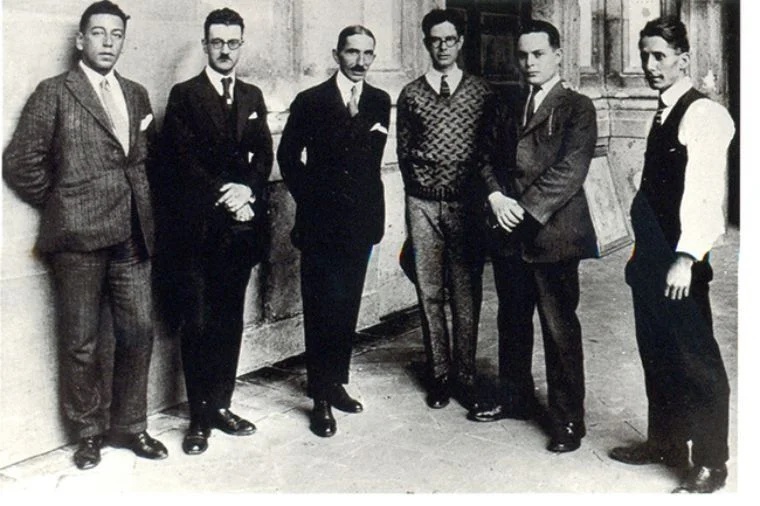
Enter a new generation of poets, who called themselves los estridentistas (the Stridentists). From 1921 to 1927, they published iconoclastic manifestos, literary magazines, and books of avant-garde poetry, making themselves a rowdy force to be reckoned with in Mexico's literary world. The Stridentists were intent on getting rid of all the old formal apparatus of poetry—meter, rhyme, traditional "poetic" themes—turning instead to explore emotions rooted in the modern world. "We make nowism," Manuel Maples Arce, one of the leading Stidentists, declared.

1921 Peugeot
*
Maples Arce (1900-1981) is often credited as the founder of Stridentism. Whether or not this is true, he was certainly one of the new era's "authentically seditious poets" says Professor of Mexican Literature Enrique Padilla. When he was 21, Maples Arce wrote, printed, and put up all over Mexico City a manifesto, titled Actual No 1, which brazenly hoisted the banner of Stridentism. "My pure, destructive Stridentism," he called it. "Death to Father Hidalgo, Down with San Rafael, Saint Lazarus," the manifesto began. The bad-boy poet championed imaginative creation over slavish copying of reality—"truth in thought reality, and not in apparent reality." His "thought reality" went into overdrive.
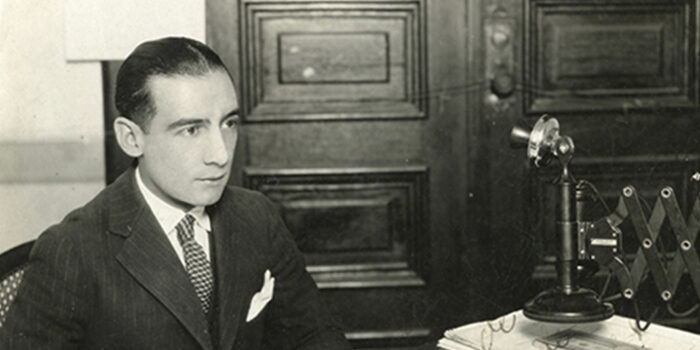
Manuel Maples Arce
*
Born in Papantla, Veracruz, the so-called vanilla capital of Mexico, Maples Arce spent his childhood in the port of Tuxpan. After his secondary education, he went on to study law in Mexico City, a time during which he became deeply affected by the Revolution. He developed radical convictions against the conservative trends of his day. Vanilla may have been the flavor of his hometown. It was certainly not the flavor of his politics or his poetry.
Maples Arce set out to shock the middle class, and he succeeded. The text of Actual No 1 is a piece of "antic self-promotion," writes poet and translator KM Cascia, "as bombastic as could ever be wished … a hurtling mass of text flung in the face of a literary old guard." The young firebrand poet, unabashedly self-regarding, celebrated "the marvelous incandescence of my electric nerves."He called for the creation of "an insuperable literature that honors telephones" and cheekily declared, "An automobile in motion is more beautiful than the Victory of Samothrace."
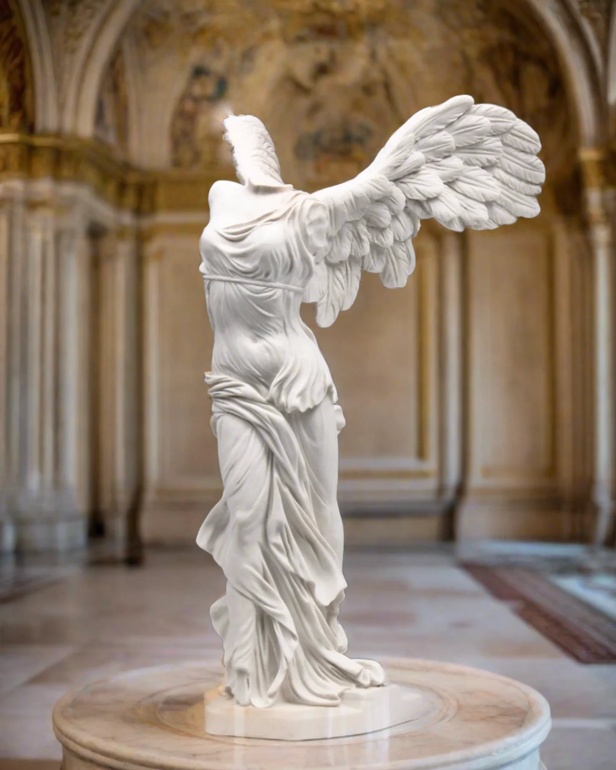
Victory of Samothrace
*
Maples Arce exulted in the thrill of the modern: "the modern beauty of machines, of gymnast bridges strongly stretched over slopes by concrete muscles, the smoke of factories, the cubist emotions of transatlantic ships with smoking red and black chimneys." He disparaged all the paraphernalia of nineteenth-century romanticism, which he deemed "putrified literature" and "outdated melancholism." "Chopin to the electric chair!" he proclaimed. "The blue smoke of exhaust pipes, which smells of modernity and dynamism has, equivalently, the same emotional value as our avant-gardist's adorable veins."
The manifesto is great fun to read, in large part because of Maples Arce's outrageous claims and over-the-top language: "How much more, and deeper, emotion have I managed to experience in an arbitrary, suggestive newspaper clipping than in all those pseudo-lyrical organgrinderisms and melodic bonbons, cowbell recitals free for young ladies, declamatorially deduced from the auditory disjunction of fox-trotted girls and spasmatics and bourgeois gentlemen afraid of their concubines and their strongboxes." You have to love this kind of adolescent audacity!
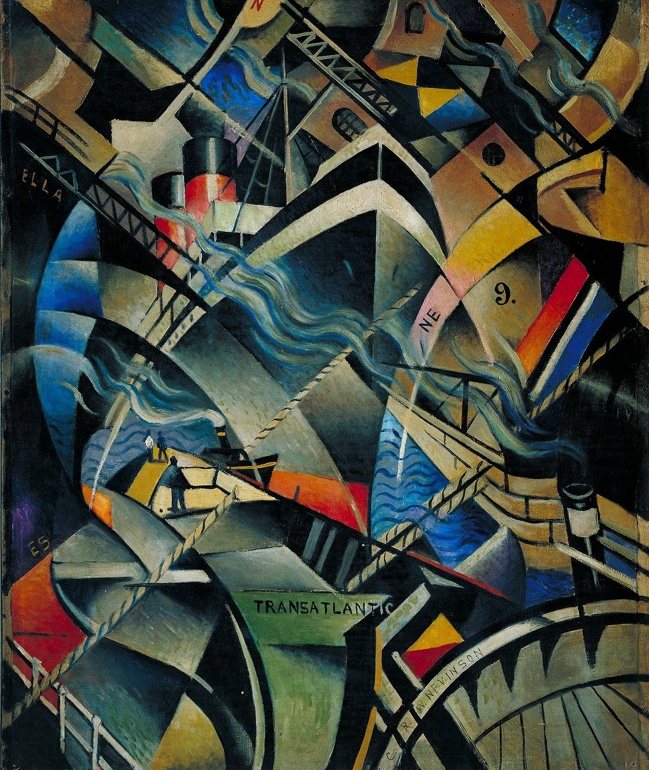
Christopher Richard Wynne Nevinson - The Arrival, 1913
*
Despite such youthful brashness, Maples Arce actually had a vast knowledge of the avant-garde literary movements around the world—Dadaism, Cubism, and Futurism—drawing on their ideas, both in his manifesto and in his poetry. His intent was to synthesize what he had learned from the international avant-garde and adapt it to Mexico's new literary aesthetic. "It's no longer possible to keep ourselves in the conventional confines of national art," he declared. He called for an outlook, and an art, "illuminated on the stupendous axis of the present moment."
"Success to all the young poets, painters and sculptors of Mexico," he wrote in the closing section of the manifesto, "to those who haven't been ruined yet by the perks of government sinecures … to those who haven't decomposed in the lamentable, foul-smelling efflorescence of our nationalist atmosphere with the stench of pulque and embers of fried food, to all those, success in the name of the modern avant-garde of Mexico." He concluded with a quotation from the Spanish modernist poet Rafael Lasso de la Vega: "We are writing on new tablets."
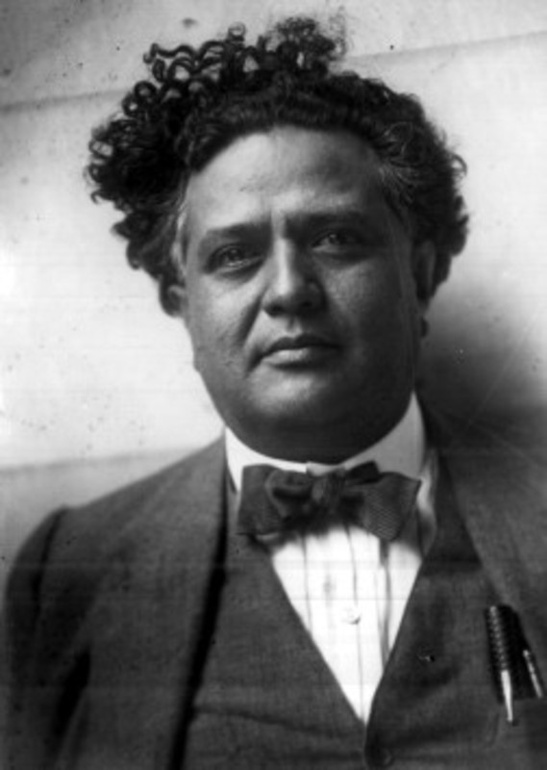
Heriberto Jara
*
During the liberal governorship of Heriberto Jara in Veracruz (1924-1927), Maples Arce served as Secretary of Government, inaugurating an ambitious publishing project with his fellow Estridentistas. In 1924, he brought out his second book of poems, Andamios Interiores: Poemas Radiográficos (Inner Scaffolds: Radiographic Poems), which followed the tenets of his manifesto. Its publication became an enormous scandal. "Most of the critics in those days," recalled fellow Mexican writer Arqueles Vela, "attacked the spirit of the book" as well as the author. But the younger writers loved what Maples Arce had pulled off.
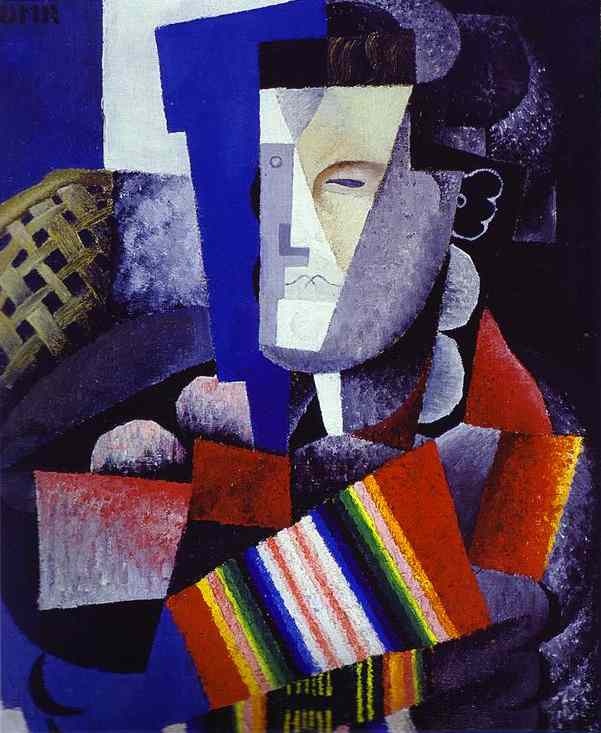
Cubist painting by Diego Rivera, 1915
*
After Jara's fall from office, Maples Arce returned to Mexico City, where he joined the diplomatic corps, serving as Mexico's ambassador to various countries in Europe, Asia, and the Americas. One could say that in his later years, he himself committed the sin he once railed against: "ruined by the perks of government sinecures." He seems, KM Cascia notes, not only to have walked away from Stridentism, but to have taken "refuge in the privileges of his class when Stridentism's political situation became difficult." While Maples Arce continued to write poetry, literary criticism and memoir, he distanced himself from the movement he helped to launch. "Nothing he did in those years," Cascia writes, "had anything like the impact or importance of his Stridentist period."
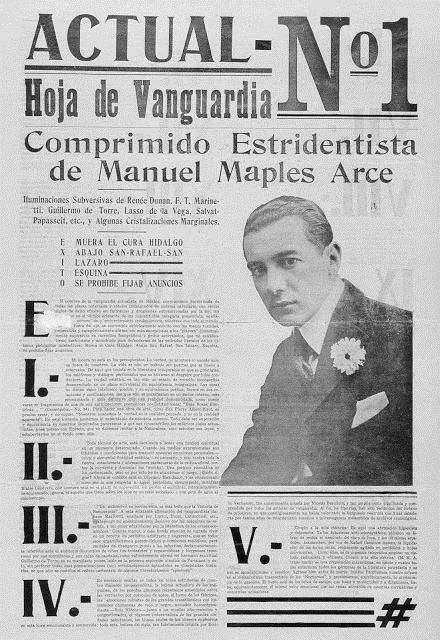
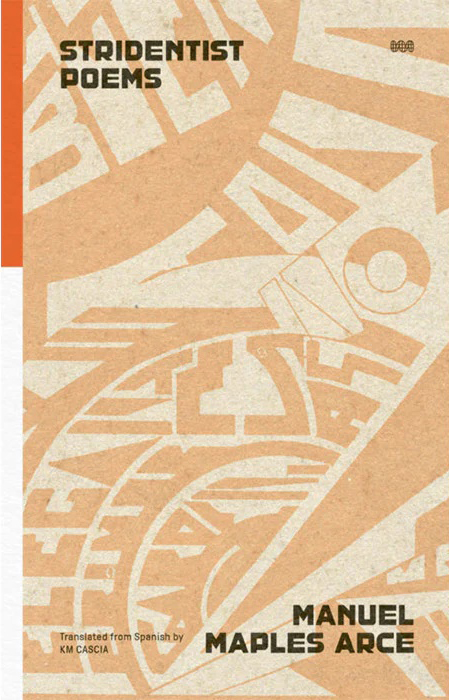
Actual No 1, in the original Spanish, is widely available online. An excellent English translation can be found in Cascia's edition of Maples Arce's Stridentist Poems (World Poetry Books, 2023).
 **************

Philip Gambone, a retired high school English teacher, also taught creative and expository writing at Harvard for twenty-eight years. For over a decade, his book reviews appeared regularly in The New York Times. Phil is the author of seven books. His memoir, As Far As I Can Tell: Finding My Father in World War II, was named one of the Best Books of 2020 by the Boston Globe. His new collection of short stories, Zigzag, was published last year by Rattling Good Yarns Press. His books are available through Amazon, Aurora Bookstore, and at "Tesoros," the bookshop at the Biblioteca.
**************
*****
Please contribute to Lokkal,
SMA's online collective:
 ***
***
Discover Lokkal: Mission
Visit SMA's Social Network
Contact / Contactar